Fresh Beet Borscht Starter with Tomato and Garlic
Fresh beet borscht starter is a cooked Ukrainian soup base made from grated beetroot, carrot, onion, tomato paste and garlic. Red wine vinegar adds brightness, while dill or parsley brings a fresh herbal finish. The mixture is concentrated rather than a finished soup, so add it to broth and other cooked borscht ingredients to taste. This recipe makes approximately three cups in 40 minutes, excluding cooling. Use immediately, refrigerate for up to three days or freeze in small portions. It is not a shelf-stable canning recipe.
Fresh beet borscht starter is a concentrated vegetable base for making Ukrainian borscht. Grated beetroot, carrot and onion are softened with tomato paste, then seasoned with garlic, vinegar and herbs. This recipe yields about three cups in 40 minutes, excluding cooling. It is not a complete soup or a tested shelf-stable preserve.
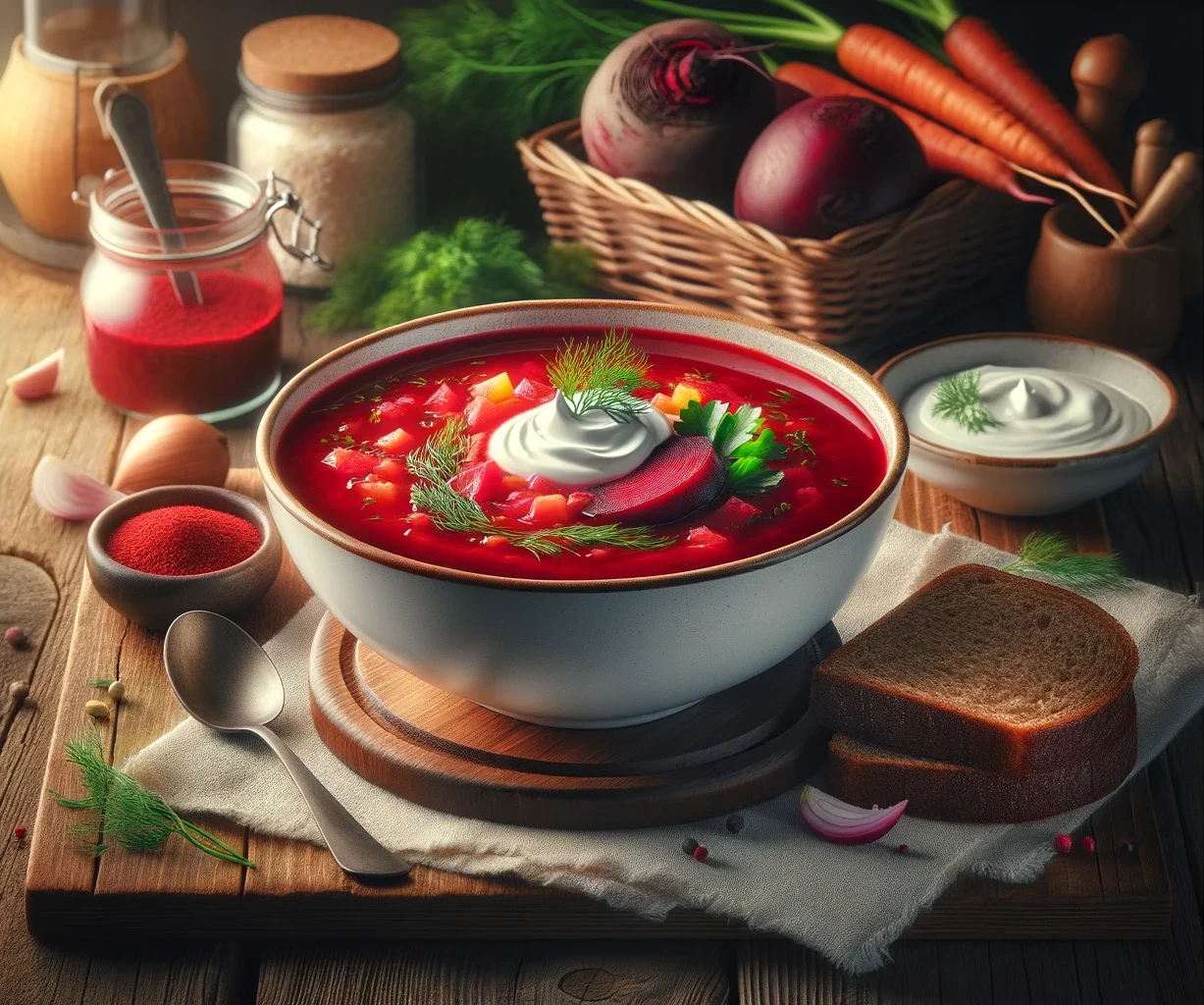
Recipe card
Fresh Beet Borscht Starter with Tomato and Garlic
40 minutes covers preparation and cooking. Additional cooling time is required if storing; approximate yield depends on beet size and evaporation.
Equipment: Wide heavy skillet with lid, chopping board, knife, box grater, measuring spoons, measuring jug, spatula, shallow storage containers
Ingredients
Vegetables
Cooking base
Finishing
Cooking base
Instructions
Soften the onion and carrot
Heat the neutral oil in a wide heavy skillet over medium heat. Cook the diced onion and grated carrot for five minutes, stirring until the onion becomes translucent and the carrot softens.
Cook the grated beetroot
Add the peeled and grated beets. Cook for 5–7 minutes, stirring frequently and lowering the heat if the vegetables begin to stick.
Simmer with tomato paste
Stir in tomato paste, sugar, salt, pepper and 120 ml (½ US cup) water. Cover and simmer gently for about ten minutes, stirring occasionally, until the beetroot is tender. Add a little more water if needed to prevent scorching.
Finish and use or chill
Stir in minced garlic, red wine vinegar and herbs and heat briefly until fragrant. Add to simmering borscht to taste or divide into shallow containers and refrigerate promptly within two hours. Do not pantry-can this untested soup base.
Prepare the beetroot and aromatics
Choose firm medium beets and a carrot, wash them and peel before grating. A coarse grater produces strands that retain some texture in the finished soup. Finely dice the onion so it softens at a similar rate. Beetroot stains hands and porous surfaces, so use a washable board and protect clothing if needed.
Tomato paste adds concentrated flavour without much extra liquid. A little sugar balances the earthiness of the beets and acidity of the vinegar. Neutral oil helps soften the vegetables without masking their flavour. Use fresh dill or parsley for the finishing herbs.
Cook a tender, concentrated soup base
Soften onion and carrot first in a wide skillet over medium heat. Add grated beetroot and stir frequently for five to seven minutes. The mixture should begin to soften without developing a hard browned crust. Add tomato paste, seasoning and the measured water, then cover and simmer gently until the beet strands are tender. If the pan dries too quickly, add water in small amounts; avoid diluting the mixture into a finished soup.
Add garlic, vinegar and herbs near the end to preserve their character. The vinegar balances sweetness and can help retain beet colour, but its presence does not establish shelf stability. Prolonged boiling after adding the starter to a soup can dull its colour.
How to use the starter in borscht
Cook your broth, potatoes, cabbage and other soup ingredients according to the borscht recipe you choose. Add a few spoonfuls of the cooked starter once those vegetables are nearly tender. Stir, simmer briefly until hot and taste before adding more. Because the base already contains tomato paste, salt, sugar and vinegar, adjust the remaining seasoning accordingly. The full three-cup batch is an approximate yield, not a mandatory amount for one pot of soup.
Use it with vegetarian Ukrainian borscht or Ukrainian borscht with pork or beef, taking their existing beet and tomato quantities into account. For a different concentrated preparation, compare fresh tomato borscht soup base. Serve the finished soup with garlic pampushky.
Troubleshooting and substitutions
If the starter is watery, simmer briefly uncovered while stirring. If the beets are still firm, add a little water, cover and cook until tender. If it tastes sharply acidic, use a smaller amount in the soup and adjust the finished broth. Lemon juice can replace vinegar for a fresh version, though the flavour differs. The listed base is plant-based; check prepared tomato paste and any accompanying broth for allergens.
Refrigerate or freeze, never pantry-can
Divide the hot starter into shallow containers and refrigerate promptly. Use within three days or freeze small portions. Thaw in the refrigerator or add directly to simmering soup, ensuring the mixture reaches 74°C (165°F). This mixture contains low-acid vegetables and oil and has no validated home-canning process. Do not assume that vinegar, hot filling or a sealed lid makes it safe to store at room temperature. Follow FoodSafety.gov cooling and storage guidance.
Editorial note: the 120 ml water already specified in the original cooking method has been added to the ingredient list; the other quantities remain unchanged.
Frequently asked questions
Is this a complete borscht recipe?
No. It is a concentrated cooked vegetable starter. Add it to broth with the other ingredients specified by your chosen soup recipe.
How much starter should I use?
Begin with a few spoonfuls, stir into simmering soup and taste before adding more. The amount depends on broth volume and other beet and tomato ingredients.
Can I freeze this base?
Yes. Cool promptly, divide into meal-sized freezer-safe portions and freeze. Thaw in the refrigerator or heat directly in simmering soup, stirring until hot.
Why has the beetroot lost its colour?
Prolonged boiling can dull beet colour. Simmer gently and add the finished starter towards the end of cooking the soup.
Can I use lemon juice instead of vinegar?
For immediate or refrigerated use, lemon juice can provide a different acidic flavour. Adjust to taste; this is not a preservation substitution.
Can I store this in sealed jars at room temperature?
No. This is not a tested home-canning recipe. Keep refrigerated or frozen regardless of whether the lid seals.
More recipes to try






Spotted a detail that needs correcting? Contact the FeastDelights editors.