Vegan Ramen Recipe with Browned Tofu and Vegetables
This vegan ramen is a Japanese-inspired noodle soup with golden, pan-browned tofu, sweet carrot, peas and torn nori in a savoury sesame and soy broth. Ginger and garlic give the broth warmth while a little maple syrup balances its saltiness. Cooking the noodles separately keeps them springy and makes the soup easy to prepare ahead. Four light bowls are ready in about 40 minutes, with scallions and sesame seeds for a fresh, nutty finish.
A good quick ramen starts with hot, well-seasoned broth and noodles that have not been sitting in it. This plant-based version uses ready-made vegetable broth rather than a long-simmered Japanese stock. Brown the tofu separately and add it at the last moment for a contrast between its golden edges and soft centre.
Choosing ingredients for vegan ramen
Use dried or fresh wheat ramen noodles labelled vegan; some noodles include egg or come with non-vegan seasoning packets. The listed quantity is suitable for four light servings when using dried noodles. If using fresh noodles, follow the packet’s serving weight and cooking time. Vegetable broth is the main liquid here, so choose one you would enjoy drinking on its own. A lower-sodium broth gives you more control when adding soy sauce. Nori adds a marine savouriness without fish stock; tear the sheets into manageable pieces rather than stirring them into the pot.
Firm tofu holds its shape during pan-frying. Drain it and gently pat it dry with a clean towel; very wet tofu will steam and may stick. Use toasted sesame oil for aroma and a neutral high-heat cooking oil for browning. Fresh ginger and garlic are stronger when grated or minced finely. Cut the carrot into thin strips to match the short cooking time of the peas. Frozen peas can go straight into the broth.
Equipment and timing
Have a noodle pot, colander, medium saucepan, non-stick skillet, knife and four heatproof bowls ready. Start heating the noodle water while preparing the vegetables. The tofu and broth can cook side by side, but if you are using one burner, finish the broth first and keep it hot while cooking the noodles and tofu.
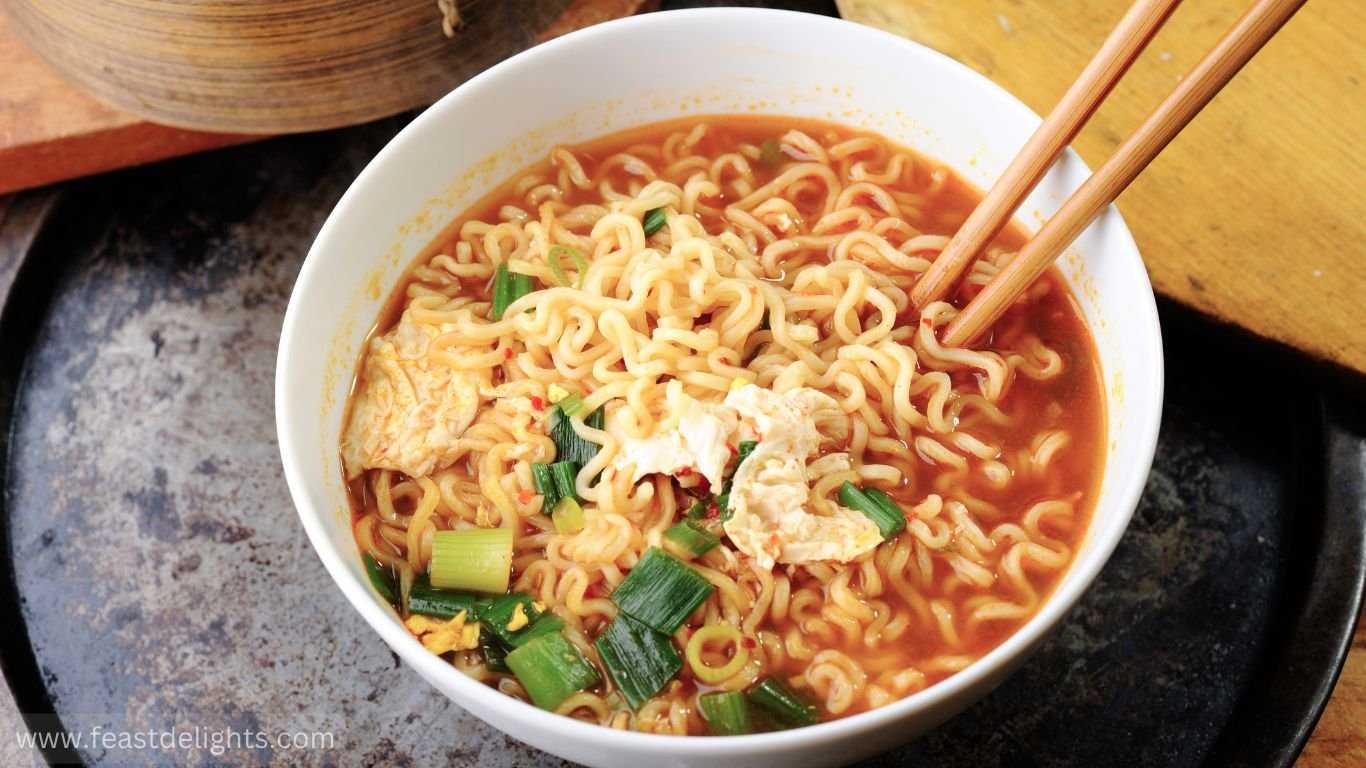
Recipe card
Vegan Ramen Recipe with Browned Tofu and Vegetables
Tofu, broth and noodle preparation can overlap. Allow extra time if using one burner.
Equipment: Noodle pot, colander, medium saucepan, non-stick skillet, knife, chopping board, ladle and four heatproof bowls
Ingredients
Noodles
Broth
Tofu
Vegetables
Toppings
Instructions
Prepare and cook the noodles
Bring a separate pot of water to a boil. Cook the ramen noodles according to the packet until just tender, drain and divide among four warm bowls near serving time. Start this step while the broth and tofu cook if possible.
Pan-brown the tofu
Drain and pat the tofu dry, then cut into 2 cm cubes. Heat neutral oil in a non-stick skillet over medium-high heat. Brown several sides for about 6–8 minutes, letting the first side turn golden before flipping. Set aside.
Build the sesame-soy broth
Warm sesame oil in a saucepan over medium-low heat. Stir in ginger and garlic for about 30 seconds until fragrant. Add vegetable broth, soy sauce and maple syrup. Bring to a simmer and cook gently for 5 minutes.
Simmer the vegetables
Add the thin carrot strips and peas. Simmer 3–5 minutes until tender but still bright; taste and adjust the broth with a little soy sauce or hot water if needed.
Assemble four bowls
Ladle the hot broth and vegetables over the drained noodles. Divide the browned tofu, torn nori, scallions and sesame seeds among the bowls and serve immediately.
Building flavour without meat stock
Briefly warm ginger and garlic in sesame oil over medium-low heat. They should smell fragrant, not turn dark brown. Pour in the broth promptly to stop the aromatics from burning. Soy sauce adds salt and savoury depth; maple syrup balances its sharper edges. Taste after simmering, since different broths and soy sauces contain different amounts of salt. If needed, dilute with hot water or add soy sauce a teaspoon at a time. The result should be savoury enough to season plain noodles and tofu but not overwhelmingly salty.
For more body, simmer sliced shiitake mushrooms in the broth before adding the carrots. A spoonful of miso dissolved in a little warm broth and stirred in off the heat is another option. Start with a small amount and reduce the soy sauce if the miso is salty. Neither addition is required for this basic recipe.
How to brown tofu and keep noodles springy
Cut tofu into roughly 2 cm (¾ inch) cubes. Heat the neutral oil before adding them, then leave enough room between the cubes for moisture to escape. Let the first side turn golden before attempting to flip. Use a thin spatula and turn gently. Brown several sides rather than trying to create a thick crust on every face.
Cook the noodles in a separate pot until just tender according to the packet. Drain thoroughly and divide into warm bowls as the broth finishes. If the noodles are done early, rinse briefly with cool water to stop cooking and rewarm them briefly in hot water before serving. Avoid keeping cooked noodles in the saucepan of broth: they will continue absorbing liquid.
Troubleshooting
Tofu sticking: use a non-stick skillet, dry the cubes thoroughly and give the underside time to form a crust. Bland broth: check the seasoning after the vegetables are tender and add a little soy sauce or a small splash of rice vinegar to taste. Overly salty broth: dilute with unsalted stock. Soft vegetables: cut the carrots evenly and add peas only near the end. Cold bowls: warm them with hot water, then empty before assembling.
Substitutions and toppings
Replace peas with shelled edamame, cooking according to the packet, or use sweetcorn. Sliced bok choy can be added during the last few minutes of simmering. Tamari labelled gluten-free can replace soy sauce, but regular ramen noodles also contain wheat; use suitable rice noodles for a gluten-free adaptation. The texture will differ. Add chilli oil, extra nori or a small squeeze of lime at the table. These toppings let everyone adjust their own bowl.
Serving suggestions
Serve the soup immediately. For more substantial portions, cook extra noodles or tofu and increase the broth to suit. If you enjoy this style of tofu, try sticky tofu teriyaki, a vegan tofu rice bowl or vegan nori sushi rolls. The site’s vegan tofu pad Thai is a different noodle dinner with a tangy tamarind sauce.
Make ahead and storage
Prepare the broth and cut vegetables ahead, then cook the noodles and brown the tofu shortly before dinner. Refrigerate broth, cooked vegetables, tofu and noodles separately in shallow covered containers within two hours (one hour above 32°C/90°F). Keep at 4°C (40°F) or colder for up to three days. Reheat the broth, vegetables and tofu to 74°C (165°F) throughout. Freeze the broth alone for up to two months for best quality; thaw in the refrigerator. Cook fresh noodles when possible. See USDA storage guidance. This recipe contains soy, sesame and typically wheat. Check broth, noodle and topping labels for animal ingredients and other allergens.
Taste the broth before filling the bowls and add the crisp-edged tofu and nori just before eating. A few fresh scallions are all the finishing this light soup needs.
Frequently asked questions
Can I use instant ramen noodles?
Yes, use the noodle blocks if vegan and leave out the seasoning packet unless its ingredients suit the recipe.
Do I need to press the tofu?
Firm tofu often needs only draining and patting dry. If it is very wet, press gently for 10–15 minutes and allow extra preparation time.
Can I use dried seaweed other than nori?
A small amount of rehydrated wakame is an alternative, but it has a different texture and should be prepared according to the packet.
Is this a spicy ramen?
No. The base is mild; add chilli oil or sliced chilli at the table if you prefer heat.
Can I use a different sweetener?
A little sugar or agave syrup can replace maple syrup. Add gradually and taste.
Why is the serving size relatively light?
The recipe uses 200 g dried noodles and 200 g tofu for four bowls. Increase the noodles, tofu and broth for a larger main meal.
More recipes to try






Spotted a detail that needs correcting? Contact the FeastDelights editors.