Vegan Sushi Rolls with Avocado and Cucumber
These vegan sushi rolls wrap lightly seasoned Japanese short-grain rice, creamy avocado, crisp cucumber and carrot in sheets of nori. Optional cooked tofu adds a more substantial filling without changing the rolling technique. The rice is seasoned with vinegar, sugar and salt, while soy sauce, pickled ginger and wasabi are served separately. Allow about 75 minutes to prepare five rolls, including time for draining and cooling the rice. Keep the filling narrow, roll firmly without crushing the rice, and slice each roll into six pieces.
Vegan sushi rolls are Japanese-inspired maki made with nori, seasoned short-grain rice, avocado, cucumber and carrot. Optional cooked tofu adds a firmer bite. This recipe makes five rolls, approximately 30 pieces, in about 75 minutes including draining and cooling. The aim is cohesive rice, crisp vegetables and a neat roll that holds together when sliced.
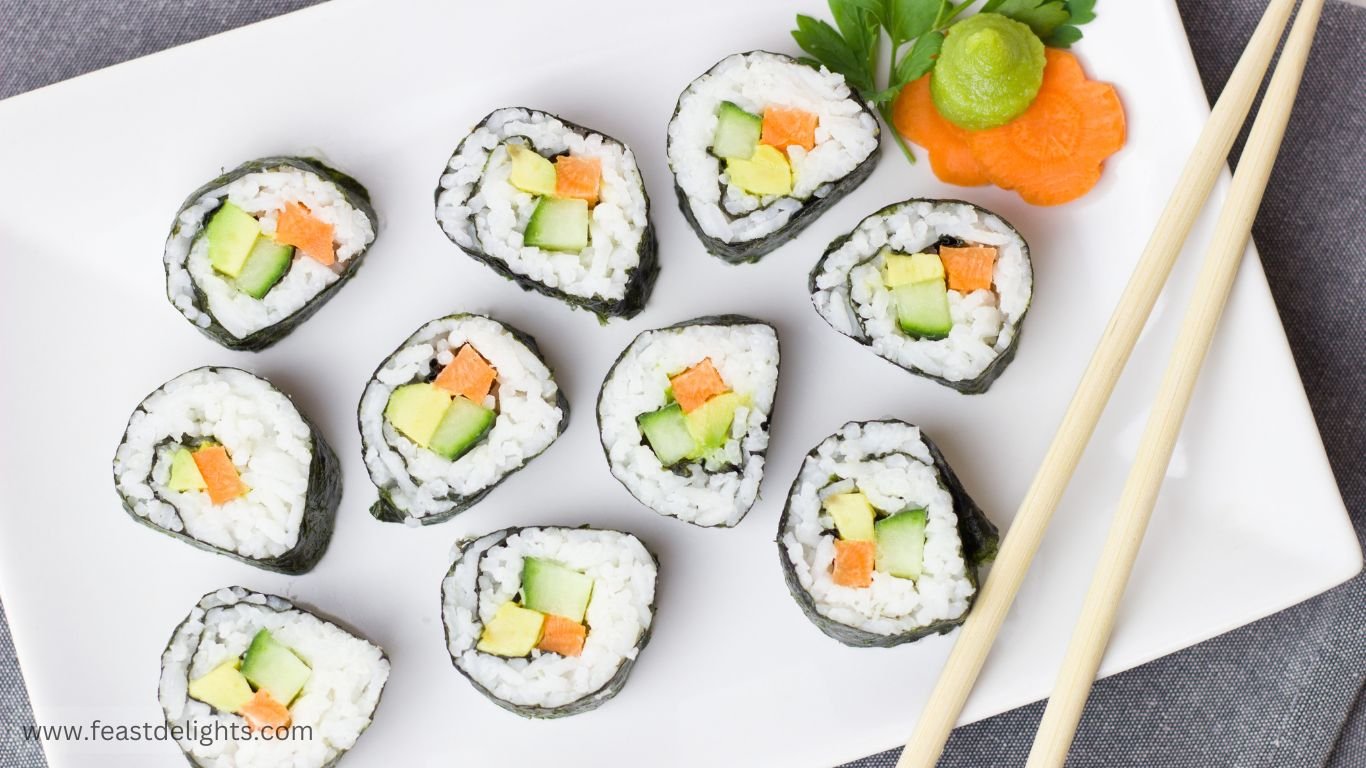
Recipe card
Vegan Sushi Rolls with Avocado and Cucumber
30 minutes preparation, approximately 20 minutes cooking, and an estimated 25 minutes waiting (10 minutes draining uncooked rice and about 15 minutes rapid cooling). Actual cooling and cooking times vary. Start with cooked, cooled tofu if using; additional tofu cooking time is not included. Refrigerate rice or rolls not served immediately within one hour of rice cooking.
Equipment: Rice cooker or lidded saucepan, fine-mesh sieve, small saucepan or heatproof bowl, shallow nonreactive tray, rice paddle, bamboo sushi mat, chopping board and sharp knife.
Ingredients
Seasoned sushi rice
Rolls and filling
To serve
Instructions
Rinse, drain and cook sushi rice
Rinse the rice in several changes of cold water, gently stirring, until the water is mostly clear. Drain in a sieve for 10 minutes. Cook with the measured water in a rice cooker or covered saucepan, following the rice package or appliance instructions. Allow approximately 20 minutes for cooking, depending on equipment. The grains should be tender and cohesive, with no hard centre.
Season and cool the rice promptly
Warm rice vinegar, sugar and salt just enough to dissolve the seasonings. Fold gently into hot cooked rice with a rice paddle. Spread rice in a thin layer on a clean shallow tray and fan or turn gently until no longer hot, allowing about 15 minutes for rapid cooling. Do not leave it in the warm cooker. Assemble promptly; refrigerate rice or rolls not eaten immediately within 1 hour of cooking the rice.
Prepare the vegetable fillings
Wash produce under running water and dry it. Cut cucumber and carrot into slender matchsticks. Slice avocado just before rolling. Cut optional cooked, cooled tofu into narrow strips. Keep fillings chilled until needed and pat wet surfaces dry.
Fill and roll the nori
Place one nori sheet shiny-side down on a clean bamboo mat. With clean lightly damp hands, distribute about one-fifth of the rice in a thin even layer, leaving 2 cm bare at the far edge. Place a narrow line of filling across the rice nearer the edge closest to you. Lift the mat and tuck the nori around the filling, then roll forward with gentle even pressure. Dampen the bare edge lightly to seal. Repeat with the other four sheets.
Slice and serve immediately
Place each roll seam-side down. Use a clean sharp knife, lightly dampened, to cut each roll into 6 pieces. Wipe the blade between cuts if rice sticks. Serve immediately with soy sauce, pickled ginger and wasabi. Refrigerate any portions for later within one hour of rice cooking and eat within 24 hours.
Choose rice and prepare the fillings
Japanese short-grain rice has the slightly sticky texture needed to hold maki together. Long-grain rice tends to fall apart, and glutinous rice is a different product with a much stickier texture. Rinse the grains gently until the water is mostly clear, then drain for ten minutes. Use the measured water or follow the package or cooker instructions if the rice needs a different amount.
Choose unseasoned rice vinegar and dissolve the measured sugar and salt into it. Season the rice while it is still hot, folding rather than crushing the grains. Soy sauce is served at the table rather than mixed into the rice. Use full-size roasted nori sheets and keep them dry until you are ready to roll.
Choose an avocado that yields gently to pressure but still slices cleanly. Remove the watery cucumber seed core if necessary and cut the carrot into fine sticks. Optional tofu should already be cooked and cooled; its preparation time is additional if starting from scratch. Avoid warm or wet fillings, which can soften the nori.
How to cool sushi rice safely
Transfer cooked seasoned rice to a clean shallow tray instead of leaving it in a warm rice cooker. Spread it thinly and fan gently until it is comfortable to handle. The estimated 25 minutes of waiting includes ten minutes draining uncooked rice and about fifteen minutes of cooling. Actual cooling depends on the tray, rice depth and room temperature. Assemble and serve promptly.
For rice not eaten immediately, follow NHS cooked-rice safety guidance: cool rapidly and refrigerate within one hour of cooking, then use within 24 hours. Cooked rice can support bacteria that produce toxins if stored improperly. The vinegar seasoning in this home recipe is not a validated preservation treatment. Do not keep sushi at room temperature for extended periods.
Rolling and slicing without a mess
Lay the nori shiny-side down on a bamboo mat so the rougher surface faces the rice. Divide the rice into five portions. Moisten clean hands lightly and spread each portion evenly without packing it down. Leave about 2 cm (3/4 inch) uncovered along the far edge. Arrange a narrow row of fillings nearer the edge closest to you, leaving room to fold the nori around them.
Lift the near edge of the mat and guide the nori over the filling. Tuck gently, then roll forward, keeping the mat outside the roll. Apply even pressure rather than squeezing hard. Moisten the bare edge lightly to seal. Place the finished roll seam-side down and use a sharp damp knife to cut six pieces. Wipe the blade between cuts to prevent sticky rice dragging the filling.
Troubleshooting and substitutions
If the roll bursts, use less filling and a thinner rice layer next time. If the nori becomes soggy, dry the vegetables and use cooled rice. If the rice will not hold together, check the rice variety and whether it was cooked through. Do not fix dry rice by soaking a finished roll. Pickled daikon, red pepper or cooked cooled sweet potato strips offer different textures. Check packaged seasonings for fish-derived ingredients if preparing vegan sushi.
Serving and related recipes
Serve cut-side up with soy sauce, pickled ginger and wasabi. For a soup accompaniment, try miso soup with tofu using vegan dashi or stock. For a warm main, explore sticky tofu teriyaki. If rolling is not convenient, a vegan tofu rice bowl with avocado offers a different presentation.
Make ahead, storage and allergens
Prepare vegetables ahead and keep chilled; cut avocado shortly before rolling. Refrigerate any rolls not served immediately at 4°C (40°F) or colder within one hour of cooking the rice and consume within 24 hours of cooking. Keep them covered to prevent drying. Do not reheat the assembled rolls; freezing is not recommended for texture. Discard rice that has been stored unsafely, even if it smells normal.
Allergens: soy in the dipping sauce and optional tofu, and wheat in many soy sauces. Check nori, ginger, wasabi and tofu labels for additional allergens, animal-derived ingredients and cross-contact. Choose certified gluten-free tamari when necessary.
Frequently asked questions
What rice works best for sushi rolls?
Japanese short-grain rice has the cohesion needed for maki. Long-grain rice tends to separate and glutinous rice has a different texture.
Why does my nori tear when rolling?
Too much rice, wet filling or excessive pressure can tear the sheet. Use a thin layer of rice, dry fillings and gentle pressure.
Can I roll sushi without a bamboo mat?
A clean flexible silicone mat or a clean food-safe wrap can help shape the roll. A bamboo mat makes even pressure easier.
Can I use brown rice?
Short-grain brown rice may work but will require its own cooking water and timing and may not hold together as readily.
Can I prepare sushi rolls the day before?
Freshly made rolls have the best texture. If preparing ahead, chill within an hour of cooking the rice, keep covered and refrigerated, and eat within 24 hours of cooking.
Is sushi vinegar enough to make rice safe at room temperature?
No. Home-seasoned rice is not validated as shelf-stable. Cool promptly and refrigerate portions not eaten immediately.
More recipes to try



Spotted a detail that needs correcting? Contact the FeastDelights editors.