Russian Pelmeni Recipe with Soft Buttermilk Dough
These homemade Russian pelmeni combine tender buttermilk and sour cream dough with a savory pork and turkey filling seasoned with softened onion, garlic and black pepper. The rested dough rolls into supple wrappers that are folded around the meat and gently boiled until cooked through. Serve the dumplings hot with melted butter, fresh dill and sour cream, or in a bowl of warm broth. Freeze extra uncooked pelmeni for a convenient family meal later.
Russian pelmeni are small, rounded meat-filled dumplings with tender wrappers and a juicy, savory center. This Russian-style version combines buttermilk, egg and sour cream in the dough with equal amounts of ground pork and turkey. Unlike a basic flour-and-water wrapper, the dairy-enriched dough has a mild tang and soft texture. Rest it for 45 minutes before rolling, then shape the dumplings by hand or with a pelmeni mold. Serve them hot with butter, fresh dill or sour cream. Making pelmeni takes patience, but freezing extra uncooked dumplings makes the effort worthwhile for future family meals.
What makes this pelmeni dough different?
Many pelmeni wrappers use flour, water and salt, sometimes with an egg. This variation includes cultured dairy for a mild tang and a softer texture. The egg helps the dough hold together during shaping, while resting allows the gluten to relax. This is unleavened dough; it does not need to rise. A smooth, supple dough that rolls thinly without tearing is the goal.
Recipe at a glance
Estimated yield: 6 servings, about 60–75 pelmeni depending on wrapper size. Allow 75 minutes for preparation, 45 minutes for dough resting and 30 minutes for batch cooking (2 hours 30 minutes total). Filling preparation overlaps the rest, so elapsed time may be shorter. The quantities, timing and yield have been reviewed for consistency but are not documented kitchen-test results.
Equipment
Kitchen scale, large mixing bowl, whisk, rolling pin, 7–8 cm round cutter or glass, knife, cutting board, skillet, floured trays, 5–6 liter pot, slotted spoon and instant-read food thermometer. Optional: pelmeni mold.
Ingredient notes
Flour: use plain all-purpose flour, preferably weighed. The original 500 g is approximately 4 cups, depending on how the flour is measured. Reserve a little flour for adjusting the dough and dusting the work surface.
Buttermilk: use 160 ml (about 2/3 US cup) of plain cultured buttermilk, not a sweetened drink. The 120 ml of water is about 1/2 US cup; add the last portion gradually according to flour absorption.
Sour cream and egg: one tablespoon of sour cream and one large egg contribute tenderness and structure. Use lukewarm rather than hot water.
Meat: use 250 g (about 9 oz) each of ground pork and turkey. Choose mince with some fat to keep the filling moist. Finely dice the onion and mince the garlic. For sautéing, use one tablespoon of neutral oil; season the filling separately with approximately 3/4 teaspoon fine salt and the listed pepper.
Food safety: the pork and turkey filling must reach 74°C (165°F), including when cooking from frozen.
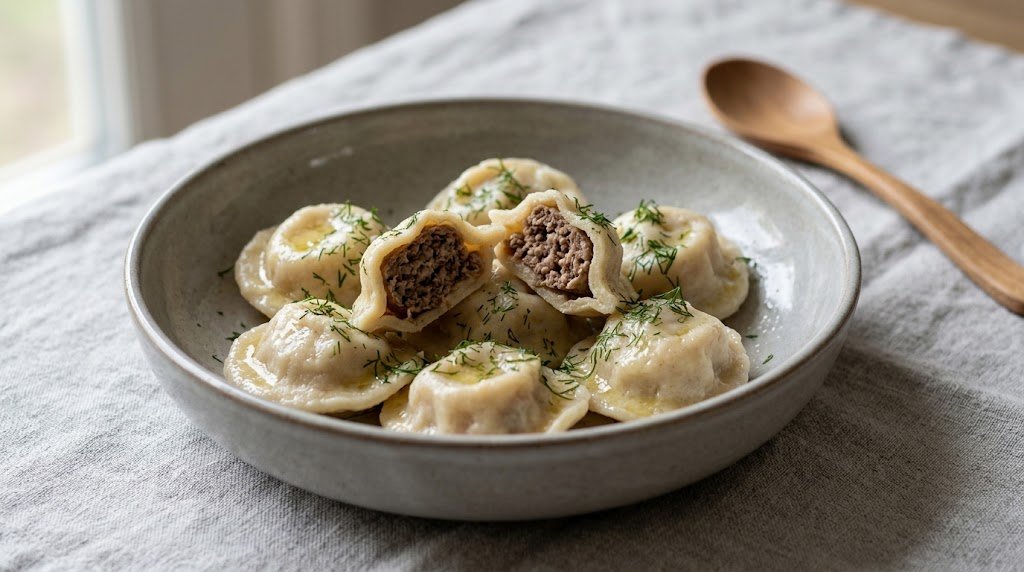
Recipe card
Russian Pelmeni Recipe with Soft Buttermilk Dough
Estimated times. Preparation of filling overlaps dough resting, so actual elapsed time may be shorter.
Equipment: Kitchen scale, large mixing bowl, whisk, rolling pin, 7–8 cm round cutter or glass, knife, cutting board, skillet, floured trays, 5–6 liter pot, slotted spoon and instant-read food thermometer. Optional: pelmeni mold.
Ingredients
Dough
Filling
Serving (optional)
Instructions
Combine the dough ingredients
Whisk together the buttermilk, egg, sour cream and dough salt in a large bowl. Add most of the lukewarm water, then gradually stir in the flour. Add the remaining water only if needed. Mix until no dry patches remain and the dough is cohesive, soft and slightly tacky.
Knead the dough
Turn the dough onto a lightly floured work surface and knead for 8–10 minutes, folding and pressing until smooth and elastic. If it is very sticky, dust it with a little flour; if dry or crumbly, knead in water one teaspoon at a time. Avoid making the dough stiff with excess flour.
10 minRest the dough
Shape the dough into a ball and cover with a bowl or food-safe wrap. Rest at room temperature for 45 minutes to relax the gluten. Prepare the filling during this time. Keep the dough covered so its surface remains pliable.
45 minSoften the onion and garlic
Heat the neutral oil in a skillet over medium heat. Add the finely diced onion and cook for 4–6 minutes until softened and translucent. Add the minced garlic for the final 30 seconds. Spread the mixture on a clean plate and let it cool completely before adding raw meat.
Mix the meat filling
Combine ground pork, ground turkey, cooled onion and garlic, filling salt and black pepper. Mix gently until the seasoning is evenly distributed. Cover and refrigerate until shaping. To check seasoning, cook a small sample thoroughly to 74°C (165°F); never taste the raw mixture.
Roll and cut the wrappers
Divide the dough into four pieces and keep three covered. Roll one portion on a lightly floured surface to approximately 2 mm thick. Cut 7–8 cm rounds, adjusting diameter and thickness as needed. Gather scraps, rest briefly and reroll. If dough remains after the filling is used, cut it into noodles and cook separately.
Fill and shape the pelmeni
Place a heaped teaspoon of filling (roughly 8–10 g) in the center of a wrapper. Fold into a half-moon, press out trapped air and pinch the edges firmly. Bring the two pointed corners together and seal. Place on a lightly floured tray with space between dumplings. Repeat with the remaining dough and filling.
Boil in batches
Bring 3–4 liters of water to a boil and salt lightly if desired. Add about 20 dumplings, stir gently to prevent sticking and maintain a steady simmer. Begin checking after 8–10 minutes; use a thermometer to confirm the center of the largest dumplings reaches at least 74°C (165°F). Frozen dumplings may take longer. Repeat with remaining batches.
Drain and serve
Lift the cooked dumplings with a slotted spoon and let excess water drain. Toss gently with butter if desired. Serve immediately with sour cream and fresh dill, or in hot broth. Refrigerate leftovers promptly and follow the storage instructions.
Nutrition per serving 530 kcal · protein 26 g · fat 17 g · carbs 67 g
How to tell when pelmeni are ready
The wrappers should be tender with a slight chew and no raw, floury layer at the seams. Floating indicates progress but does not establish safe doneness. Insert an instant-read thermometer into the center of a large dumpling and check more than one if sizes vary. Continue simmering until the poultry-containing filling reaches 74°C (165°F).
Practical tips for better pelmeni
- Weigh flour; add the final portion of water gradually, since absorption varies by brand.
- Knead until smooth and rest covered for 45 minutes. Keep unused portions covered during shaping.
- Keep the raw filling refrigerated and bring out only small portions as needed.
- Roll dough about 2 mm thick and adjust the wrapper diameter to suit the amount of filling. Brush excess flour away from the seams before pinching.
- Cook one test dumpling to check seasoning and wrapper thickness before shaping the full batch.
- Cook in batches at a gentle boil and verify the center reaches 74°C (165°F); floating alone is not enough.
Troubleshooting
Why does the dough shrink when rolled?
It may need more resting time. Cover it for another 10–15 minutes, then roll from the center outward. Use smaller portions if the sheet is difficult to manage.
Why do dumplings burst?
Overfilling, trapped air, dry edges and vigorous boiling can cause seams to open. Reduce the filling, press out air and pinch firmly. Moisten dry edges very lightly if needed.
Why is the filling dry?
Extremely lean meat and prolonged boiling can make the center dry. Use mince with some fat and stop cooking once the required internal temperature is reached.
Substitutions and variations
Plain kefir can replace buttermilk; adjust water as necessary. Ground chicken can replace turkey, or moderately fatty beef can replace pork. Any filling containing poultry still requires 74°C (165°F). For a poultry-only version, see our Russian chicken pelmeni recipe. For an alternative wrapper, try the vareniki dough with egg and sour cream. For a meat-free alternative, consider potato and fried onion varenyky.
To use a pelmeni mold, flour the mold, cover with a thin dough sheet, fill the cavities, place a second sheet on top and roll firmly to separate the dumplings. Inspect each seam before cooking. For a crisp variation, pan-fry fully cooked and drained pelmeni in a little butter.
Serving suggestions
Toss warm dumplings with approximately two tablespoons of melted butter and scatter fresh dill over them. Offer sour cream, freshly ground black pepper or a little vinegar at the table. Pelmeni also work well in hot chicken or beef broth. Serve with cucumber salad or pickled vegetables to balance the rich meat filling.
Make ahead and freezing
Prepare the filling while the dough rests and keep it refrigerated until shaping. Freeze extra uncooked dumplings in a single layer on a lightly floured tray. Once firm, transfer them to labeled freezer bags, remove excess air and store at −18°C (0°F) or colder. Use within two months for best quality. Cook directly from frozen, allowing additional time and checking the center temperature.
Storage and reheating
Refrigerate cooked pelmeni in shallow covered containers at 4°C (40°F) or colder within two hours, or within one hour when the temperature exceeds 32°C (90°F). Use within three days. Reheat in simmering broth or a covered skillet with a splash of water until the center reaches 74°C (165°F).
Food safety and allergens
This recipe contains wheat, eggs and milk. Keep raw meat and its utensils separate from cooked foods. Wash hands and surfaces after handling raw meat or dough. Never taste uncooked filling or dough. Cook a small sample thoroughly before adjusting seasoning. See the official minimum internal temperature chart for poultry cooking guidance.
Nutrition information
Estimated per serving (one-sixth of the batch): approximately 530 calories, 26 g protein, 17 g fat and 67 g carbohydrates, calculated from typical USDA ingredient composition for the dough and meat filling including cooking oil. Optional serving butter, sour cream and dill, and salt added to boiling water are excluded. The estimate assumes all the dough and filling are used; actual values depend on meat fat content, brands, leftover dough and portion size.
The key to homemade pelmeni is a well-rested dough, a cold seasoned filling and carefully sealed wrappers. Cook a test dumpling before shaping the entire batch, then boil what you need and freeze the rest. Serve with butter, dill or sour cream while the dumplings are warm and tender.
Frequently asked questions
Why is buttermilk used in this pelmeni dough?
Cultured buttermilk contributes moisture and a subtle tang, while egg and sour cream help produce a supple wrapper. Resting the dough for 45 minutes makes it easier to roll without excessive shrinking.
Can I make pelmeni without a stand mixer?
Yes. A large bowl and a rolling pin are enough. Knead by hand until the dough is smooth and elastic, then cover and rest before rolling.
Do I cook the meat before filling the wrappers?
No. The onion and garlic are sautéed first and cooled, but the meat is enclosed raw. During boiling, the pork and turkey mixture must reach 74°C (165°F) at the center.
Can I use a pelmeni mold?
Yes. Flour the mold, cover with a thin dough sheet, add small portions of filling, cover with another sheet and roll firmly. Inspect the released dumplings for open seams before boiling.
Are pelmeni done when they float?
Not necessarily. Floating is a sign that cooking is progressing, but it does not establish that raw meat is safely cooked. Check the center of large dumplings with a thermometer.
Can I boil frozen pelmeni without thawing?
Yes. Cook them directly from frozen, in small batches, allowing additional time. Check the center reaches 74°C (165°F). Thawing is unnecessary and may make the wrappers sticky.
What is the difference between pelmeni and vareniki?
Pelmeni usually contain meat and are shaped into small rings, whereas vareniki are often crescent-shaped and may contain potatoes, cheese, cabbage or fruit. Dough formulations can overlap.
Can I omit the egg from this dough?
Egg-free dumpling dough is possible, but simply leaving out the egg changes the liquid-to-flour balance. Use a separate egg-free formulation or adjust and test the dough before shaping.
More recipes to try

Belyashi Recipe with Juicy Beef and Soft Yeast Dough

Turkey Jambalaya with Rice, Corn and Crispy Bacon
Otbivnaya Chicken Tenders with a Crisp Pan Fried Coating
Easy Mushroom Gravy with Browned Mushrooms and Thyme
Chicken and Vegetable Skewers with Lemon Herb Marinade
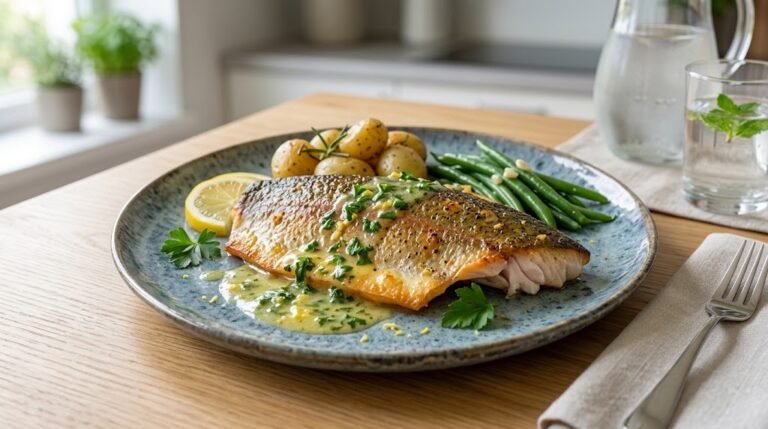
Pan Seared Trout with Parsley and Lemon Butter
Spotted a detail that needs correcting? Contact the FeastDelights editors.