Takoyaki Recipe with Octopus and Dashi
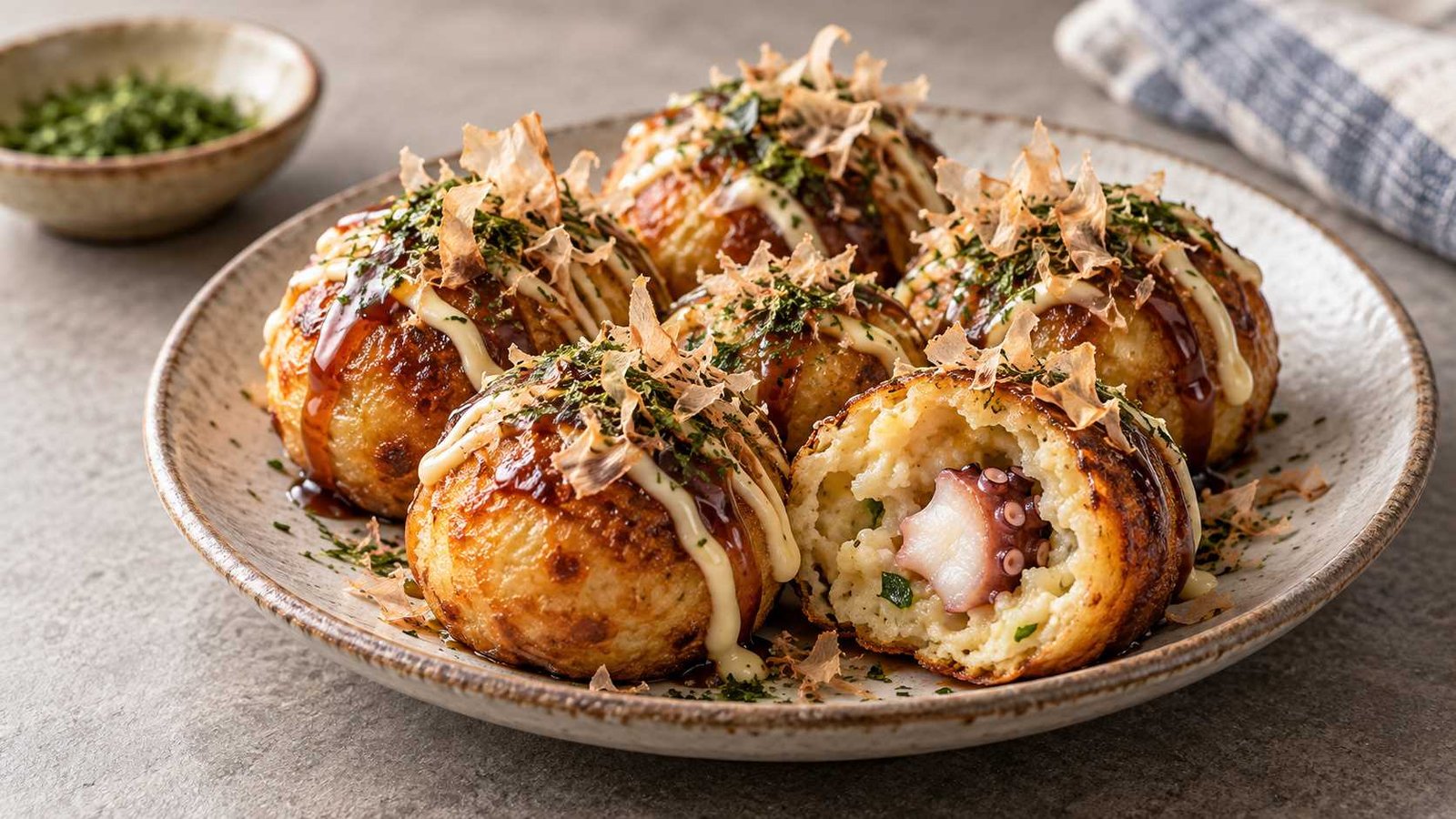
This takoyaki recipe cooks a thin dashi batter around pieces of cooked octopus in a dedicated round-well pan.
This takoyaki recipe cooks a thin dashi batter around pieces of cooked octopus in a dedicated round-well pan. Turning the partly set batter creates browned balls with a soft center. Spring onion, pickled ginger and tempura crumbs add familiar flavor and texture. The first batch needs attention while you learn the pan heat. Serve with takoyaki sauce, Japanese mayonnaise, aonori and bonito flakes, and warn diners that the soft centers remain very hot after the surface has cooled.
What matters for takoyaki
Use fully cooked octopus and a takoyaki pan, not a flat skillet. The batter is intentionally much thinner than pancake batter. Let the lower shell set before turning, then tuck overflow into the cavities as the balls rotate. A soft center should still be cooked, without raw flour taste or uncooked egg liquid.
Recipe at a glance
Yield: about 24 balls; 4 snack servings. Preparation: about 25 minutes. Cooking: about 20 minutes. Total elapsed time: about 45 minutes. Extra sequential cooking or baking batches extend the listed time.
How to make takoyaki
Recipe card
Takoyaki Recipe with Octopus and Dashi
Equipment: Dedicated takoyaki pan; jug; skewer or turning picks; food thermometer.
Ingredients
Main
Topping
Instructions
Mix thin batter
Whisk eggs with dashi, soy and salt. Whisk gradually into flour until smooth. Transfer to a pouring jug.
Heat and oil pan
Heat a takoyaki pan over medium heat or according to its electrical instructions. Oil every cavity and the flat area around them lightly.
Fill cavities
Pour batter into wells and slightly over the surrounding surface. Add a piece of cooked octopus to each, then scatter onion, ginger and tenkasu. Cook 2–3 minutes until lower edges set.
Turn and tuck
Use a skewer to divide connected batter and turn each ball about a quarter turn, tucking excess into the cavity. Add a little batter to empty areas if needed. Continue turning every minute for 5–7 minutes until round and browned. Check an egg-containing center is cooked, reaching 71°C/160°F.
Top and serve
Transfer to a plate. Add sauce, mayonnaise, aonori and bonito. Repeat for remaining batter. Let cool briefly before eating; the center can be much hotter than the surface.
How to tell when it is ready
Round golden shells enclose cooked soft centers at 71°C/160°F.
Tips
- Use the correct pan.
- Keep batter thin.
- Wait for the lower shell to set.
- Turn regularly to brown evenly.
Troubleshooting
- Balls tear: let the shell set longer.
- Burnt exterior: lower heat.
- Raw center: cook longer with frequent turns.
Substitutions
- Cooked shrimp can replace octopus for a different snack.
- Use vegetable stock for dashi, but seafood toppings still remain unless changed.
Variations
- Omit ginger for a milder batch, keeping the other proportions.
Serving suggestions
- Serve in small portions.
- Add toppings just before eating.
- Offer skewers or forks.
- Warn about hot centers.
Make ahead
Cut cooked octopus and prepare toppings ahead; mix batter shortly before cooking.
Storage
Refrigerate plain cooked balls 3–4 days. Reheat to 74°C/165°F before adding fresh toppings. Freeze plain balls up to 1 month for quality.
Food safety
Keep perishable ingredients at 4°C/40°F or below. Refrigerate perishable leftovers within 2 hours, or within 1 hour above 32°C/90°F. Use clean equipment and separate raw animal ingredients from ready-to-eat food.
Frequently asked questions
Can I use raw octopus?
Use cooked octopus for this short pan schedule.
Why is the center soft?
The high-liquid batter creates a soft interior, but it must still be cooked rather than raw.
More recipes to try




Spotted a detail that needs correcting? Contact the FeastDelights editors.