Khashlama Recipe for Georgian Boiled Beef
This khashlama recipe gently simmers large beef pieces with onion, bay and peppercorns until tender.
This khashlama recipe gently simmers large beef pieces with onion, bay and peppercorns until tender. It follows the Georgian boiled-beef style rather than a tomato-and-potato stew carrying the same name in other cuisines. The finished meat is served with parsley, salt and a little of its broth. The ingredients are simple, but the cooking takes several hours. Choose a collagen-rich stewing cut and let fork tenderness determine the endpoint instead of shortening the simmer because the broth looks ready.
What matters for khashlama
A gentle simmer keeps the beef fibers softer than a rolling boil. Skim early foam for a cleaner broth, then let the pot cook partly covered. Water should cover the meat, so top up with hot water as evaporation lowers it. The broth can become a separate soup base after cooling and removing excess fat.
Recipe at a glance
Yield: 4 servings. Preparation: about 15 minutes. Cooking: about 190 minutes. Total elapsed time: about 205 minutes.
How to make khashlama
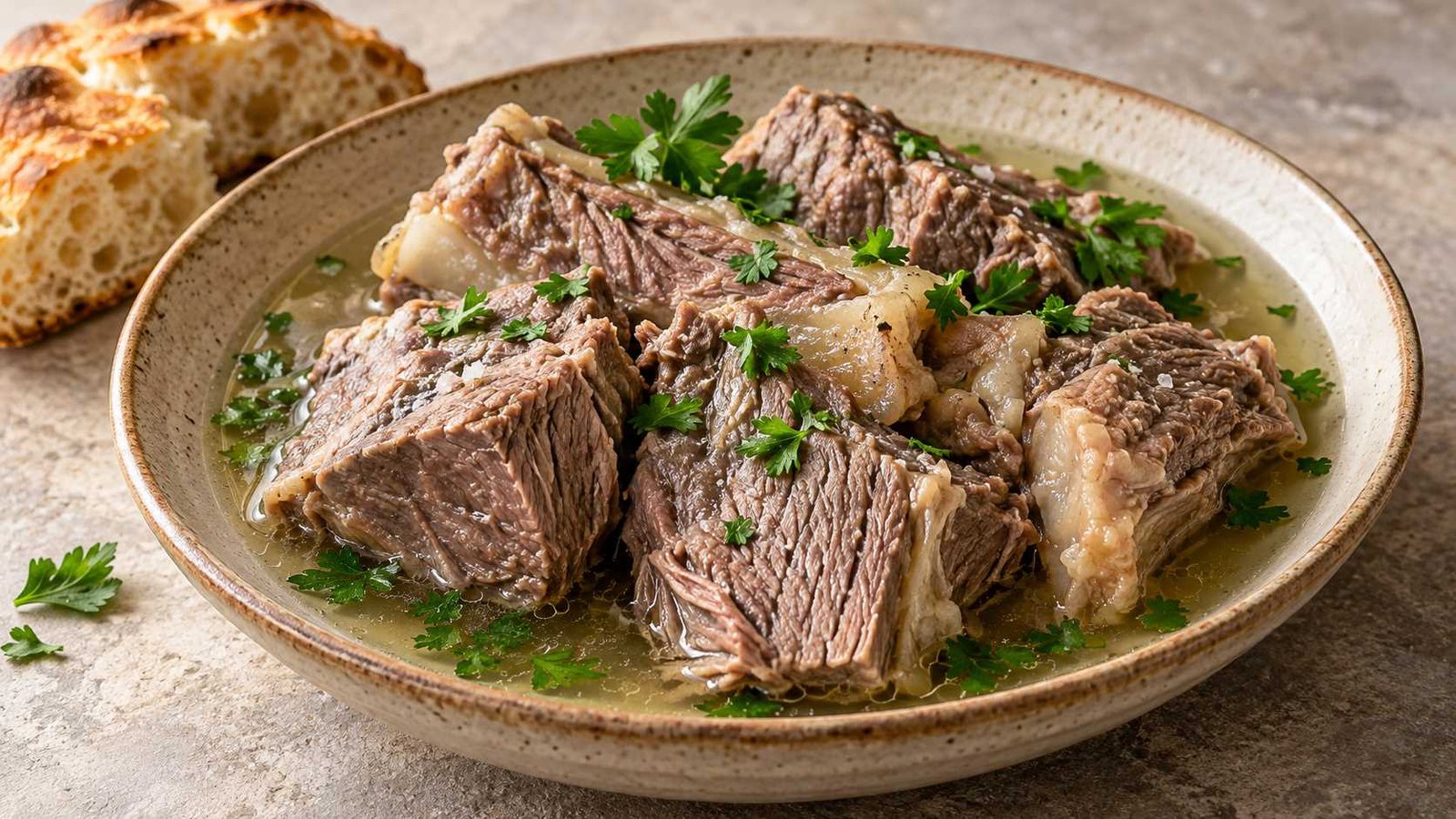
Recipe card
Khashlama Recipe for Georgian Boiled Beef
Equipment: Heavy 4–5 litre pot; skimmer; sieve; shallow cooling containers.
Ingredients
Main
Instructions
Start the broth
Put beef in a heavy 4–5 litre pot and add water to cover by 2–3 cm. Bring slowly to a simmer over medium heat. Skim surface foam during the first 10 minutes; do not wash raw beef.
Add aromatics
Add onion, bay, peppercorns, garlic and salt. Lower heat until bubbles rise gently, and partly cover.
Cook patiently
Simmer 2½–3 hours, checking every 30 minutes and adding hot water to keep meat submerged. Begin testing after 2½ hours. A fork should slide in easily and separate a piece without force; tougher meat may need longer.
Serve simply
Lift beef onto a warm platter and spoon a little strained broth around it. Sprinkle parsley, taste a piece and add salt as wanted. Strain remaining broth and cool promptly if saving.
How to tell when it is ready
Beef separates easily under fork pressure and remains moist with broth.
Tips
- Use chuck rather than lean steak.
- Avoid a rolling boil.
- Skim foam early.
- Top up with hot water.
Troubleshooting
- Tough beef: continue simmering gently.
- Cloudy broth: keep heat lower and avoid stirring repeatedly.
- Dry meat: serve with some broth.
Substitutions
- Bone-in beef works, but buy more weight to allow for bones.
- Lamb is a different regional variation and needs its own tenderness checks.
Variations
- Serve with a little crushed garlic mixed into a spoonful of hot broth.
Serving suggestions
- Serve on a warm platter.
- Offer bread.
- Add fresh onion and herb salad.
- Use broth in a separate soup.
Make ahead
Cook a day ahead, chill in broth and remove solidified excess fat before reheating.
Storage
Refrigerate meat and broth promptly in shallow containers for 3–4 days. Freeze up to 3 months for quality. Reheat meat in broth to 74°C/165°F.
Food safety
Keep perishable ingredients at 4°C/40°F or below. Refrigerate perishable leftovers within 2 hours, or within 1 hour above 32°C/90°F. Use clean equipment and separate raw animal ingredients from ready-to-eat food.
Frequently asked questions
Where are the tomatoes?
This is Georgian boiled-beef khashlama. Other regional dishes with the name can include tomatoes and vegetables.
Can I use the broth?
Yes. Strain it, cool promptly and use as a soup base.
More recipes to try


Spotted a detail that needs correcting? Contact the FeastDelights editors.