Lenten Mayonnaise Recipe with Aquafaba
This lenten mayonnaise recipe uses aquafaba, the liquid from canned chickpeas, to emulsify oil without eggs or dairy.
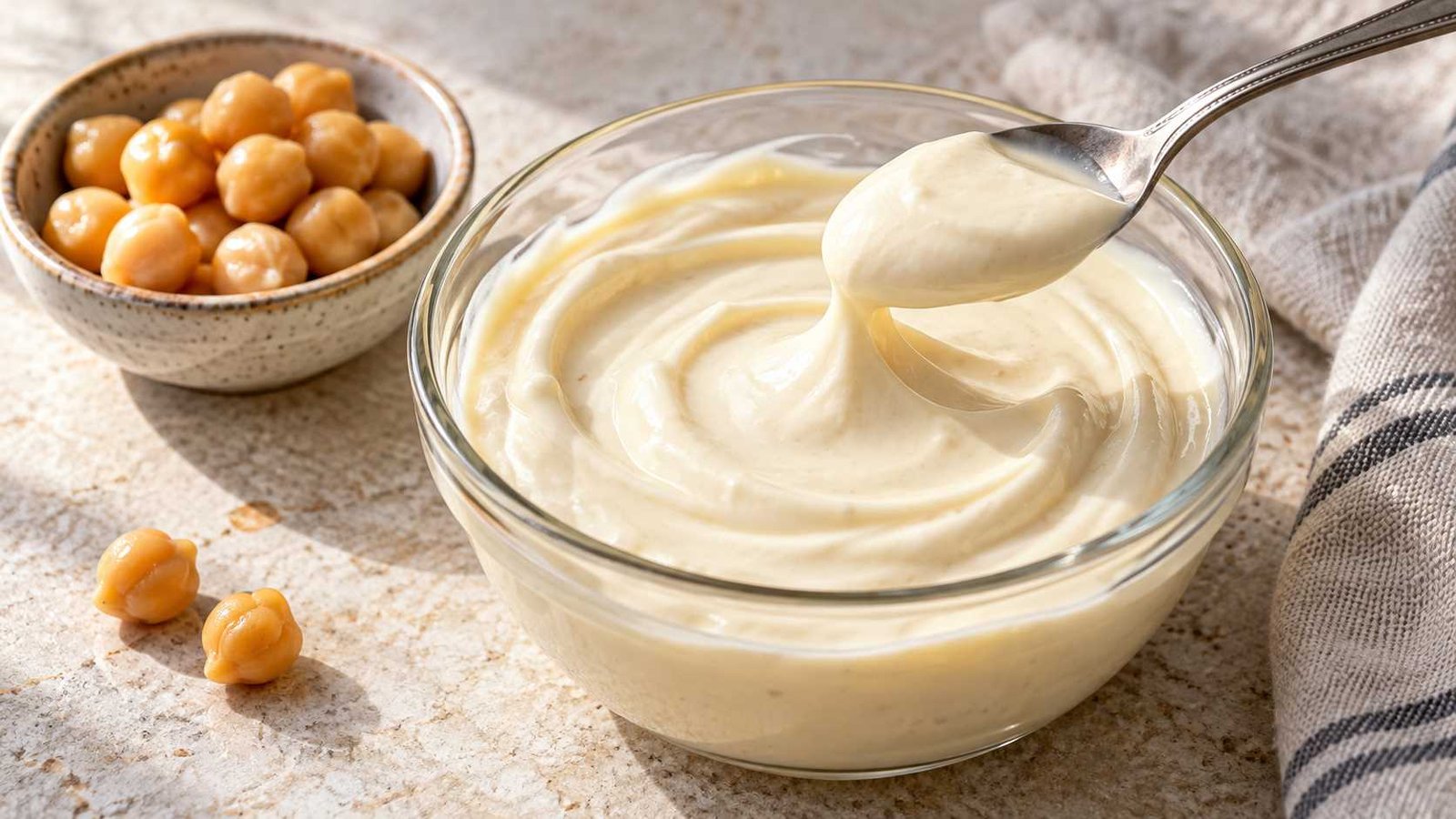
This lenten mayonnaise recipe uses aquafaba, the liquid from canned chickpeas, to emulsify oil without eggs or dairy. It makes a pale, creamy dressing for sandwiches and salads. The recipe is a plant-based home adaptation, not a statement about every religious fasting rule. A narrow blending jar and immersion blender make the process easier. Add the oil slowly enough for the mixture to thicken, then chill briefly before deciding whether it needs further adjustment.
What matters for lenten mayonnaise
Use aquafaba from a commercially canned chickpea product, preferably without strong seasonings. Mustard helps the emulsion begin, while lemon gives acidity for flavor; this recipe is not a validated shelf-stable preservation formula. Oil choice matters: a neutral oil avoids the bitterness some olive oils develop under vigorous blending.
Recipe at a glance
Yield: about 280 ml mayonnaise. Preparation: about 10 minutes. Cooking: about 0 minutes. Total elapsed time: about 40 minutes. Includes about 30 minutes for the resting, rising, cooling or chilling described below.
How to make lenten mayonnaise
Recipe card
Lenten Mayonnaise Recipe with Aquafaba
Equipment: Immersion blender; narrow blending jar; clean storage jar.
Ingredients
Main
Instructions
Set up jar
Use a clean tall jar only slightly wider than the immersion-blender head. Add aquafaba, lemon, mustard, salt and optional sugar.
Start emulsion
Blend 10 seconds. With the blender running and blades submerged, drizzle oil in a thin stream. After about half the oil, the mixture should begin thickening.
Finish gradually
Continue adding oil slowly while moving the blender slightly up and down to incorporate it. Stop when thick and creamy; do not keep blending needlessly.
Chill and taste
Cover and refrigerate 30 minutes. Taste and adjust lemon or salt in small amounts. Keep chilled until serving.
How to tell when it is ready
Creamy emulsion holds soft peaks with no separate oil pool.
Tips
- Use a narrow jar.
- Start with unseasoned aquafaba.
- Pour oil slowly.
- Chill before judging final thickness.
Troubleshooting
- Runny mixture: blend a fresh tablespoon of aquafaba and slowly add the failed mixture.
- Bitter flavor: choose neutral oil.
- Too salty: use lower-salt chickpea liquid next time.
Substitutions
- White-wine vinegar can replace lemon for a different flavor.
- Use sunflower or canola oil rather than strong olive oil.
Variations
- Stir in 1 tsp smoked paprika after emulsifying.
Serving suggestions
- Spread in sandwiches.
- Use in potato salad.
- Serve with roasted vegetables.
- Mix a small amount with herbs for a dip.
Make ahead
Make a day ahead and keep refrigerated. Use a clean spoon each time.
Storage
Refrigerate in a clean covered jar and use within 3 days. Do not keep at room temperature or freeze; the emulsion may split.
Food safety
Keep perishable ingredients at 4°C/40°F or below. Refrigerate perishable leftovers within 2 hours, or within 1 hour above 32°C/90°F. Use clean equipment and separate raw animal ingredients from ready-to-eat food.
Frequently asked questions
Does it taste of chickpeas?
A mild aquafaba usually contributes little flavor once emulsified; strongly seasoned canned liquid is less suitable.
Is it shelf-stable like a shop jar?
No. Homemade acidity and hygiene have not been validated for ambient storage.
More recipes to try


Spotted a detail that needs correcting? Contact the FeastDelights editors.