Adyghe Seasoned Salt with Garlic and Herbs
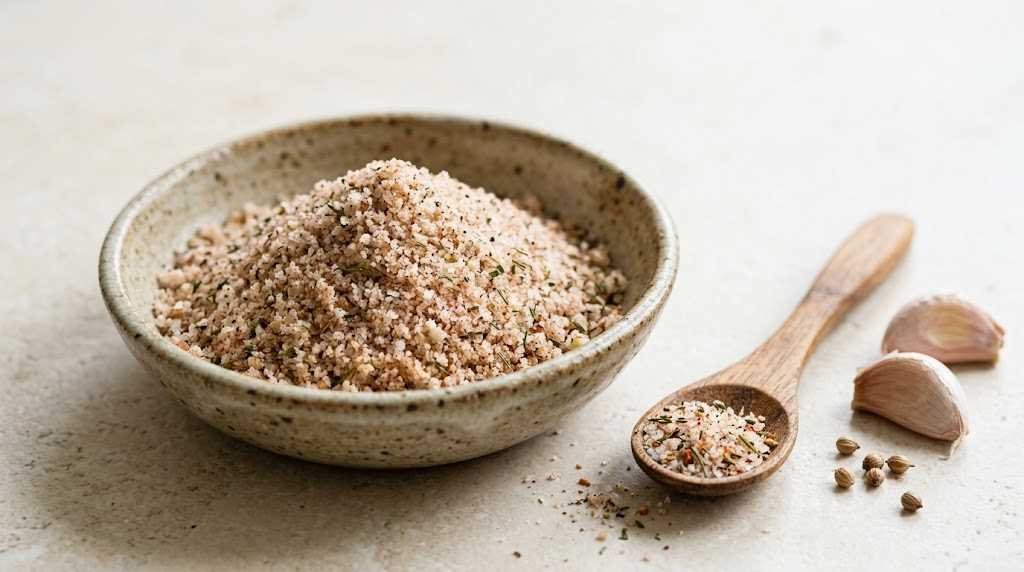
This Adyghe seasoned salt recipe turns a few spoonfuls of salt into a fragrant seasoning for potatoes, eggs, vegetables and soups. Fresh garlic is rubbed into the crystals, then mixed with coriander, dried herbs and a little paprika. Unlike ordinary garlic powder mixed with salt, the finished blend is slightly damp and intensely aromatic. Adyghe salt is associated with the Adyghe cooking traditions of the North Caucasus, and household spice mixtures vary. This version makes a small refrigerated batch rather than promising that fresh garlic will keep indefinitely in a cupboard. You need about 10 minutes and a mortar or mixing bowl. Start with a pinch when cooking, because this remains a salt-based seasoning, not a low-sodium alternative.
How to use this seasoned salt
Treat the blend as a replacement for part of the salt in a dish. If a soup already contains salted stock or pickles, taste it before adding any. Add a small pinch, stir thoroughly and let the garlic flavor spread before deciding whether more is needed.
A mortar distributes the garlic most evenly, but a fork can press it into the salt in a shallow bowl. The mixture should resemble damp sand, with no large garlic clumps. Prepare only the amount you can use promptly. Fresh garlic contributes moisture, so a salt coating is not evidence that a homemade mixture is shelf-stable. A dry version made with commercial garlic powder is a different blend and is described as a variation below.
Recipe at a glance
Yield: 1 small batch, about 65 g. Active preparation: about 10 minutes. Cooking: about 0 minutes. Total elapsed time: about 10 minutes.
How to make adyghe seasoned salt with garlic and herbs
Recipe card
Adyghe Seasoned Salt with Garlic and Herbs
Equipment: Kitchen scale; garlic press or fine grater; mortar and pestle or small bowl and fork; clean small lidded container
Ingredients
Blend
Instructions
Prepare the container
Wash and thoroughly dry a small lidded container and all utensils. Peel the garlic, remove any damaged areas, and grate it finely. Do not add oil or water.
Rub garlic into salt
Put the salt and garlic in a mortar or shallow bowl. Pound or press with a fork for 2–3 minutes, scraping down the sides, until no large garlic pieces remain.
Blend the spices
Add coriander, dill, parsley, marjoram, paprika, black pepper and optional cayenne. Rub together for another minute until the herbs and spices are evenly distributed.
Check and store
Break up any damp clumps with the fork. Transfer immediately to the clean container, label the preparation date and refrigerate at 4°C (40°F) or below.
Season a cooked sample
Test a small pinch on a piece of cooked potato or vegetable rather than tasting a spoonful of salt. Use sparingly in place of ordinary salt and return the jar promptly to the refrigerator.
How to tell when it is ready
The blend looks like evenly colored damp sand, with finely distributed herbs and no obvious lumps of raw garlic. A pinch should season food without overwhelming it.
Tips
- Weigh the salt because tablespoon weights differ substantially between brands.
- Grate garlic finely so one bite does not receive a strong raw chunk.
- Crush coarse dried leaves between your fingers before adding them.
- Use a clean dry spoon every time you take seasoning from the container.
- Add this blend late in cooking when you want a clearer garlic aroma.
Troubleshooting
- Large damp clumps: mash the garlic more finely and rub it through the whole mixture.
- Too salty in a dish: add more unsalted food or liquid; adding more garlic does not remove sodium.
- Weak aroma: replace stale dried herbs and spices rather than increasing the salt.
Substitutions
- Use dried thyme in place of marjoram for a slightly woodier flavor.
- Omit cayenne if you want aroma without heat.
- Fine table salt works by the same 50 g weight; measure by weight rather than the tablespoon estimate.
Variations
- For a dry pantry-style adaptation, replace the fresh garlic with 1 teaspoon commercially dried garlic powder and keep every utensil dry. This is not the same texture as the fresh-garlic version.
- Add 1/4 teaspoon ground cumin for a warmer spice profile.
- Replace sweet paprika with smoked paprika for use on roasted vegetables; the smoky flavor changes the blend.
Serving suggestions
- Toss a small pinch through hot roasted potatoes.
- Use sparingly on grilled or pan-fried vegetables.
- Season scrambled eggs near the end of cooking.
- Stir a pinch into an unsalted bean soup.
- Sprinkle lightly over cucumber and tomato slices just before serving.
Make ahead
Mix the dry spices ahead in a separate dry container. Rub in the fresh garlic on the day you need the seasoning. Prepare a half batch if you use seasoned salt infrequently.
Storage
For this fresh-garlic version, refrigerate immediately and make only enough to use within 3 days; this is a conservative small-batch practice, not a validated preservation process. Freeze any portion you will not use promptly. Do not keep the damp mixture at room temperature or add oil for storage. The dry-powder variation can be kept in a tightly closed dry spice jar; make small batches for best aroma.
Food safety
A high salt content does not establish shelf stability without a validated process. Keep the fresh-garlic mixture chilled, and do not cover it with oil. This seasoning contains substantial sodium and should be used as salt, even though it also contains herbs.
Frequently asked questions
Is Adyghe salt just garlic salt?
Garlic is important, but coriander and dried herbs give this blend a broader aroma than ordinary garlic salt. Specific herb and spice combinations vary.
Can I double this batch?
The ingredients scale directly, but a larger fresh-garlic batch creates a storage problem if you will not use it promptly. Prefer the small batch or freeze separate portions.
More recipes to try



Spotted a detail that needs correcting? Contact the FeastDelights editors.