Ajapsandali Recipe with Eggplant and Fresh Herbs
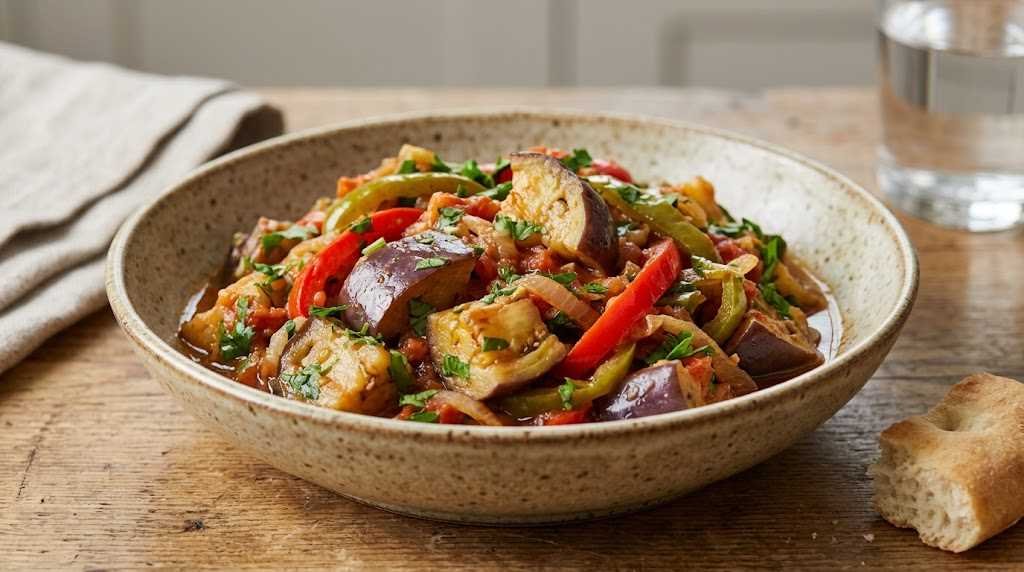
A Georgian vegetable stew with silky eggplant, peppers, tomatoes and generous fresh basil and cilantro. This ajapsandali recipe brings eggplant, peppers and tomatoes together in a soft, herb-filled Georgian vegetable stew. The eggplant should become silky, while the peppers and onions keep enough shape to give each spoonful variety. Fresh basil and cilantro are central to the flavor, so they go in near the end rather than simmering for the whole cooking time. This version leaves out potatoes and carrots for a lighter summer-style dish and uses a wide pan to cook off excess tomato juice. It takes about an hour from chopping to serving, with a short rest at the end. Serve it warm as a main dish with bread, or offer smaller portions alongside a fuller meal.
Cooking eggplant without a watery sauce
Cut the eggplant into chunks rather than very thin slices. The exposed surfaces can brown, but the centers will still have time to soften in the tomato sauce. Start with a measured amount of oil and let the pieces sit in contact with the pan before turning them. Eggplant can absorb oil quickly; adding more at every dry-looking moment makes the finished stew greasy.
Use ripe tomatoes with good flavor, or substitute drained canned tomatoes when fresh ones are watery. A wide pan makes evaporation easier. At the end, the sauce should coat the vegetables rather than collect as a large pool around them. Fold in the herbs gently so the vegetables do not turn to a uniform mash.
Recipe at a glance
Yield: 4 servings. Active preparation: about 20 minutes. Cooking: about 35 minutes. Total elapsed time: about 60 minutes. Total includes 5 minutes of resting or cooling.
How to make ajapsandali with eggplant and fresh herbs
Recipe card
Ajapsandali Recipe with Eggplant and Fresh Herbs
Equipment: Wide 28 cm (11 inch) deep skillet or sauté pan with lid; cutting board; sharp knife; broad spoon
Ingredients
Vegetables
Seasoning
Finish
Instructions
Brown the eggplant
Heat 3 tablespoons of the oil in the wide pan over medium-high heat. Add the eggplant and 1/2 teaspoon salt. Cook for 10 minutes, turning occasionally, until several sides are browned. Transfer to a bowl; the centers need not be fully tender yet.
10 minSoften onion and peppers
Add the remaining 1 tablespoon oil to the pan. Cook the onion and peppers over medium heat for 7–8 minutes, stirring, until the onion is translucent and the pepper edges begin to soften.
7 minAdd tomatoes and garlic
Add the garlic and stir for 30 seconds. Add the tomatoes and their juice, black pepper and remaining 1/2 teaspoon salt. Stir and scrape up the browned bits from the pan.
Simmer the vegetables
Return the eggplant to the pan. Cover and simmer over medium-low heat for 12 minutes, stirring once or twice. The eggplant should yield when pressed with the spoon. If it is still firm, continue cooking before reducing the sauce.
12 minReduce and finish
Uncover and cook for 4–5 minutes until the sauce coats the vegetables. Fold in cilantro, basil and parsley, turn off the heat and rest for 5 minutes. Taste and adjust the seasoning before serving.
5 min
How to tell when it is ready
Eggplant is soft all the way through, peppers have relaxed, and the tomato sauce lightly coats the vegetables. The fresh herbs should remain recognizable rather than looking long-boiled.
Tips
- Use a wide pan so the eggplant browns instead of steaming.
- Let the eggplant touch the hot pan between turns.
- Keep garlic out of the initial high-heat frying stage to prevent bitterness.
- Wait for tender eggplant before concentrating the tomato sauce.
- Chop herbs shortly before adding them to preserve their aroma.
- Rest briefly so the juices settle around the vegetables.
Troubleshooting
- Firm eggplant: cover and simmer longer; a browned outside does not mean the inside is cooked.
- Watery stew: remove the lid and reduce in a wide pan without crushing the vegetables.
- Bitter garlic: keep the garlic on medium heat for only a short stir before adding tomatoes.
Substitutions
- Use 500 g drained canned tomatoes in place of fresh tomatoes, adding their reserved juice only as needed.
- Neutral vegetable oil can replace sunflower oil in the same quantity.
- If cilantro is unavailable, increase parsley, but expect a different herb profile.
Variations
- Add a finely chopped fresh chili with the garlic for heat.
- Use a mixture of red and green peppers for sweeter and sharper notes.
- Add 1/4 teaspoon dried summer savory with the tomatoes when available.
Serving suggestions
- Serve warm with crusty bread to pick up the tomato juices.
- Spoon beside grilled fish or chicken as a vegetable side.
- Add cooked white beans at the table for a more substantial plant-based meal.
- Offer with plain rice or bulgur.
- Serve a small bowl with cheese and bread for a relaxed lunch.
Make ahead
Cook the vegetables a day ahead and refrigerate promptly. Reheat thoroughly, then add a little freshly chopped basil and cilantro to restore the aroma. Cutting the eggplant well ahead is less useful because its exposed surfaces discolor.
Storage
Refrigerate promptly in a shallow covered container and use within 3 days. Reheat gently in a saucepan, stirring carefully, until the center reaches 74°C (165°F). Freeze for up to 2 months for best quality; the eggplant and peppers will be softer after thawing.
Food safety
Wash vegetables and herbs before preparation. Chill cooked stew within 2 hours, or 1 hour above 32°C (90°F). Serving at room temperature is a short serving choice, not a reason to leave the pan out all afternoon.
Frequently asked questions
Does ajapsandali have to contain potatoes?
No. Regional and household versions differ. This recipe focuses on eggplant, peppers and tomatoes; adding raw potatoes would change the cooking order and time.
Should I peel the eggplant?
Leave the skin on if it is thin and tender. With a tough-skinned eggplant, peel alternate strips so some skin remains to help the pieces hold their shape.
More recipes to try





Spotted a detail that needs correcting? Contact the FeastDelights editors.