Vegan Jambalaya with Brown Rice and Beans
This Louisiana-inspired vegan jambalaya cooks brown rice with tomatoes, eggplant, bell pepper, onion, black beans and smoky paprika in a single pot. The rice absorbs the seasoned broth while the vegetables soften, producing a hearty, gently smoky meal without meat or seafood. Add the cooked beans near the end so they retain their shape. Allow about 75 minutes for four servings, with extra time if your brown rice cooks slowly. Serve with hot sauce or fresh spring onions if you like.
This vegan jambalaya is a one-pot brown rice and black bean meal with tender eggplant, sweet bell pepper, tomatoes and smoky paprika. It makes four main-course portions. Plan on 20 minutes of preparation and around 55 minutes of cooking, allowing extra time for slower-cooking brown rice.
What makes this jambalaya-style rice different?
Instead of cooking plain rice and spooning a vegetable stew over it, this adaptation simmers the grains in the seasoned tomato broth. That is the technique that gives the dish its character. It is inspired by Louisiana jambalaya, not a claim to represent every traditional version. Our chicken and andouille jambalaya follows a different, meat-based approach, while this recipe relies on beans and vegetables.
Choosing the ingredients
Regular brown rice retains its bran and takes longer to soften than white rice. Use a variety with a package cooking time close to the suggested range; instant brown rice is not a direct replacement. Rinsing removes loose starch. Drain well so the measured liquid remains meaningful. Tomato brands differ in thickness and acidity, so keep a little extra hot broth nearby.
Black beans are already cooked when canned. Drain and rinse them to remove excess packing liquid, then add them towards the end. Eggplant (aubergine) absorbs oil and softens as it cooks; small even dice make it easier to stir without crushing the rice. Onion and bell pepper supply sweetness. Choose smoked paprika for its distinctive aroma and a vegetable broth that is suitable for a vegan diet. If the broth is salty, hold back some salt until the end.
How to cook vegan jambalaya
A heavy pot with a close-fitting lid reduces evaporation and helps prevent the tomato mixture from catching. Use medium heat for the vegetables and a low, steady simmer for the rice. Keep the beans aside until the grains are nearly tender.
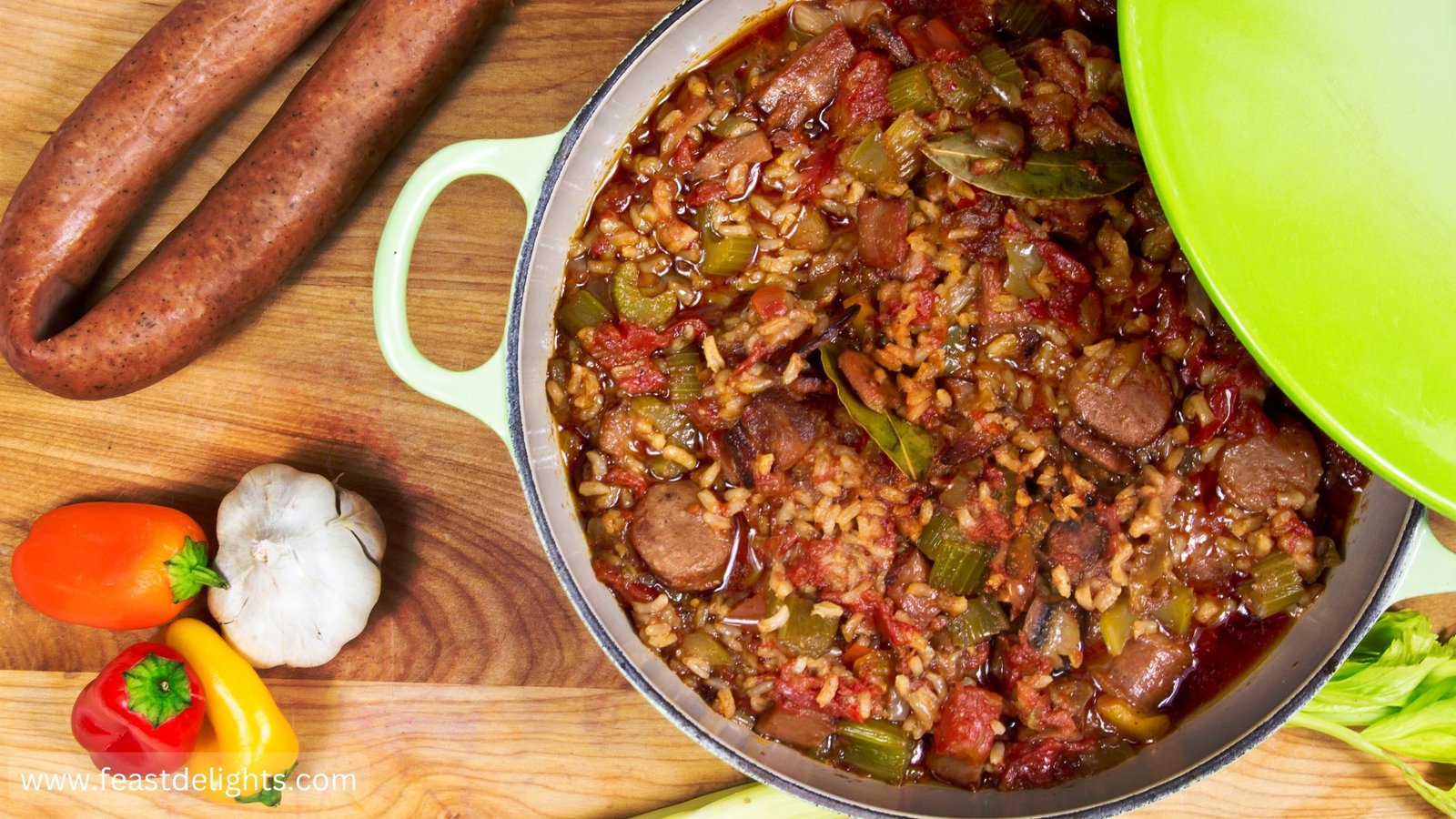
Recipe card
Vegan Jambalaya with Brown Rice and Beans
Brown rice cooking time varies by variety; allow extra time and hot broth if necessary. The beans cook during the final 10 minutes of simmering, not in addition.
Equipment: Heavy 3–4 litre pot with tight lid, knife, chopping board, sieve, measuring jug and wooden spoon
Ingredients
Rice and broth
Beans
Rice and broth
Vegetables and oil
Rice and broth
Seasoning
Instructions
Soften the vegetables
Heat oil in a heavy 3–4 litre pot over medium heat. Add onion, bell pepper and diced eggplant. Stir frequently for 7–9 minutes until the onion turns translucent and the eggplant starts to soften.
9 minBloom the spices
Stir in smoked paprika, thyme and bay leaf for about 30 seconds until fragrant. Do not let the paprika scorch.
1 minSimmer the brown rice
Add rinsed rice, tomatoes with their juices and broth. Bring to a boil, then reduce to a gentle simmer and cover tightly. Cook for about 35–45 minutes or according to the rice package, checking occasionally to prevent sticking.
40 minWarm the black beans
When the rice is nearly tender, stir in the drained black beans and continue simmering for the final 10 minutes of rice cooking. If the rice is still hard and the pan is dry, add hot broth in small splashes, cover and continue until tender.
10 minCheck the rice and season
Remove bay leaf and thyme stems. Taste a grain: it should be tender with a little chew but no hard centre. If excess liquid remains, simmer uncovered briefly. Season with salt and pepper and serve hot.
5 min
How to judge doneness and fix common problems
Do not judge the rice by the clock alone. Taste a grain from the middle of the pan. Brown rice should retain a slight chew but should not crunch or have a hard, pale centre. When the liquid disappears before the grains soften, add a small splash of hot broth, replace the lid and check again after several minutes. Avoid adding a large quantity at once. If the rice is tender but the pot looks soupy, remove the lid and let excess liquid evaporate gently.
If the bottom begins to catch, lower the heat immediately. Do not scrape burnt material into the rest of the dish. Frequent vigorous stirring can break tender grains and beans, so stir gently only as needed. Remove the woody thyme stems and bay leaf before serving.
Substitutions and serving ideas
Cooked kidney beans or pinto beans can replace black beans in the same drained quantity. Courgette (zucchini) is an alternative to eggplant but releases more water and softens faster; add it later in the vegetable-cooking stage. For extra heat use a little cayenne or serve hot sauce at the table. For another plant-based Louisiana-inspired meal, try vegan red beans and rice. A crisp salad such as our vegan Caesar salad makes a fresh accompaniment.
Make ahead and store cooked rice safely
Chop the vegetables in advance and keep them chilled. Measure spices separately and drain the beans just before cooking. The cooked meal is best freshly made. Divide leftover jambalaya into shallow portions and chill quickly, ideally within one hour. Refrigerate at 4°C (40°F) or below and eat within 24 hours, or freeze promptly in meal-sized portions. Thaw in the fridge and reheat once, stirring until steaming hot throughout (74°C/165°F). Discard rice left out too long; reheating does not reliably remove toxins. The UK Food Standards Agency guidance recommends a shorter storage period for rice dishes than for most leftovers. Add a splash of water when reheating so the grains do not dry out.
Check the vegetable broth and canned ingredients for allergens such as celery, wheat or soy, depending on the brand. Do not assume that a vegan label also means allergen-free.
Frequently asked questions
Is this traditional jambalaya?
It is a Louisiana-inspired plant-based adaptation, using brown rice, eggplant and black beans instead of meat or seafood.
Can I use white rice?
Yes, but regular white rice cooks faster and generally needs less liquid. Adjust the broth and cooking time according to the package rather than following the brown-rice timing.
Why is my brown rice still hard?
Some varieties take longer, and acidic tomatoes can slow softening. Add a little hot broth, cover and continue simmering until tender.
Can I use dried black beans?
Yes, but cook them fully separately first. Use the drained cooked beans near the end as you would canned beans.
How spicy is this dish?
Smoked paprika gives smoke rather than necessarily heat. Add cayenne or hot sauce to individual portions for a spicier meal.
Can I use a rice cooker?
The stovetop method is designed to soften vegetables and control liquid. Follow your appliance instructions if adapting it; the timing has not been tested in a rice cooker.
More recipes to try





Spotted a detail that needs correcting? Contact the FeastDelights editors.