Vegan Bibimbap with Tofu and Gochujang Sauce
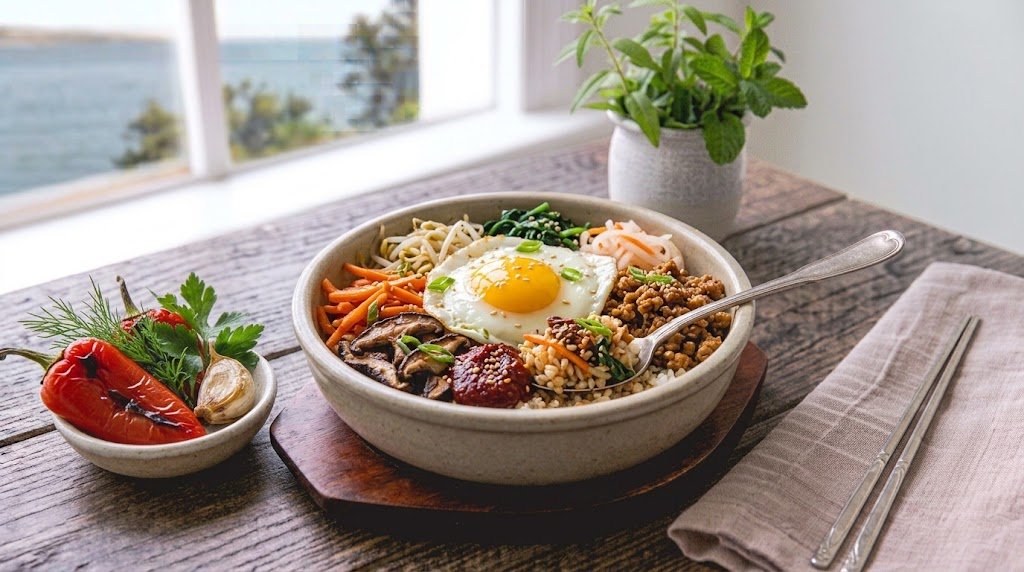
This vegan bibimbap combines warm short-grain rice with golden soy-seasoned tofu, sautéed mushrooms, spinach, carrot and crisp cucumber. A spicy, tangy sauce made with Korean gochujang, rice vinegar and sesame oil brings the separate toppings together when you mix the bowl at the table. Cooking the vegetables separately helps preserve their colour and texture. This Korean-inspired meat-free recipe makes four bowls in about 50 minutes. Start with a little sauce, then adjust the heat and seasoning to taste.
Bibimbap is a Korean mixed rice dish. This vegan adaptation uses tofu instead of meat or egg, with individually prepared vegetables and a gochujang sauce. The toppings look distinct when served but are mixed into the rice before eating. Allow 25 minutes for preparation and 25 minutes for cooking, with the rice and toppings cooking in parallel.
Ingredients and substitutions that work
Use 300 g (10.6 oz) dry short-grain rice, which has the slight stickiness that helps hold the bowl together. Rinse several times and follow the packet water ratio. Use 400 g (14 oz) firm tofu, pressed and cut into even cubes. Firm tofu withstands turning better than silken tofu. Pat the surface dry so it browns instead of steaming.
Shiitake mushrooms have a deeper savoury flavour, but ordinary button mushrooms work too. Slice 200 g (7 oz) mushrooms evenly. Julienne the carrot into thin strips and wash the 150 g (5.3 oz) spinach well. Cucumber stays raw for crunch. Keep two tablespoons of neutral oil divided between tofu and vegetables, and use the sesame oil in the dressing rather than for high-heat frying.
Gochujang is a Korean fermented chilli paste, usually containing grains, chilli and salt. It is not the same as plain hot sauce: it contributes sweetness, thickness and savoury depth as well as heat. Brands vary, so begin with the measured tablespoon and serve extra separately. Check the ingredient list for wheat or animal-derived flavourings if necessary. Rice vinegar loosens the paste and balances its richness.
Equipment and order of cooking
Use a rice cooker or lidded saucepan, a wide skillet, knife, chopping board, tongs and a small bowl. Start the rice first. Prepare the vegetables while it cooks, then brown tofu and cook the vegetable toppings separately in the same skillet. Keep cooked toppings on clean plates and assemble promptly.
Recipe card
Vegan Bibimbap with Tofu and Gochujang Sauce
Cook rice and prepare toppings in parallel; separate vegetable batches may add time.
Equipment: Rice cooker or lidded saucepan, wide skillet, knife, cutting board, spatula, tongs, small mixing bowl
Ingredients
Rice
Tofu and vegetables
Sauce
To finish
Instructions
Cook the short-grain rice
Rinse rice and cook using the packet water ratio. Rest briefly and fluff gently. Keep hot until serving, or chill promptly in shallow portions if preparing ahead.
Brown and season the tofu
Pat pressed tofu cubes dry. Heat 1 tablespoon neutral oil over medium-high heat and fry tofu until golden on several sides. Add 1 tablespoon soy sauce, toss briefly and transfer to a plate.
Cook the vegetable toppings separately
Divide remaining 1 tablespoon neutral oil among the cooked toppings. Brown mushrooms until their liquid evaporates, wilt spinach until tender and drain excess liquid, then sauté carrot for about 2 minutes. Keep cucumber raw.
Mix the gochujang sauce
Mix gochujang with remaining 1 tablespoon soy sauce, rice vinegar, sesame oil and 1 tablespoon water until smooth. Adjust the amount served according to heat preference.
Assemble and mix the bowls
Divide warm rice among four bowls. Arrange tofu, mushrooms, spinach, carrot and cucumber separately on top. Spoon over sauce to taste, sprinkle sesame seeds and mix before eating.
Doneness and texture
The rice should be tender, with grains retaining their shape. Tofu should be golden on several sides and hot throughout. Let mushrooms release their liquid and brown before removing them. Spinach only needs to wilt; drain excess liquid so it does not soak the rice. Carrot should be just tender, while cucumber remains fresh. Spoon the sauce over the bowl and mix at the table.
Fix common problems
If tofu sticks, wait until a crust forms and use a thin spatula to turn it. If vegetables are watery, cook them in smaller batches and let moisture evaporate before transferring them. If the sauce is too thick, stir in water a teaspoon at a time. If it is too hot, use less per bowl rather than adding more soy sauce. Taste the components together before adding extra seasoning, since both soy sauce and gochujang contain salt.
Variations and allergens
Swap some spinach for sautéed courgette (zucchini), or add cooked bean sprouts as a separate topping. Cook sprouts thoroughly, especially when serving higher-risk diners. Use certified gluten-free tamari and gluten-free gochujang if needed. This recipe contains soy and sesame, and conventional soy sauce and many gochujang products contain wheat. Check kimchi for fish sauce or shrimp if serving it with a vegan bowl.
For a contrasting meat-and-egg version see Korean bibimbap with beef and fried egg. For other tofu meals try tofu rice bowls with mung beans or sticky tofu teriyaki.
Serving and preparing ahead
Divide warm rice among four bowls, arrange the toppings in separate sections and offer sauce at the table. Vegan kimchi or sliced spring onions make useful additions. The sauce can be made a day ahead and refrigerated; prepare the cucumber shortly before serving. Do not leave cooked rice at room temperature while assembling other ingredients.
Storage and rice safety
For rice intended for later, cool rapidly in shallow portions, ideally within one hour, refrigerate at 4°C (40°F) or below and use within 24 hours. Reheat rice only once to 74°C (165°F) throughout. Refrigerate cooked tofu and vegetables within two hours (one hour above 32°C/90°F) and use within three days. Store cucumber and sauce separately. Freeze rice or cooked tofu separately if needed, but fresh cucumber and spinach are best unfrozen. See the UK Food Standards Agency guidance on rice leftovers and USDA leftover guidance.
Frequently asked questions
What does bibimbap mean?
It refers to mixed rice: the toppings and sauce are mixed into the rice before eating.
Can I use brown rice?
Yes, but it takes longer and has a firmer texture. Follow the packet directions.
Can I make this without gochujang?
You can use another chilli paste, but the distinctive fermented flavour will change. Adjust salt and sweetness to taste.
Can I cook all vegetables together?
Yes for convenience, but separate cooking gives better control of moisture, tenderness and colour.
Does bibimbap need a fried egg?
No. This vegan adaptation uses tofu instead of egg or meat.
Is gochujang gluten-free?
Not necessarily. Many brands contain wheat or barley. Choose certified gluten-free products if required.
More recipes to try






Spotted a detail that needs correcting? Contact the FeastDelights editors.