Korean Bibimbap with Beef, Vegetables and Fried Egg
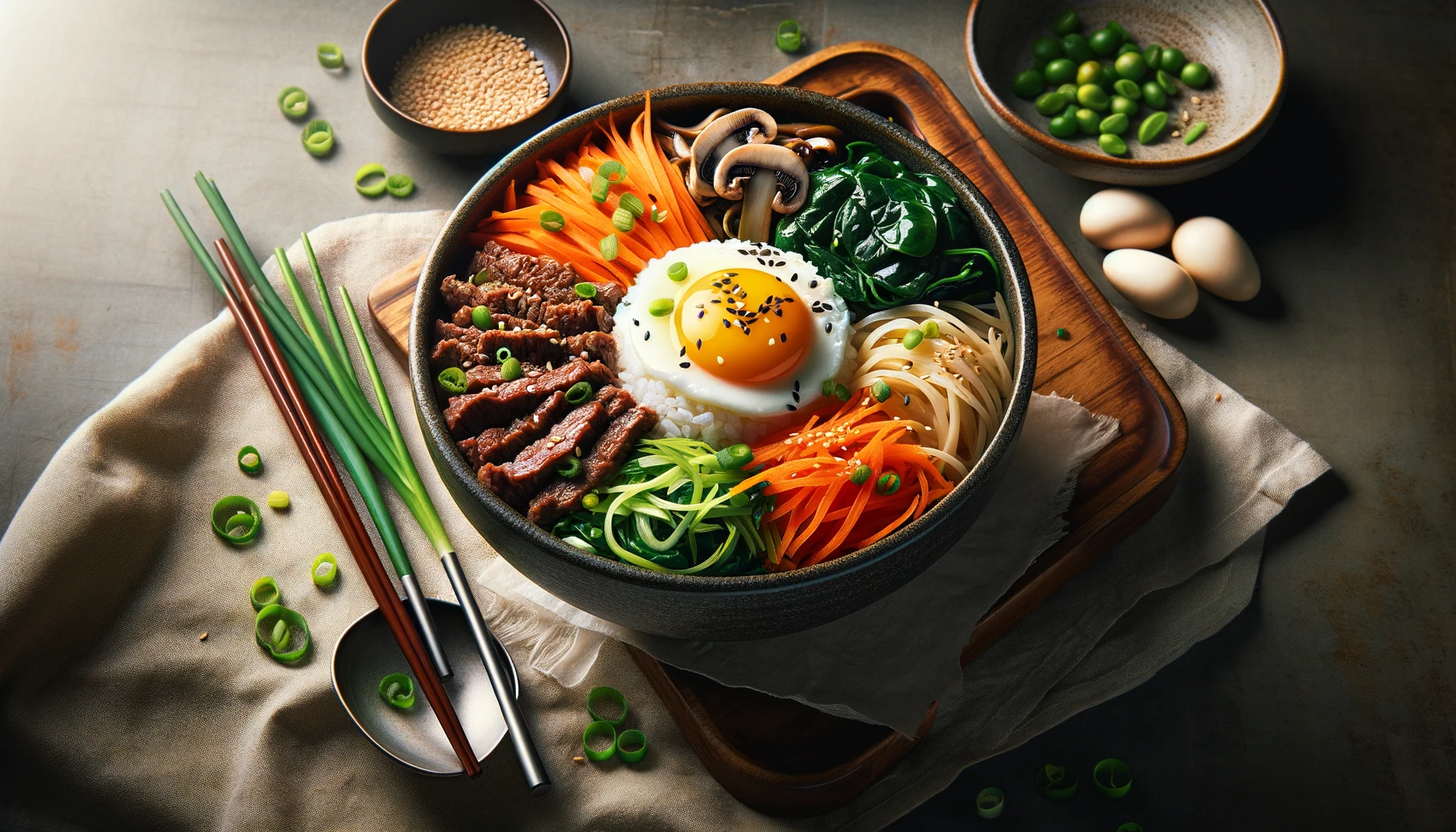
This Korean bibimbap brings together warm short-grain rice, seasoned ground beef, sautéed carrots, courgette, shiitake mushrooms and spinach, finished with a fried egg and sesame seeds. Gochujang adds a savoury, spicy note when the toppings are mixed through the rice. Cooking the vegetables separately helps each retain its own colour and texture. The recipe makes four bowls, with an estimated 50-minute preparation and cooking time. Serve the chilli paste separately so each diner can choose the heat level.
Korean bibimbap is a mixed rice bowl with vegetables, seasoned beef, fried egg and gochujang. This recipe makes four bowls with short-grain rice and four separately cooked vegetables. Allow about 50 minutes, cooking the rice while preparing the toppings. The finished bowl should have tender rice, lightly seasoned vegetables and a savoury, spicy finish.
Recipe card
Korean Bibimbap with Beef, Vegetables and Fried Egg
The cooking estimate assumes rice cooks while the vegetables and beef are prepared. Allow extra time if the toppings need multiple pan batches.
Equipment: Kitchen scale, sieve, rice cooker or lidded saucepan, knife, separate chopping boards, large skillet, clean egg pan, spatula and instant-read thermometer.
Ingredients
Rice
Beef
Vegetables
Cooking and seasoning
Finishing
Instructions
Cook short-grain rice
Rinse rice until water is mostly clear, drain and cook according to package directions. Keep covered and hot.
Sauté each vegetable separately
Heat some neutral oil in a skillet. Sauté carrot, zucchini and shiitake separately until just tender, transferring each to a plate. Wilt spinach, drain excess liquid and season vegetables lightly with part of the soy sauce.
Brown and safely cook beef
Heat remaining neutral oil. Brown ground beef, breaking it up, with remaining soy sauce and sesame oil. Verify beef reaches 71°C (160°F).
Fry the eggs
Fry eggs in a clean skillet until whites and yolks are firm. For a softer yolk, use pasteurised eggs; fully cooked eggs are the safer choice.
Assemble and mix at serving
Divide rice among four bowls, arrange vegetables and beef, add fried eggs and sesame seeds. Offer gochujang separately and mix everything together just before eating.
What makes bibimbap different from an ordinary rice bowl?
The name refers to mixing rice with its toppings. Many Korean households use a variety of available vegetables, seasoned individually before being combined with rice and chilli paste. This recipe is a home-style beef version served in ordinary bowls, rather than dolsot bibimbap, which uses a heated stone bowl and develops crisp rice on the bottom. For more about the traditional approach to seasoning individual toppings, see Korean Bapsang’s bibimbap recipe.
Choosing the rice, vegetables and seasoning
Measure 300 g (roughly 1½ US cups) uncooked short-grain rice; follow the package’s water ratio rather than using a fixed amount for every brand. The slightly sticky texture helps the mixed toppings stay together. Use 300 g (about 10.6 oz) ground beef. Wash and drain the spinach, remove tough shiitake stems, and cut carrot and zucchini (courgette) into similarly sized matchsticks. Drain any excess liquid from the vegetables after cooking so it does not make the rice watery.
Gochujang is a Korean fermented chilli paste, not an ordinary hot sauce. It brings sweetness, savouriness and heat. Start with a small amount and mix in more to taste. Soy sauce is divided among vegetables and beef, while sesame oil adds fragrance. Check the gochujang and soy sauce labels if you have dietary restrictions; both may contain wheat.
Cooking the toppings efficiently
Rinse the rice until the water is mostly clear, drain and cook according to its instructions. Keep it covered and hot while preparing the toppings. Heat a little of the measured neutral oil in a skillet over medium-high heat. Cook carrots until just tender, transfer to a plate, then repeat with zucchini and shiitake. Work in separate batches so the pan stays hot and the vegetables retain their own flavours. Wilt the spinach briefly; squeeze or drain excess moisture. Season lightly with a portion of the measured soy sauce, since the beef and gochujang contribute seasoning too.
Use remaining neutral oil to brown the ground beef. Break it into small pieces, add the remaining soy sauce and sesame oil, and cook until it reaches 71°C (160°F). Check with a thermometer rather than relying on colour. In a separate clean skillet, cook the four eggs until both whites and yolks are firm; use pasteurised eggs if choosing to serve a softer yolk, and prefer fully cooked eggs for people at increased risk of foodborne illness.
Assembling the bowls
Divide the cooked rice among four bowls. Arrange beef and vegetables in distinct sections, top each bowl with an egg and sprinkle sesame seeds. Offer the measured gochujang separately. Mix the toppings and rice just before eating, adding chilli paste gradually. If the paste is particularly thick, stir a little warm water into your portion to help distribute it.
Troubleshooting
Watery bowl: cook vegetables in separate batches and drain the spinach. Rice too sticky: rinse and drain well before cooking, and use the package’s water ratio. Beef is dry: use moderately lean mince and stop cooking once the correct temperature is reached. Too salty: reduce soy sauce on the individual toppings next time and use less gochujang at serving. Toppings cool too quickly: prepare the vegetables while rice cooks and assemble as soon as the eggs are ready.
Serving ideas and variations
Serve with Korean-style cucumber salad or refrigerator napa cabbage kimchi. For a separate meat-free recipe, try vegan bibimbap with tofu and gochujang. Button mushrooms can replace shiitake by weight, with a milder flavour. Substitute another suitable leafy green for spinach and adjust cooking time.
Make ahead, storage and allergens
Slice the vegetables ahead and refrigerate them covered. Prepare cooked toppings separately and chill promptly if not serving immediately. Cook rice fresh when possible; leftover cooked rice should be cooled rapidly and used within 24 hours, following Food Standards Agency rice guidance. Reheat once to 74°C (165°F). Contains egg, soy and sesame; soy sauce and gochujang may contain wheat. Keep raw beef utensils away from cooked vegetables. See FoodSafety.gov cooking guidance.
Frequently asked questions
Should I mix bibimbap before eating?
Yes. Mix the arranged toppings with the rice and gochujang at the table.
Can I use long-grain rice?
Yes as an adaptation, though it will be less sticky than short-grain rice.
What is gochujang?
It is a Korean fermented chilli paste with savoury, sweet and spicy flavours. Use it to taste.
Can I cook the vegetables together?
You can, but cooking separately gives better control over texture and moisture.
Can I use chicken instead of beef?
Yes, as a variation. Cook ground chicken to 74°C (165°F).
Do I need a stone bowl?
No. This version uses ordinary serving bowls; a hot stone bowl is used for dolsot bibimbap.
More recipes to try






Spotted a detail that needs correcting? Contact the FeastDelights editors.