Spanish-Style Chicken and Seafood Paella with Saffron
This Spanish-style mixed paella combines saffron-scented short-grain rice with browned chicken thighs, sliced chorizo, shrimp, mussels, tomato and red pepper. A broad pan helps the stock evaporate evenly and lets the rice develop a lightly toasted base without constant stirring. Add the shellfish late so they cook without becoming rubbery. The recipe serves four to six and takes about 75 minutes, including a short saffron infusion and final rest. Finish with parsley and fresh lemon wedges.
Chicken and seafood paella is a Spanish-style mixed rice dish with saffron, browned chicken thighs, sliced chorizo, shrimp and mussels. It makes four to six servings in a broad pan. Expect rice that is tender but not soupy, with a savoury tomato and paprika base, bright saffron aroma and a little sweetness from red pepper. Plan on about 75 minutes, including the final rest.
Mixed paella versus traditional Valencian paella
This is a home-style mixed paella, not a claim to reproduce traditional paella Valenciana. Chicken, seafood and chorizo make it a distinct combination. Good Food’s paella guide describes mixed paella as a version combining meat and seafood. The cooking principle here is to build flavour in a wide pan, spread the rice evenly and let it absorb stock without frequent stirring.
Which rice and stock should you use?
Choose short-grain rice intended for paella, such as Bomba. Bomba absorbs liquid well while retaining its shape. Other paella varieties may require a different amount of stock, so judge the grains as they cook rather than treating the ratio as universal. This recipe uses 300 g rice and 900 ml hot stock. Keep a little additional hot stock available if the rice is still firm when the liquid runs low. Long-grain rice and risotto rice can behave differently and are not guaranteed direct substitutes.
Steep saffron in the warm stock for about ten minutes while preparing the remaining ingredients. This disperses its colour and aroma throughout the rice. Choose low-sodium chicken stock if possible because chorizo contributes seasoning and the liquid concentrates during cooking. Sweet paprika gives a warm pepper flavour; do not let it burn in a dry pan.
Preparing chicken and shellfish safely
Cut boneless chicken thighs into even pieces, which cook more consistently than a mixture of very small and large cubes. Use Spanish cured chorizo that is suitable to eat as sold, or check the label and fully cook any raw sausage before adding it. Keep raw poultry away from the vegetables and cooked food.
Buy live mussels from a reliable seafood supplier, keep them cold and follow their storage instructions. Scrub and remove the beards shortly before cooking. Discard cracked shells and any open mussel that does not close when tapped. For shrimp, use peeled raw pieces, thawed in the refrigerator if frozen. Consult the FDA seafood safety guide for handling and doneness. Shellfish should never be judged safe solely by a fixed cooking time.
Choosing the pan
A 32–34 cm paella pan or broad skillet is a practical starting point for this quantity. The surface area matters because rice cooks uncovered and moisture escapes from the top. A narrow, deep pot can produce uneven cooking. Use a burner that heats as much of the pan as possible. On a smaller burner, rotate the pan carefully by its handles from time to time rather than stirring the rice. Avoid moving a heavy pan filled with hot liquid unless necessary.
How to cook chicken and seafood paella
Brown the chicken and chorizo first to build flavour, then set them aside while the vegetables cook. The sofrito is the concentrated mixture of onion, pepper, garlic and tomato that forms the flavour base. Cook it until thick enough that it does not add excessive watery liquid to the rice. Stir the dry rice through briefly, add the saffron stock and return the meat. Spread everything into an even layer and bring the liquid to a steady simmer.
Once the rice is distributed, avoid repeatedly stirring. Let the grains absorb stock while the meat finishes cooking. Add mussels and shrimp toward the end so they do not overcook. Check the thickest chicken pieces reach 74°C (165°F), the shrimp become pearly and opaque and the mussels open. If one ingredient finishes earlier than another, remove the cooked pieces or finish the undercooked ones separately rather than letting all the seafood boil for longer.
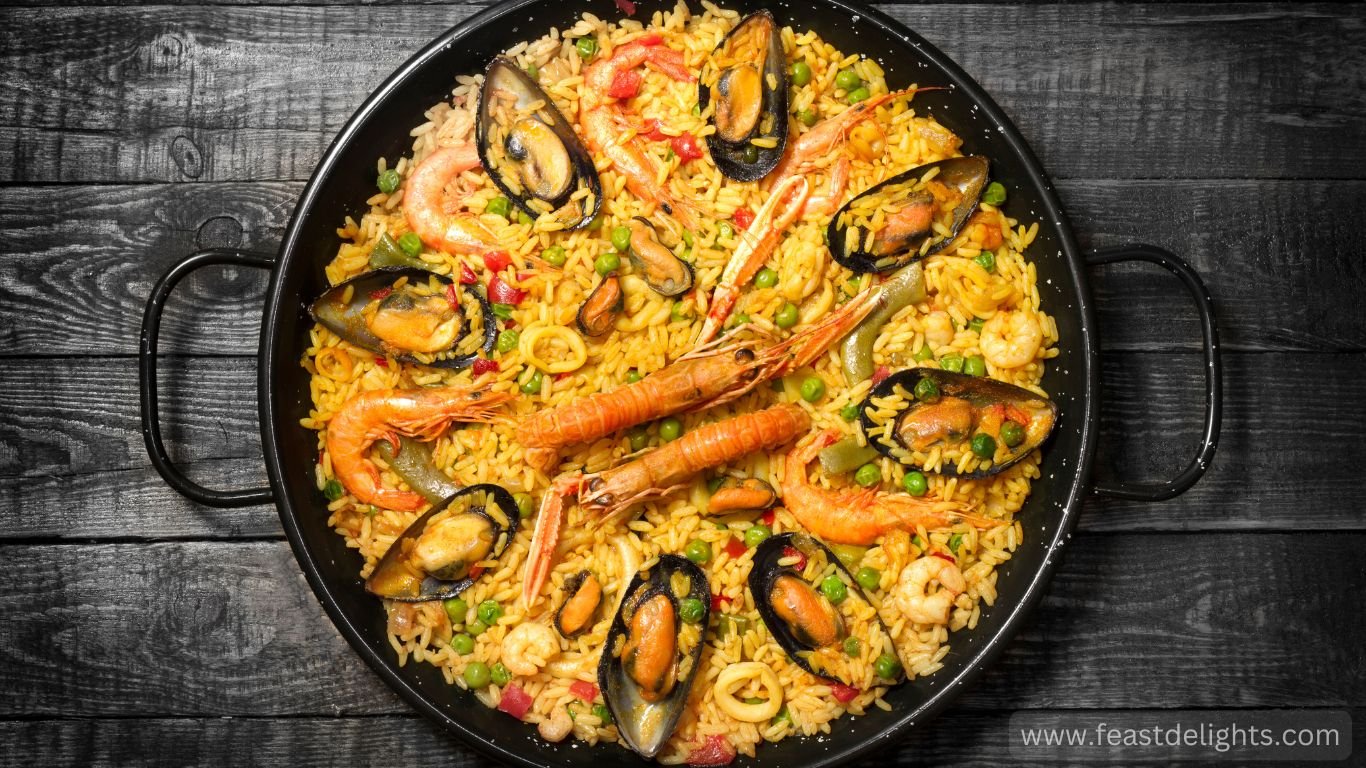
Recipe card
Spanish-Style Chicken and Seafood Paella with Saffron
The 10-minute saffron steep overlaps vegetable and meat preparation. Cooking includes browning, sofrito and roughly 19–21 minutes of rice and seafood simmering; add time if the rice or chicken needs longer.
Equipment: Wide 32–34 cm (13-inch) paella pan or heavy wide skillet, saucepan for stock, measuring jug, kitchen scale, separate boards for raw poultry and seafood, tongs, thermometer and oven gloves.
Ingredients
Rice
Meat
Seafood
Sofrito and stock
Finish
Instructions
Prepare saffron stock and seafood
Warm the stock, stir in saffron threads and let steep about 10 minutes while preparing other ingredients. Keep it hot. Scrub and debeard live mussels under cold running water just before cooking; discard cracked shells and any open mussels that do not close when tapped. Keep cleaned seafood and chicken chilled separately until needed.
Brown the chicken and chorizo
Heat the oil in a wide 32–34 cm paella pan over medium-high heat. Brown chicken pieces for 5–7 minutes, turning as needed. Add sliced chorizo for the last 2 minutes. Transfer chicken and chorizo to a separate plate, leaving the flavoured oil in the pan. The chicken will finish cooking with the rice.
Cook the sofrito
Reduce to medium heat. Cook onion and red pepper about 5 minutes until softened. Stir in garlic and paprika, then immediately add crushed tomatoes. Cook about 4 minutes until the mixture thickens and the pan is no longer watery. Avoid scorching the paprika.
Add rice, meat and stock
Stir the dry rice into the sofrito briefly to coat the grains. Pour in the hot saffron stock, return the chicken and chorizo with their juices, and spread the rice and meat evenly. Add salt conservatively, taking account of the stock and chorizo; taste for final seasoning only after the chicken and seafood are fully cooked. Bring to a steady simmer and stop stirring.
Simmer and add shellfish
Simmer uncovered for about 10 minutes, adjusting the heat so the rice cooks evenly. Nestle the mussels into the rice with room for their shells to open; cook 5 minutes. Add the shrimp and continue for 4–6 minutes or until the rice is tender, chicken reaches 74°C (165°F) in the thickest pieces, shrimp flesh is pearly and opaque, and the mussels have opened. Add a small amount of hot stock around the edge if the rice is still hard and the pan is dry. If the rice is ready but chicken or seafood is not, finish those pieces separately until safely cooked.
Check the base, rest and serve
Once rice is cooked and most liquid absorbed, listen for a gentle crackle; if desired, allow a brief increase in heat to toast the base, stopping immediately if it smells burnt. Do not scrape up burnt rice. Discard any mussels that did not open. Remove from heat and rest 5 minutes. Scatter parsley and serve with lemon wedges.
How to recognise a good socarrat
Socarrat is the lightly toasted layer that can develop beneath the rice. When the liquid has nearly gone and the grains are tender, the sound may change from bubbling to a quiet crackle. If you want more toasting, increase heat briefly and watch closely. Stop if the aroma becomes acrid. A good socarrat is a bonus, not a requirement for a safe or successful meal. Never sacrifice fully cooked rice or safely cooked poultry for a crust.
Troubleshooting
Rice remains firm: If most liquid has gone, pour a little hot stock around the edges and continue simmering. Avoid adding a large amount at once. Check several places because the burner may heat unevenly.
Rice is mushy: Excess stock, frequent stirring or prolonged cooking can make the grains soft. Start checking at the earlier end of the timing range and stop once the rice is tender.
Rubbery shrimp: Add the shrimp during the final few minutes and remove any that are already cooked if the rice needs more time.
Mussels do not open: Discard unopened shells after cooking. Do not force them open to serve.
Base burns: Remove the pan from the heat immediately. Serve the rice above the burnt layer without scraping it into the rest of the dish. Use gentler heat next time.
Serving ideas and related recipes
Rest the pan for five minutes and finish with lemon and parsley. Serve with a cauliflower, cucumber and tomato salad for freshness. For a meat-only alternative, try our chicken paella with peppers and peas. Our vegetarian saffron paella uses a vegetable-focused combination, while shrimp scampi linguine offers a quick seafood pasta instead of rice.
Make ahead, rice safety and allergens
Chop the vegetables and measure the rice and spices in advance, but keep raw seafood and poultry refrigerated and cook the finished dish shortly before serving. Rice needs particular care: bacterial spores can survive cooking and produce toxins if cooked rice is left warm for too long. Reheating cannot reliably undo improper storage. Following the UK Food Standards Agency rice guidance, cool leftover portions rapidly, refrigerate ideally within one hour and use within 24 hours. Reheat only once until steaming and 74°C (165°F) throughout. The dish contains crustaceans and molluscs; chorizo contains pork, and stock or sausage may contain other allergens. Check labels before serving.
Frequently asked questions
Is this traditional Valencian paella?
No. This is a Spanish-style mixed paella with chicken, chorizo and seafood. Traditional paella Valenciana uses a different ingredient combination.
What rice should I use?
Use Bomba or another short-grain rice labelled for paella. Different rice varieties absorb stock at different rates; adjust with a little hot stock if needed.
Can I cook paella without a paella pan?
Yes, use a broad heavy skillet that lets the rice spread in a shallow layer. A deep narrow saucepan changes the cooking and evaporation.
Why should I avoid stirring the rice?
Once the grains are spread evenly, repeated stirring releases starch and disturbs the base. Leave the rice undisturbed unless needed to correct a cooking problem.
What is socarrat?
It is the thin toasted layer of rice at the bottom of a paella pan. It should smell nutty and toasted rather than acrid or burnt.
Can I use frozen shrimp?
Yes, thaw them safely in the refrigerator and pat dry. Add near the end. Use live mussels as listed or a separately tested variation with a different seafood mix.
How do I know mussels are safe to use?
Purchase from a reputable source, discard cracked shells and open shells that do not close when tapped before cooking, and discard any that remain closed after cooking.
Can I make paella ahead?
Prepare the ingredients ahead but cook the rice and seafood close to serving. Refrigerate leftover rice promptly, ideally within an hour, and use within 24 hours.
Can I omit chorizo?
Yes; the rice will have a milder smoky flavour. The existing chicken-only paella recipe is another option if you prefer a simpler meat combination.
More recipes to try






Spotted a detail that needs correcting? Contact the FeastDelights editors.