Chicken and Shrimp Pad Thai with Tamarind Sauce
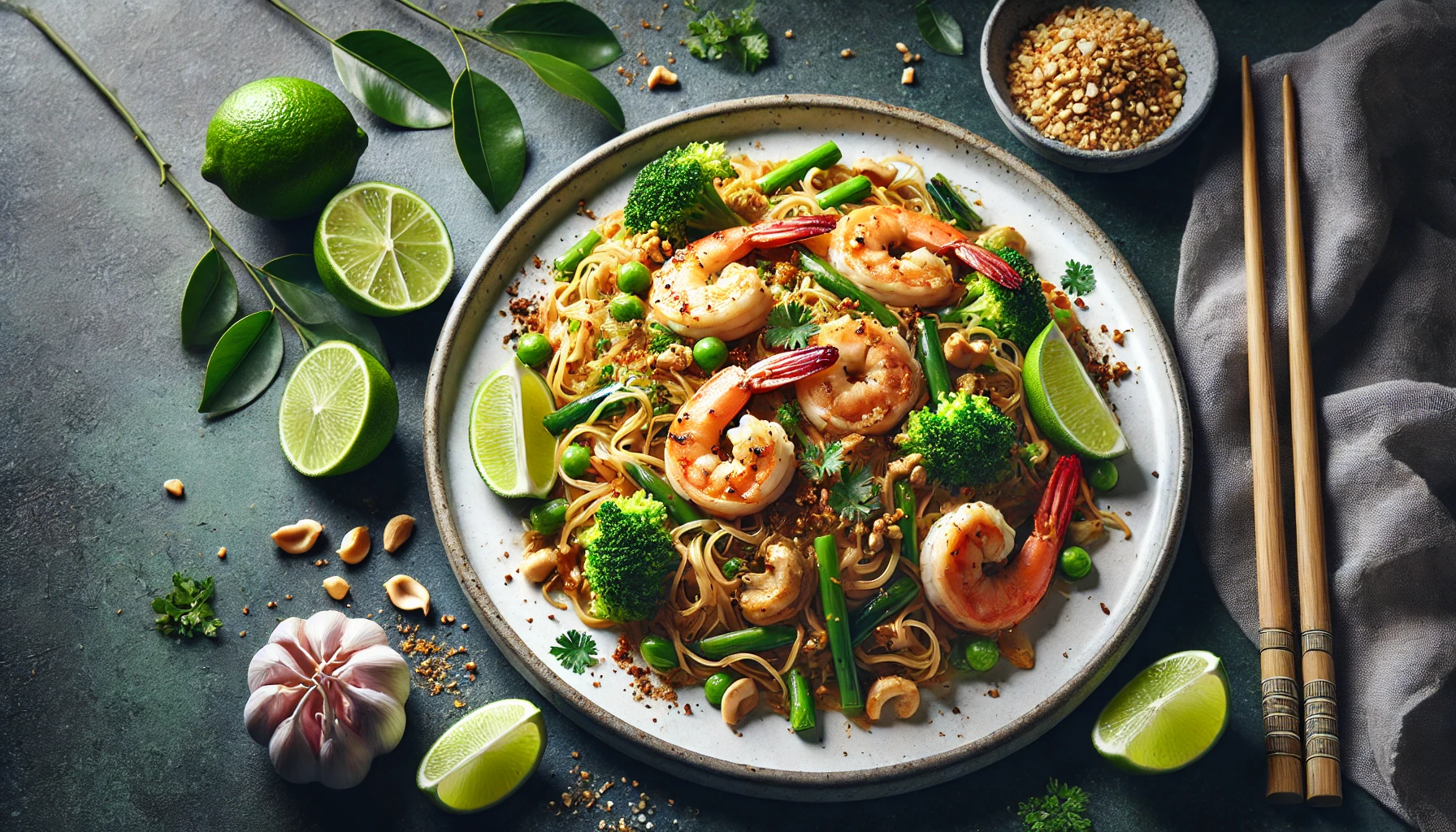
This chicken and shrimp pad Thai brings together springy rice noodles, tender chicken breast, prawns, egg and broccoli in a sweet, sour and savoury tamarind sauce. Chopped roasted peanuts and lime wedges finish the four portions with crunch and freshness. It is a Thai-inspired home version rather than a definitive traditional street-food recipe. Allow about 45 minutes if the noodles soak while you prepare the remaining ingredients. A hot, spacious wok and separately cooked proteins help keep the noodles from becoming soggy.
Chicken and shrimp pad Thai for home cooks
Pad Thai is a Thai rice-noodle stir-fry known for its combination of sweet, sour and savoury flavours. Tamarind supplies the sourness, fish sauce adds salt and savoury depth, and sugar rounds out the acidity. This recipe preserves the site’s chicken, shrimp, egg and broccoli combination. It is a home adaptation; broccoli and paprika are not presented as essential ingredients in every traditional version.
Choosing the noodles and sauce ingredients
Use flat rice noodles intended for stir-frying. Thin noodles hydrate faster than broad ones, so follow package directions. They should bend easily but still resist slightly when pressed between your fingers. If they are already soft enough to eat before they enter the wok, the final stir-fry may make them fragile. Drain thoroughly so the sauce does not become watery.
Tamarind paste can range from mild prepared pulp to a dense concentrate. The listed three tablespoons refer to a ready-to-use paste, not necessarily every concentrated product. Begin with less if the label indicates a strong concentrate. Combine with soy sauce, fish sauce and brown sugar, tasting the mixture before it touches raw ingredients. The aim is noticeable acidity balanced by sweetness and salt, not a thick syrup. Lime is added at the table for fresh acidity.
Prepare the proteins and vegetables
Slice chicken breast thinly and evenly. Use a separate board for raw chicken and wash hands and utensils afterwards. Keep raw shrimp chilled until cooking and remove the digestive tract if needed. Cut broccoli into small florets so they soften quickly. Beat the eggs and measure the sauce before switching on the wok; there is little time for chopping once stir-frying begins.
Recipe card
Chicken and Shrimp Pad Thai with Tamarind Sauce
Includes up to 30 minutes noodle soaking and concurrent preparation, followed by about 15 minutes stir-frying. Follow the noodle package if it requires a different soaking method; batches may extend timing.
Equipment: Large soaking bowl, colander, separate raw-protein cutting board, knife, small sauce bowl, wide wok or skillet, heatproof spatula, clean plates and instant-read thermometer
Ingredients
Noodles
Stir-fry
Tamarind sauce
To serve
Instructions
Soak the rice noodles
Soak the dried rice noodles according to their package directions, using warm water for about 20–30 minutes if appropriate. They should bend without breaking but remain slightly firm. Drain well; do not cook them until fully soft at this stage.
Whisk the tamarind sauce
Whisk tamarind paste, soy sauce, fish sauce, brown sugar and paprika or chilli powder in a small bowl until the sugar dissolves. Start with less tamarind if using a concentrated product. Taste before contact with raw protein and balance to preference.
Cook chicken and shrimp separately
Heat part of the neutral oil in a wok over medium-high to high heat. Cook thin chicken pieces in one layer until the thickest reaches 74°C (165°F); transfer to a clean plate. Cook raw shrimp separately until firm and pearly opaque, then transfer to another clean plate. Avoid crowding the wok.
Stir-fry broccoli, egg and noodles
Add remaining oil as needed. Stir-fry broccoli about 2 minutes, then move it aside and scramble the beaten eggs until set. Add drained noodles and sauce and toss gently for 2–3 minutes, adding a little water if the noodles are still firm. Return cooked chicken and shrimp and toss just until heated through and noodles are tender.
Finish with peanuts and lime
Divide among four bowls. Scatter chopped peanuts and serve immediately with lime wedges; keep peanuts separate if serving anyone with a peanut allergy.
How to cook the noodles and proteins safely
Cooking the chicken and shrimp separately makes it easier to reach the correct temperature without leaving shrimp in the pan for too long. Check that chicken reaches 74°C (165°F), as recommended by FoodSafety.gov. Shrimp should become firm and pearly opaque. Transfer cooked proteins to clean plates rather than dishes that held raw meat. Scramble the eggs until set before mixing with the noodles. Return the proteins only at the end and toss until everything is hot.
Troubleshooting the noodle texture
If noodles clump, check whether they were soaked too long or left sitting after draining. Loosen with a tablespoon of water rather than pouring in extra oil. If they remain firm, add a small splash of water and continue tossing briefly; do not add more salty sauce simply to supply moisture. When the pan fills with steam, reduce the batch size. A dry, hot wok and prepared ingredients give the sauce time to coat rather than pool beneath the noodles.
Variations and serving ideas
Adjust chilli according to preference and serve extra lime wedges so each diner can balance acidity. Replace some broccoli with thin bell pepper strips or add bean sprouts just before serving if desired. For a meat-free alternative, see vegetable pad Thai with tofu and egg or vegan tofu pad Thai; these use separate ingredient combinations. If planning a Thai-inspired meal with several dishes, Thai red coconut curry offers a different cooking method and flavour.
Make ahead, storage and allergens
Chop vegetables and mix the sauce ahead, refrigerating them separately. Do not soak noodles far in advance unless the package specifically permits it. Cook close to serving for the best texture. Refrigerate leftover portions promptly and reheat thoroughly according to USDA leftover guidance. The dish contains crustaceans, fish, egg, soy and peanuts. Ordinary soy sauce commonly contains wheat. Check all packaged sauces, and remember that omitting peanuts at the table does not remove cross-contact from shared equipment.
Frequently asked questions
What type of rice noodle should I use?
Choose flat dried rice noodles intended for stir-frying. Their width and thickness determine soaking and cooking time.
Why are my pad Thai noodles mushy?
They may have soaked too long or been cooked in excess liquid. Drain while still firm and finish in the wok.
Can I use concentrated tamarind?
Yes, but concentrated paste varies greatly in strength. Start with less and adjust the sauce before adding it to the wok.
Can I leave out the shrimp?
Yes. Use chicken alone and cook it to 74°C (165°F). The proportions and yield may change.
Is this recipe gluten-free?
Not automatically. Rice noodles may be suitable, but ordinary soy sauce often contains wheat. Verify every label, including fish sauce, and use certified gluten-free alternatives where needed.
Can I cook pad Thai in a frying pan?
Yes. Use a large skillet and cook in batches rather than crowding it. Return cooked ingredients near the end.
Can I make it vegetarian?
Choose the dedicated vegetable or vegan pad Thai recipe instead, because the chicken, shrimp and fish sauce need replacement.
More recipes to try






Spotted a detail that needs correcting? Contact the FeastDelights editors.