Passover Matzo Ball Soup with Prepared Chicken Broth
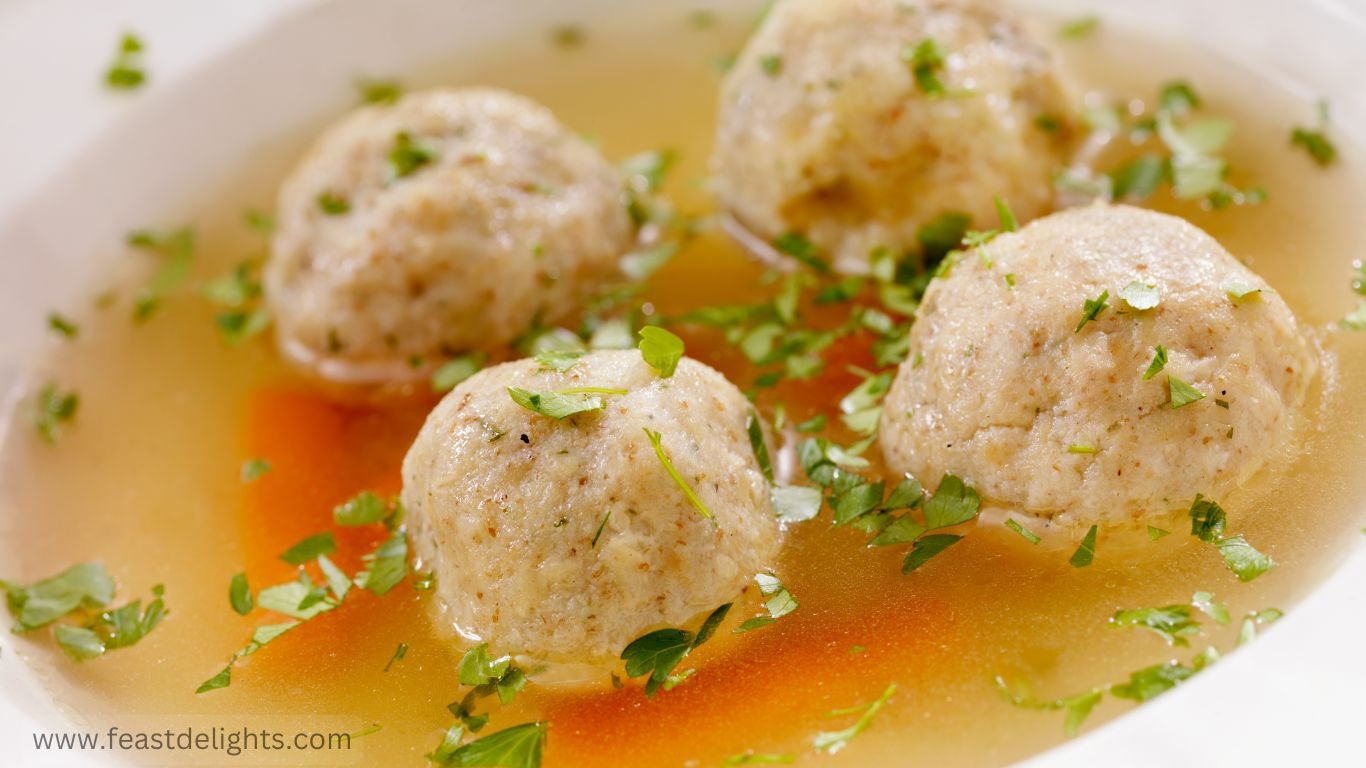
Passover matzo ball soup pairs a savoury chicken broth with tender dumplings made from matzo meal, eggs and oil or schmaltz. The mixture rests in the refrigerator before shaping, giving the meal time to absorb liquid and making the balls easier to handle. Simmer them gently under a lid until expanded and cooked through, then finish each bowl with fresh parsley or dill. This streamlined version uses prepared chicken broth and makes twelve matzo balls for six servings; check the ingredients for Passover suitability if observing the holiday.
Passover matzo ball soup is a clear, savoury chicken broth with soft dumplings made from ground matzo, eggs and fat. This version makes twelve balls, or two per serving for six people. It uses prepared broth, so the main tasks are mixing, chilling, shaping and gently simmering the dumplings. Allow up to 115 minutes including the chilling period.
Matzo balls are also known as kneidlach and are associated with Ashkenazi Jewish cooking, including Passover meals, although they are enjoyed year-round. See My Jewish Learning’s explanation of matzo balls for context.
Recipe card
Passover Matzo Ball Soup with Prepared Chicken Broth
Chill the mixture 30–60 minutes; the total allows 60 minutes. Simmer the shaped balls 30–40 minutes; heating time varies with the pot.
Equipment: Mixing bowl, whisk, spatula, measuring tools, large lidded soup pot, slotted spoon, ladle and instant-read thermometer
Ingredients
Matzo balls
Soup and garnish
Instructions
Combine the matzo ball mixture
Whisk eggs, neutral oil or melted and cooled schmaltz, 60 ml cold broth or water, salt and pepper. Stir in matzo meal just until evenly moistened. The mixture will thicken as it stands.
Chill until shapeable
Cover and refrigerate for 30–60 minutes until firm enough to portion. Keep refrigerated rather than resting the raw egg mixture at room temperature.
Heat the chicken broth
Bring 2 litres chicken broth to a boil in a wide lidded soup pot, then reduce to a gentle simmer. Leave room for the matzo balls to expand.
Shape twelve dumplings
Wet your hands with cold water and divide the mixture into 12 roughly equal portions. Roll each lightly into a ball about the size of a walnut; avoid squeezing the mixture tightly.
Simmer gently until cooked through
Lower the balls into the simmering broth one at a time. Cover and maintain a gentle simmer for 30–40 minutes without vigorous boiling. Cut one open near the end: it should be evenly tender, with no dry meal or raw egg mixture in the centre. Verify at least 71°C (160°F) in the centre because the dumplings contain egg. Continue simmering if needed.
Serve with fresh herbs
Divide the cooked matzo balls and hot broth among six bowls, about two balls per serving. Sprinkle chopped parsley or dill over each bowl and serve.
Ingredients and Passover suitability
Matzo meal is ground matzo, not raw flour. Its texture varies with the grind, which affects how quickly the mixture absorbs the broth. Use the specified weight rather than adding extra meal immediately if the freshly mixed dough seems loose. Eggs bind the mixture, while neutral oil or schmaltz keeps it tender. Schmaltz is rendered chicken fat; if using it, melt gently and allow it to cool before adding to the eggs.
Prepared chicken broth saves time and gives the dumplings flavour as they simmer. Choose a broth you enjoy drinking on its own, preferably not overly salty because the liquid may reduce during cooking. Parsley or dill provides a fresh finish.
If you are cooking for Passover observance, verify the suitability of the matzo meal, broth, oil and other processed ingredients, and follow your household’s kitchen practices. Ordinary kosher certification alone does not necessarily establish Passover suitability. Some households observe gebrokts and avoid matzo mixed with liquid during the holiday. The Orthodox Union’s Passover guidance explains these distinctions.
Resting and shaping the dumplings
Mix the wet ingredients before stirring in the matzo meal. At first the mixture may appear soft; refrigeration allows the meal to hydrate and the mixture to firm. Cover the bowl and chill for at least 30 minutes, up to an hour. If the mixture is still loose, give it the full chilling time before deciding whether adjustments are needed.
Use damp hands and divide the mixture into twelve equal portions. Roll lightly into walnut-sized balls. A tight squeeze can produce a more compact dumpling; avoid pressing out every pocket of air. Keep the portions similar in size so they cook at the same rate.
Simmer without breaking the balls
Bring the broth to a boil, then lower the heat before adding the matzo balls. A wide pot gives the dumplings space to expand. Add them individually and maintain a gentle simmer under a lid. A rolling boil can damage the surface, while too little heat slows cooking. Avoid lifting the lid repeatedly during the first part of the simmer.
After 30–40 minutes, remove one ball and cut it open. The centre should be tender with no dry meal or uncooked egg mixture. Confirm at least 71°C (160°F) in the centre, consistent with FoodSafety.gov’s guidance for egg dishes. Larger or especially dense balls may need longer. The prepared broth is the cooking liquid in this version; for a clearer soup you can cook the balls separately as a variation.
Make-ahead and serving options
For a holiday meal, prepare the broth in advance and refrigerate it promptly. Cook the dumplings ahead if needed, or mix and chill the batter shortly before cooking. Serve two balls per bowl with hot broth and a sprinkle of herbs. Cooked carrots may be added as an optional garnish.
If you prefer starting with a whole chicken or homemade stock, see our chicken matzo ball soup with homemade broth. For other broth-based meals, try classic chicken noodle soup or chicken and barley soup; these are not presented as Passover-suitable recipes.
Storage, freezing and reheating
Divide leftover soup into shallow containers for prompt cooling. Refrigerate within two hours, or one hour above 32°C (90°F), at 4°C (40°F) or colder and use within three days. Keep the balls in broth for convenience or separately to avoid them absorbing too much liquid. Freeze cooled cooked balls separately for up to two months for best quality. Thaw in the refrigerator and reheat in broth until the centre reaches 74°C (165°F).
Allergens and food safety
Contains egg and usually wheat and gluten from the matzo meal. Check broth and other packaged ingredients for additional allergens. Do not taste raw egg mixture. Keep the batter refrigerated during its resting period and cook the balls through before serving.
Frequently asked questions
Why do my matzo balls fall apart?
The mixture may not have rested long enough, or the broth may be boiling too vigorously. Chill until shapeable and maintain a gentle simmer under a lid.
Why are my matzo balls dense?
Compressing the dough tightly or using too much meal can produce dense dumplings. Weigh the matzo meal, mix only until moistened and shape with a light touch. This recipe does not use added leavening.
Can I use oil instead of schmaltz?
Yes. The original formula allows either in the same volume. Neutral oil tastes milder; schmaltz adds chicken flavour. Check Passover certification where required.
Can I cook matzo balls in a separate pot?
Yes, gently simmer them in a separate suitable broth or water if you prefer a clearer serving broth. Check that the centre is cooked, then transfer to hot serving broth. This is a variation on the direct-in-broth method.
Is ordinary matzo meal suitable for Passover?
Not necessarily. Choose matzo meal, broth, oil and other products suitable for your observance. Some households avoid gebrokts, or matzo mixed with liquid, during Passover.
Can I freeze cooked matzo balls?
Yes. Cool promptly and freeze separately in an airtight container for up to two months for best quality. Thaw in the refrigerator and reheat in broth to 74°C/165°F.
More recipes to try

Spotted a detail that needs correcting? Contact the FeastDelights editors.