Classic Chicken Noodle Soup with Shredded Thighs
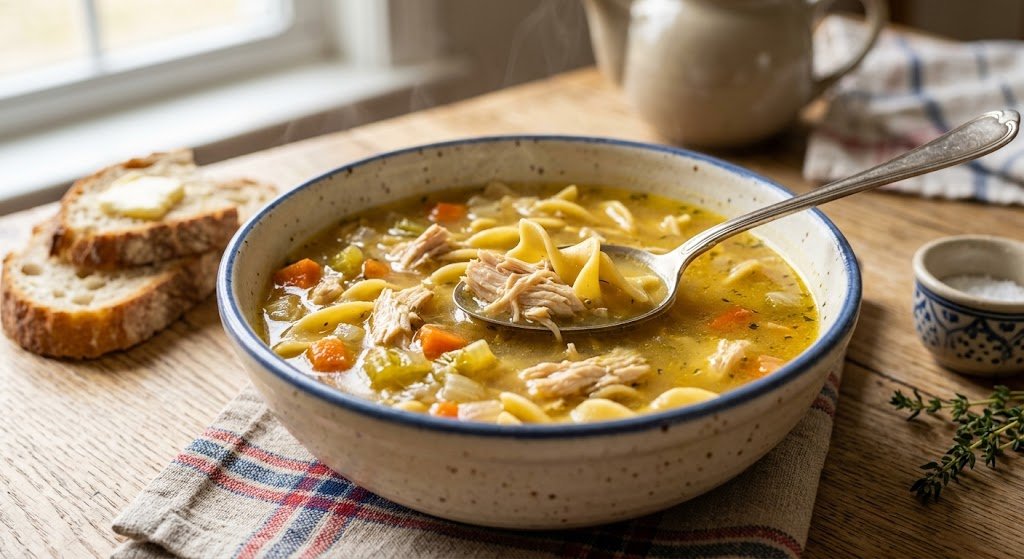
This classic chicken noodle soup combines tender shredded chicken thighs, egg noodles, carrots, celery and onion in a savoury chicken broth. Boneless thighs cook directly in the soup and are shredded before the noodles finish, giving the broth extra flavour without the time needed to make stock from bones. Garlic and fresh parsley add simple aromatic notes. The recipe serves six and takes about 50 minutes, depending on noodle thickness and chicken size. Serve it hot with bread, or cook the noodles separately if you plan to freeze portions for later.
Classic chicken noodle soup is a broth-based meal with tender pieces of chicken, egg noodles and vegetables. This recipe makes six servings in about 50 minutes using boneless chicken thighs and prepared chicken broth. It does not require making stock from bones first. The mild onion, carrot and celery base keeps the flavour familiar, while fresh parsley finishes the soup.
Choosing chicken, broth and noodles
Boneless thighs are convenient because they can be simmered whole and shredded without removing bones. Skinless thighs keep excess fat out of the broth. Choose low-sodium chicken broth if possible so you can control the salt at the end. For broth from scratch, follow this clear chicken broth recipe in advance.
Carrots add sweetness, celery brings a subtle savoury note and onion forms the base. Slice them to similar thickness so they soften evenly. Egg noodles give the soup its familiar texture, but their cooking times vary considerably. Read the packet and add them near the end. A large soup pot should leave enough room for gentle stirring and evaporation.
Recipe card
Classic Chicken Noodle Soup with Shredded Thighs
Chicken simmers 18–25 minutes; noodles cook according to package instructions. Allow extra time if thighs are large or noodles are thick.
Equipment: Large 4–5 litre soup pot with lid, cutting board and knife, separate board for raw chicken, tongs, clean plate, two forks, instant-read thermometer, ladle
Ingredients
Soup base
Noodles
Soup base
Seasoning
Instructions
Soften the aromatic vegetables
Heat the oil over medium heat in a 4–5 litre pot. Add diced onion, sliced carrots and celery; cook about 5 minutes, stirring until the onion begins to soften without browning heavily. Add minced garlic and stir 30 seconds.
5 minSimmer chicken to a safe temperature
Add the chicken thighs and broth. Bring to a gentle simmer, then reduce heat to maintain small bubbles. Simmer 18–25 minutes or until the thickest thigh reaches at least 74°C (165°F) on an instant-read thermometer.
25 minShred the cooked chicken
Lift cooked chicken onto a clean plate using clean tongs. Shred with two forks, discarding any tough pieces. Return shredded meat and its juices to the pot.
Cook the noodles until tender
Add egg noodles and simmer according to their package directions until tender but not falling apart. Stir occasionally. If the broth becomes too concentrated, add a little hot water or additional broth as needed. For planned leftovers, cook noodles separately and add to each bowl.
Season and serve hot
Taste the hot broth; add salt gradually, especially if using salted stock. Stir in pepper and chopped parsley. Divide into six bowls and serve hot.
How to cook tender chicken safely
Soften vegetables before adding broth; this develops flavour without heavy browning. Keep raw chicken and its utensils separate from cooked food and vegetables ready to eat. Once the broth and thighs are in the pot, maintain a gentle simmer instead of a vigorous boil. Use a clean thermometer to check the thickest part of the largest thigh reaches 74°C (165°F), as specified by FoodSafety.gov. Do not rely on colour alone. Shred the cooked meat on a clean plate and return it to the soup.
Keep the noodles from becoming mushy
Add dry noodles only when the chicken has finished cooking. Simmer until tender, not until they break apart. Noodles absorb liquid even after the heat is off. If preparing several meals ahead, cook and refrigerate the noodles separately, then add them to each bowl when reheating. The original amount of broth makes a generously filled soup; add a little more hot broth if you prefer a thinner consistency.
Troubleshooting
- Cloudy broth: reduce the heat to a gentle simmer and skim foam if desired.
- Tough chicken: avoid hard boiling; check doneness with a thermometer rather than extending cooking unnecessarily.
- Too salty: add unsalted broth or water gradually.
- Thick leftovers: add broth during reheating or store noodles separately.
Serving ideas and substitutions
Serve with bread, parsley and black pepper. Lemon juice adds brightness without making the soup spicy. For a different aromatic version, try ginger chicken noodle soup. If you want rice and meatballs instead, see chicken meatball soup with rice. Boneless breast can replace thighs, but check its temperature early. Add spinach near the end if you want extra greens.
Make ahead, storage and reheating
Prepare the chicken and vegetable broth first and cook noodles fresh for each meal. Divide leftovers into shallow containers and refrigerate within two hours, or one hour above 32°C (90°F). Use within three days. Freeze the broth with chicken and vegetables for up to three months for quality. Thaw in the refrigerator; bring reheated soup to a rolling boil and ensure it reaches 74°C (165°F). The egg noodles contain wheat and egg; check broth labels for additional allergens such as celery, soy or milk.
Frequently asked questions
Can I use chicken breast instead of thighs?
Yes. Breast meat is leaner and can dry out if simmered too long. Cook until the thickest part reaches 74°C (165°F), then shred.
Can I use leftover cooked chicken?
Yes, if safely stored. Simmer the vegetables in broth, add shredded cooked chicken near the end and heat it through to 74°C (165°F).
Why did my noodles absorb the broth?
Noodles continue absorbing liquid after cooking. Cook them separately for make-ahead soup, or add additional broth when reheating.
How do I keep the broth clear?
Use a gentle simmer and skim foam if needed. Avoid vigorous boiling and unnecessary stirring.
Can I freeze chicken noodle soup?
Freeze the chicken and vegetable broth without noodles for best texture. Thaw safely, reheat and add freshly cooked noodles.
What if my soup tastes bland?
Taste before adding salt because broth brands differ. Add salt gradually, fresh parsley or a little lemon juice to brighten the flavour.
More recipes to try





Spotted a detail that needs correcting? Contact the FeastDelights editors.