Irish Soda Bread with Oats and Kefir
This Irish-inspired soda bread combines plain wheat flour, rolled oats and tangy kefir or buttermilk in a rustic round loaf. Baking soda reacts with the acidic dairy, so no yeast or proofing is needed. Mix gently, score the top and bake until the crust is brown and the centre is fully cooked. Allow 90 minutes including cooling, and cut into about ten slices. Serve with butter, cheese, soup or stew.
This Irish-inspired soda bread with oats and kefir is a rustic, yeast-free loaf with a brown crust and a hearty, slightly tangy crumb. It makes approximately ten slices and takes about 90 minutes, including 30 minutes of cooling. Plain kefir or cultured buttermilk supplies the acidity that activates the baking soda. The recipe is suitable for a St Patrick’s Day meal or everyday soup and stew.
Traditional soda bread and this oat variation
Traditional Irish soda bread uses a simple combination of flour, baking soda, salt and buttermilk, as described by Tourism Ireland. This version retains the soda-leavened method but adds rolled oats, a little sugar and the option of kefir. It is an adaptation rather than a claim that kefir is the traditional Irish ingredient.
Choosing flour, oats and dairy
Use plain all-purpose flour and ordinary rolled oats. Steel-cut oats are too coarse for a direct substitution in this short baking method. Choose unsweetened kefir or cultured buttermilk rather than a flavoured dairy drink. Baking soda requires an acidic partner to produce carbon dioxide; King Arthur Baking’s guide to chemical leaveners explains why soda and baking powder are not interchangeable in equal quantities.
Equipment and preparation
Prepare a mixing bowl, lined baking tray, scale, sharp knife and cooling rack. Preheat the oven fully before mixing the dough so the shaped loaf can go straight into the oven.
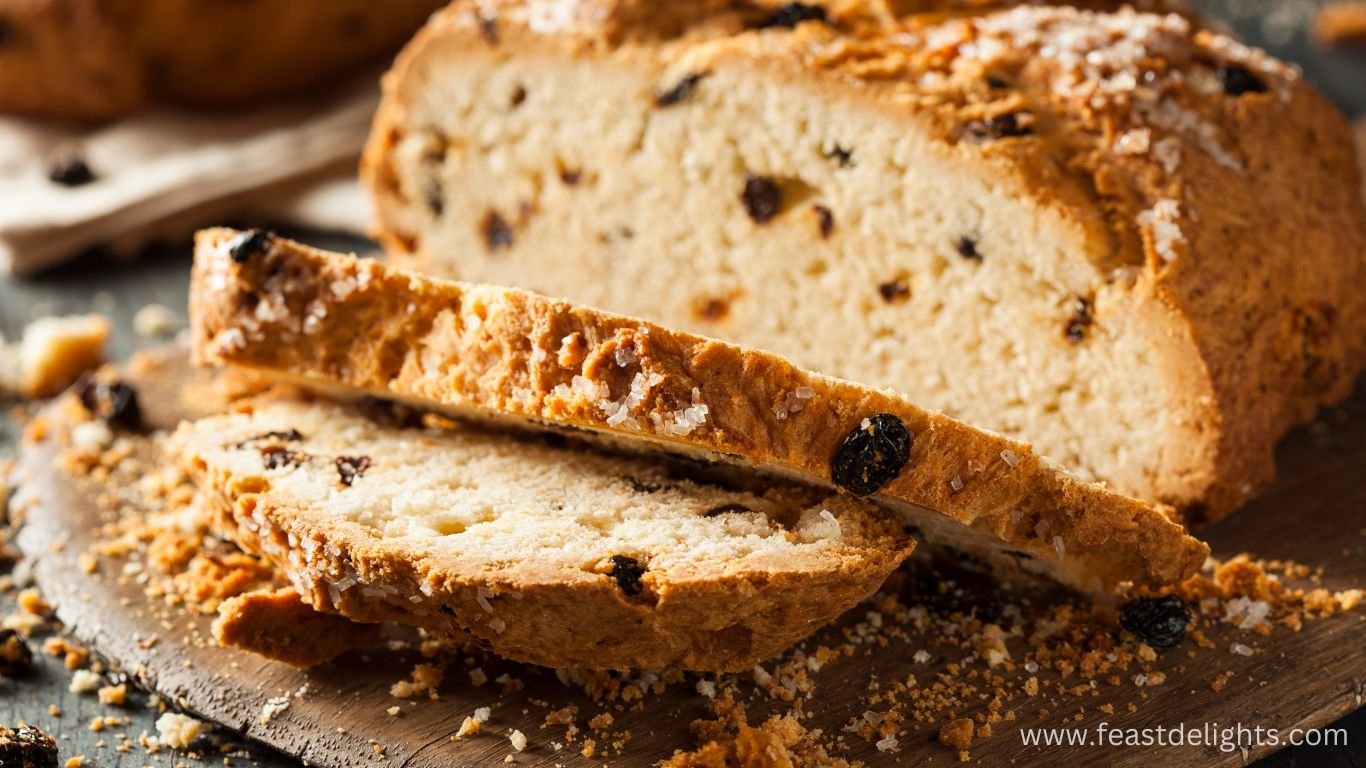
Recipe card
Irish Soda Bread with Oats and Kefir
Includes a minimum 30-minute cooling period after baking. Oven temperature and loaf thickness may affect baking time.
Equipment: Kitchen scale, measuring jug, mixing bowl, whisk, fork, baking tray, parchment, sharp knife, wire rack and instant-read thermometer.
Ingredients
Dough
Topping
Instructions
Prepare the oven and dry ingredients
Preheat the conventional oven to 200°C (400°F). Line a baking tray with parchment. Whisk together the flour, 90 g rolled oats, baking soda, sugar and salt in a large bowl.
Mix with kefir
Make a well in the dry ingredients and add the plain kefir or buttermilk gradually, stirring with a fork until a rough, slightly sticky dough forms. Use the measured 420 ml as a guide; flour and oats absorb liquid differently. Avoid prolonged mixing.
Shape the loaf
Transfer to a lightly floured surface and gently fold the dough a few times to bring it together. Shape into a round, slightly flattened loaf about 18–20 cm across and transfer to the prepared tray. Do not knead as you would yeast bread.
Score and finish
Cut a cross approximately 2 cm deep across the top with a sharp knife. Sprinkle with the remaining tablespoon of oats, pressing them lightly into the surface.
Bake and cool
Bake for 40–45 minutes until the loaf is well browned and sounds hollow when tapped underneath. Check the centre for wet dough; an instant-read thermometer should register approximately 93–96°C (200–205°F). Continue baking briefly if necessary. Cool on a wire rack for at least 30 minutes before slicing, preferably until completely cool.
How to shape and bake a tender soda loaf
Whisk the dry ingredients thoroughly to distribute the baking soda. Add the kefir and stir just until the dough comes together. The mixture may feel sticky; lightly flour your hands rather than adding large amounts of extra flour. Fold only a few times and shape into a slightly flattened round. Score the top deeply enough to help the thick centre bake evenly. Bake promptly, checking for a browned crust, a hollow sound and a fully cooked centre. A thermometer reading around 93–96°C (200–205°F) is a useful additional guide, not a substitute for checking the crumb and loaf structure.
Troubleshooting
The bread is dense or tough
Avoid vigorous kneading, which develops gluten unnecessarily in this quick bread. Check that the baking soda is fresh and the kefir is acidic.
The loaf spreads too far
Add the liquid gradually. The dough should be soft but still hold its shape; different flours and oats may absorb different amounts of liquid.
The centre remains gummy
Check that the loaf is not too tall, continue baking if the centre is wet and let it cool before slicing.
Serving ideas and related recipes
Serve with butter and Irish-inspired lamb stew or creamy potato and leek soup. For a skillet-cooked alternative, try our Irish soda farls. Toast day-old slices or serve with sharp cheddar.
Make ahead, storage and allergens
Cool completely before wrapping. Keep the bread well wrapped at room temperature for up to 2 days, or freeze individual slices for up to 2 months. Thaw at room temperature and toast if desired. Contains wheat and milk. Oats can also be affected by gluten cross-contact. Do not eat raw dough; prepare the dry ingredients ahead but mix with kefir immediately before baking.
Frequently asked questions
Can I use buttermilk instead of kefir?
Yes. Both provide the acidity needed to activate baking soda. Use the same measured volume and adjust slightly if the dough is too dry or wet.
Does soda bread need yeast or proofing?
No. Baking soda and acidic dairy produce the leavening gas. Shape and bake promptly after mixing.
Can I replace baking soda with baking powder?
Not in equal amounts. This formula is designed for baking soda and acidic dairy; baking powder has a different composition.
Why is my soda bread gummy inside?
The centre may be underbaked or the loaf sliced while too hot. Bake until fully set and allow adequate cooling before cutting.
Can I use instant oats?
Rolled oats are preferred. Instant oats absorb liquid differently and may produce a softer, less textured crumb.
Can I make the dough ahead?
Mix the dry ingredients ahead, but add the kefir only when the oven is ready. The soda reaction starts when the wet and dry ingredients meet.
More recipes to try


Spotted a detail that needs correcting? Contact the FeastDelights editors.