Gluten-Free Bread Recipe for a Soft Sandwich Loaf
This gluten-free bread recipe makes a yeast-raised sandwich loaf with an explicit rice-flour and starch blend, eggs and xanthan gum.
This gluten-free bread recipe makes a yeast-raised sandwich loaf with an explicit rice-flour and starch blend, eggs and xanthan gum. The dough is a thick batter that goes straight into a loaf tin; it is not kneaded like wheat bread. Accurate weights and a full cooling period matter because warm gluten-free bread can seem gummy even when baked. Use certified gluten-free ingredients where required and keep the tin, utensils and work surface free from wheat flour.
What matters for gluten-free bread
This formula is written for separate fine white rice flour, tapioca starch and potato starch, with xanthan measured separately. A cup-for-cup blend may contain a different binder and is not an automatic swap. Beat to make a cohesive batter and stop the rise when it reaches the pan rim. Overproofing can cause a fragile loaf to collapse.
Recipe at a glance
Yield: 1 loaf; about 14 slices. Preparation: about 20 minutes. Cooking: about 55 minutes. Total elapsed time: about 225 minutes. Includes about 150 minutes for the resting, rising, cooling or chilling described below.
How to make gluten-free bread
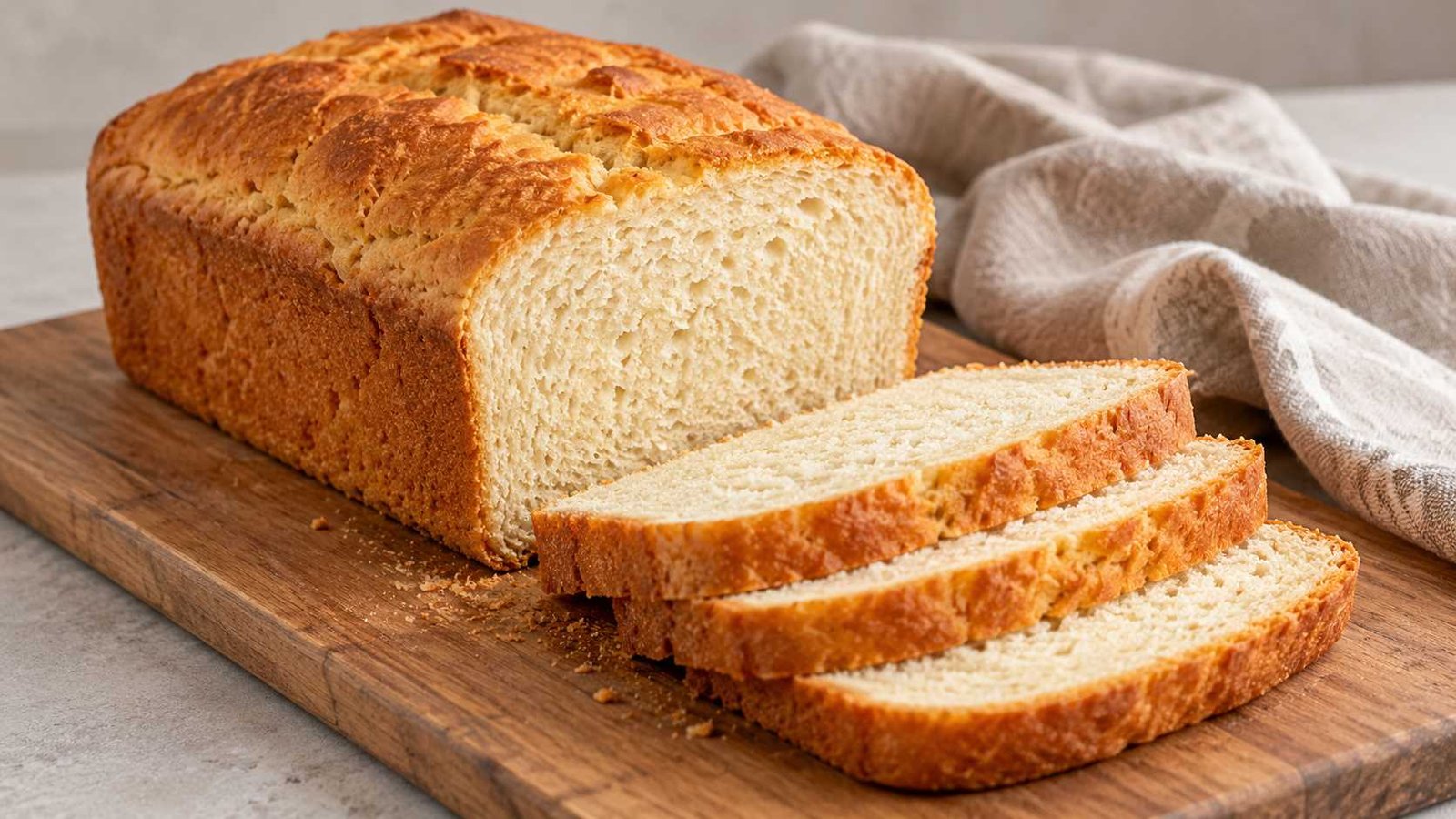
Recipe card
Gluten-Free Bread Recipe for a Soft Sandwich Loaf
Equipment: 23 × 13 cm/9 × 5 inch loaf tin; parchment; electric mixer; scale; thermometer; rack.
Ingredients
Main
Instructions
Prepare the tin
Grease and line a 23 × 13 cm/9 × 5 inch loaf tin, leaving parchment handles. Combine flours, starches, xanthan, yeast, sugar and salt thoroughly.
Beat the batter
Whisk milk, eggs, oil and vinegar. Beat into dry ingredients with an electric mixer on medium for 4 minutes, scraping twice. The result should be sticky and thick, holding soft ridges rather than a kneadable ball.
Proof once
Scrape into the tin and smooth with a wet spatula. Cover loosely and rise in a warm draft-free place 45–60 minutes until the center is near the rim. Heat oven to 190°C/375°F conventional during the final 15 minutes.
Bake thoroughly
Bake 45–55 minutes until deep golden and the center is about 96–98°C/205–208°F, a bread-quality cue. Tent with foil if browning too soon. Leave in tin 10 minutes, then lift out.
Cool before slicing
Cool on a rack at least 90 minutes until fully cool. Slice with a serrated knife. The total allows a 60-minute rise and 90 minutes cooling; a cool room can extend the rise.
How to tell when it is ready
Loaf is golden, center is baked through and the cool crumb slices without wet streaks.
Tips
- Weigh each flour.
- Use potato starch rather than flour.
- Stop proofing near the rim.
- Cool completely before cutting.
Troubleshooting
- Collapsed loaf: shorten the rise next time.
- Gummy crumb: check center temperature and allow complete cooling.
- Dry loaf: confirm milk and starch weights before changing the formula.
Substitutions
- Unsweetened soy milk can replace milk; verify dietary labels.
- Do not replace xanthan with psyllium at the same weight; it needs a different formula.
Variations
- Sprinkle 1 tbsp sesame seeds over the smoothed batter before rising.
Serving suggestions
- Toast slices for breakfast.
- Use for sandwiches.
- Slice before freezing.
- Pair with soup.
Make ahead
Measure the dry ingredients ahead; mix and bake the same day.
Storage
Store cooled bread wrapped for up to 2 days in a cool room. Freeze individual slices up to 2 months for quality and toast from frozen.
Food safety
Verify gluten-free labeling and avoid cross-contact if needed. This recipe contains eggs and milk. Do not taste raw batter; flour and eggs need cooking.
Frequently asked questions
Why is there no kneading?
The blend lacks wheat gluten. Xanthan, eggs and mixing provide structure in a batter-style loaf.
Is every flour blend suitable?
No. Binder content and starch ratios vary, so this recipe specifies its own blend.
More recipes to try

Spotted a detail that needs correcting? Contact the FeastDelights editors.