Irish-Inspired Lamb Stew with Potatoes and Carrots
This Irish-inspired lamb stew slowly simmers diced shoulder with onions, potatoes, carrots and bay leaves in a simple savoury broth. Browning the meat first gives the stew depth, while adding the vegetables later helps them keep their shape. The finished lamb should yield easily to a fork and the potatoes should be soft without dissolving completely. This recipe makes six bowls and requires approximately 2 hours and 25 minutes, depending on the tenderness of the meat.
This Irish-inspired stew is a one-pot meal of lamb shoulder and root vegetables. It is not a vegetarian stew despite the old URL. Allow about 20 minutes for preparation and 2 hours 5 minutes for cooking, with extra simmering if the meat needs it. A heavy pot with a lid helps maintain steady, gentle heat.
Choosing the lamb and vegetables
Traditional Irish stew commonly pairs lamb or mutton with potatoes and onions; carrots and browning are used in many adaptations. This version retains its original lamb shoulder, carrots and vegetable broth. Shoulder contains connective tissue that softens during prolonged moist cooking. Cut the 500 g (about 1.1 lb) lamb into roughly 3 cm pieces and trim large external pieces of fat. Do not substitute quick-cooking lean lamb steaks and expect the same texture.
Four medium potatoes and three carrots make the stew substantial. Choose waxy or all-purpose potatoes if you want distinct pieces; floury potatoes soften more and thicken the broth. Cut potatoes into similar chunks and carrots into thick slices. One litre of stock equals about 4¼ US cups. Vegetable broth works with lamb, although lamb or beef stock can give a richer flavour. Use low-salt broth where possible.
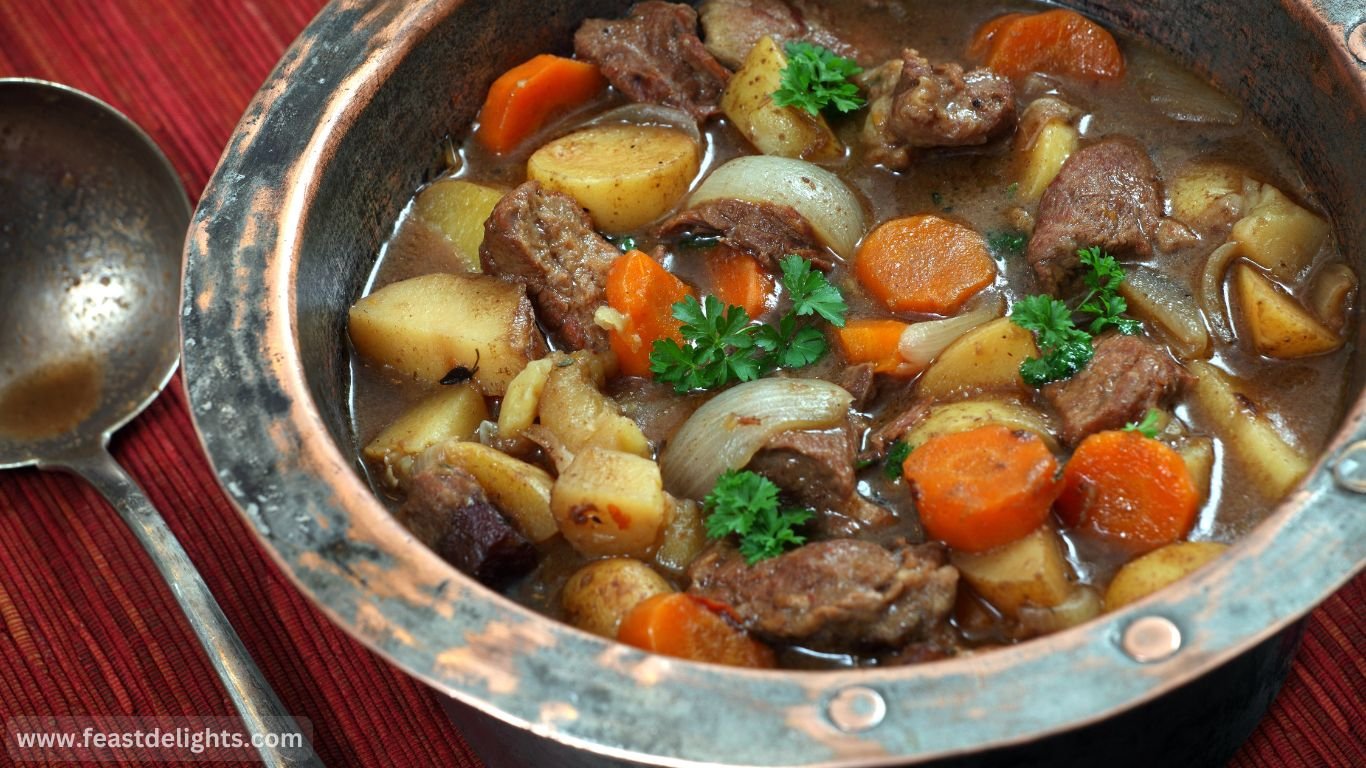
Recipe card
Irish-Inspired Lamb Stew with Potatoes and Carrots
Allow additional simmering if the lamb is still tough before adding the potatoes.
Equipment: 5 litre heavy pot or Dutch oven with lid, tongs, separate chopping boards, knife, ladle, thermometer
Ingredients
Instructions
Brown the lamb in batches
Pat diced lamb dry. Heat oil over medium-high heat in a heavy pot and brown in batches for about 8–12 minutes total, depending on pan size. Transfer to a clean plate.
Soften the onions
Reduce to medium heat. Cook sliced onions about 5 minutes, scraping browned deposits from the pot; loosen with a splash of the measured broth if needed.
Simmer the lamb
Return lamb and juices. Add broth, bay leaves and pepper. Bring to a gentle simmer, cover and cook 60–75 minutes or longer, until the meat is nearly fork-tender.
Add carrots and potatoes
Add carrot slices and potato chunks. Simmer 25–35 minutes until lamb is fork-tender and a knife slides into the potatoes easily. Uncover near the end if the broth needs reducing; season with salt to taste.
Remove bay and serve
Discard bay leaves, check seasoning and spoon the stew into bowls. Scatter chopped parsley over each serving.
Building flavour without overcooking vegetables
Pat meat dry and heat the two tablespoons of oil in a heavy pot. Brown the lamb in batches, allowing each piece to develop colour before turning. If the pan is too full, the meat releases liquid and steams. Soften the onions in the same pot, adding a little measured broth to release browned bits if necessary. Return meat to the pot and add bay leaves and broth.
Maintain a gentle covered simmer. Begin checking the lamb after an hour; it should be close to tender before the potatoes and carrots go in. If the meat still resists a fork, continue the initial simmer. Once the vegetables are added, check the potatoes with a knife rather than relying solely on the clock. Whole-cut lamb should reach at least 63°C (145°F) with a three-minute rest; the stew normally exceeds that temperature by the time the shoulder is fork-tender.
Troubleshooting the broth and texture
Tough lamb: continue simmering gently until the connective tissue softens; do not turn up the heat to a vigorous boil. Thin broth: remove the lid near the end and reduce briefly, or crush a few cooked potato pieces against the side of the pot and stir them in. Too salty: add unsalted broth or water. Greasy surface: skim excess fat with a spoon, or chill and remove solidified fat before reheating. Avoid cooking the potatoes until they disintegrate unless you prefer a thicker stew.
Serving and make-ahead ideas
Serve with chopped parsley and rye and wheat bread, or steamed greens. A few parsnip pieces may replace some carrot for a sweeter flavour; add them with the potatoes. Thyme can complement the bay leaves. For other warming dishes, try vegetable beef soup or skillet ratatouille as a separate vegetable dish. The stew can be made the day before, cooled promptly and reheated in portions. Packaged broth may contain celery, wheat or soy, so check the label for allergens. Use separate utensils for raw lamb and ready-to-eat parsley.
Frequently asked questions
Is Irish stew vegetarian?
This version contains lamb shoulder. A meat-free stew requires a different formula and cooking time.
Can I substitute mutton?
Yes, but mutton can require longer simmering before the vegetables are added.
Which potatoes hold their shape?
Waxy or all-purpose potatoes generally stay intact better than floury baking potatoes.
Does this stew need flour?
No. Reducing the broth or crushing a few cooked potato pieces gives body without flour.
Can I make it a day ahead?
Yes. Cool in shallow containers, refrigerate promptly and reheat the required portions thoroughly.
Can I freeze it?
Yes, although potatoes may become grainy after thawing. Freeze the lamb and broth separately from potatoes in a future batch for better texture.
More recipes to try

Russian Pelmeni Recipe with Soft Buttermilk Dough

Belyashi Recipe with Juicy Beef and Soft Yeast Dough

Turkey Jambalaya with Rice, Corn and Crispy Bacon
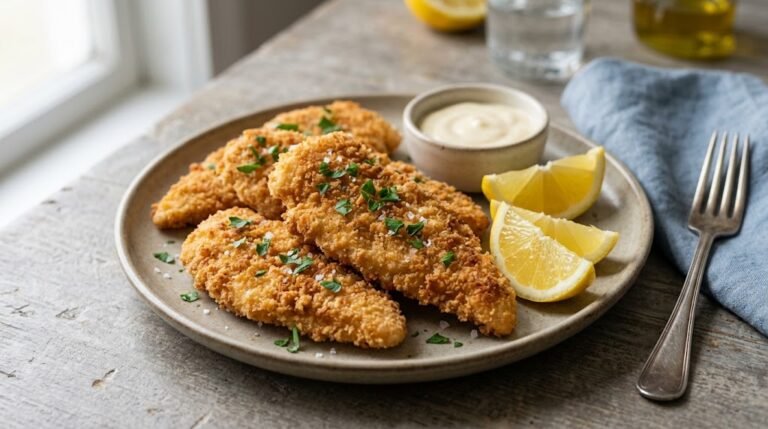
Otbivnaya Chicken Tenders with a Crisp Pan Fried Coating
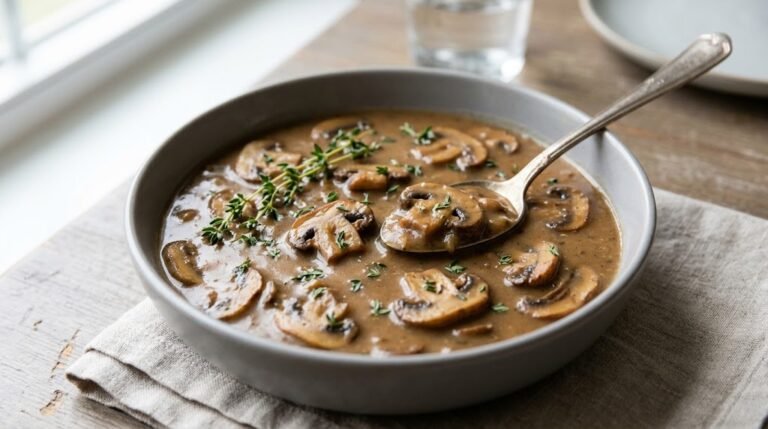
Easy Mushroom Gravy with Browned Mushrooms and Thyme
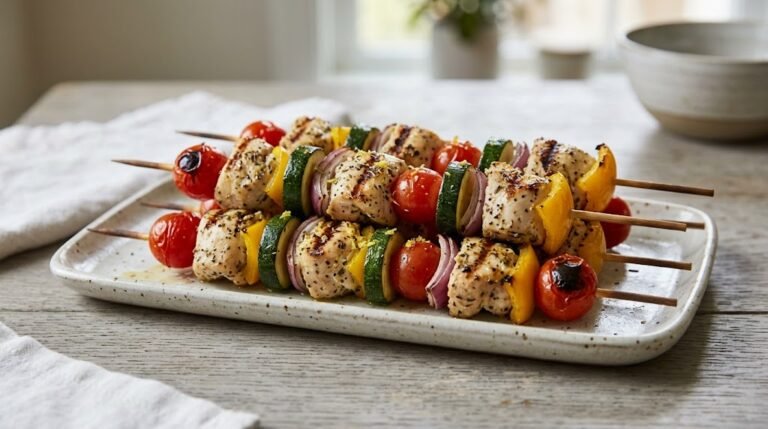
Chicken and Vegetable Skewers with Lemon Herb Marinade
Spotted a detail that needs correcting? Contact the FeastDelights editors.