Coq au Vin with Bacon, Mushrooms and Red Wine
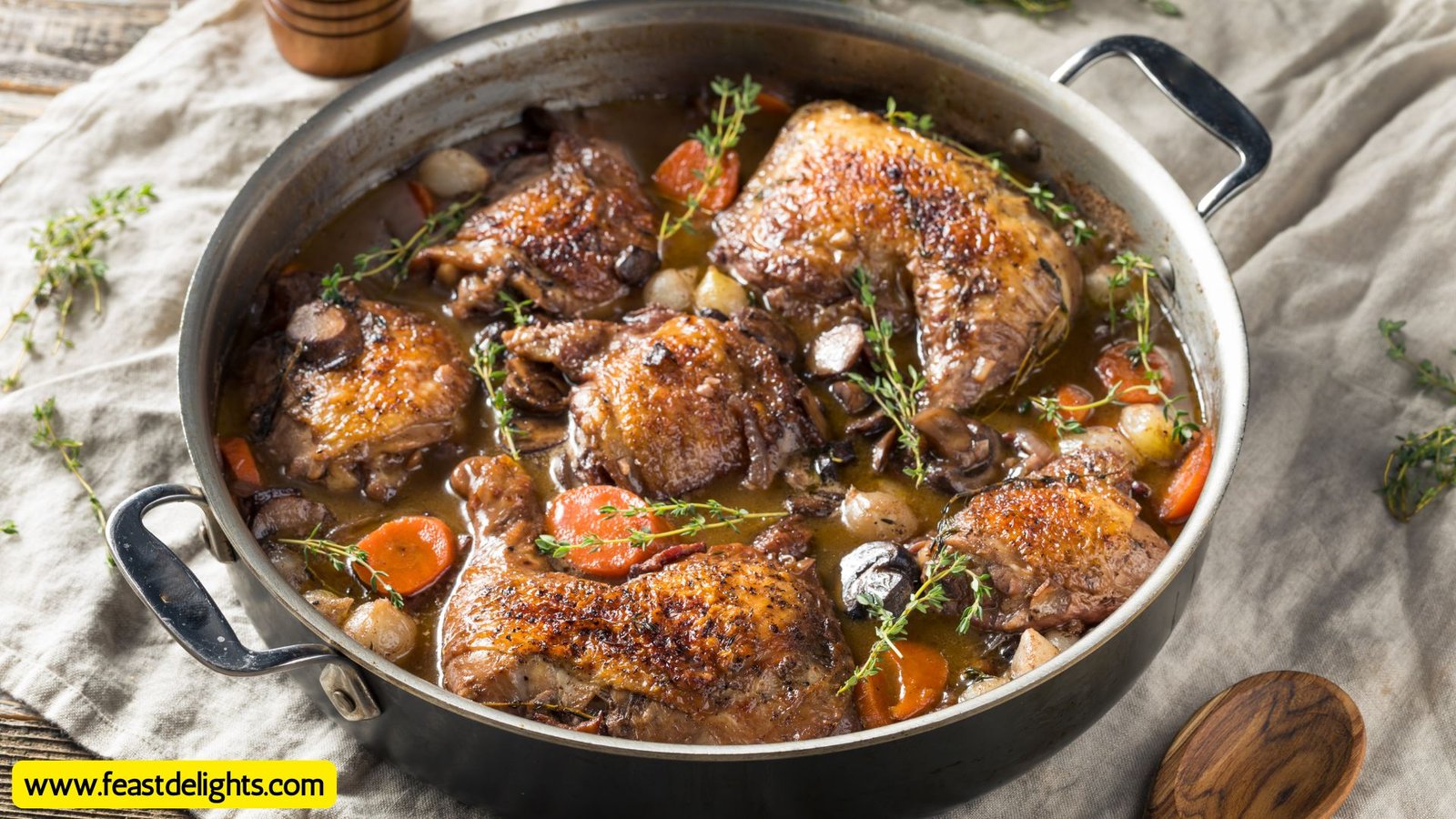
Coq au vin is a French-style chicken braise with bacon, mushrooms, carrots and onions cooked in a rich red wine sauce scented with thyme and bay leaves. Browning the chicken first builds savoury flavour, and a gentle simmer turns bone-in pieces tender while the wine and broth form a dark, aromatic sauce. This version uses a full bottle of dry red wine and serves six. Allow around two hours from preparation through cooking, including time to reduce the sauce if needed.
Coq au vin is chicken braised in a wine-based sauce with bacon, mushrooms, onions and herbs. This French-style version uses a full bottle of dry red wine, bone-in chicken, carrots and a little flour to help the sauce cling to the meat. It makes six servings in about two hours, with most of that time spent at a gentle simmer.
Choosing chicken and wine
Bone-in thighs and drumsticks hold up well during braising. Their connective tissue softens during cooking, and the bones and skin contribute flavour to the liquid. If using a mixture of cuts, check breast pieces separately because they may cook faster than the legs. Pat the chicken dry before browning rather than rinsing it.
Choose a dry red wine such as a Pinot Noir or another medium-bodied red. A sweet wine changes the balance of the sauce. Chicken broth rounds out the acidity, and bacon contributes smoky flavour and salt. The sauce also contains tomato paste, thyme and bay leaves; remove the leaves before serving.
How to make coq au vin
Render the bacon first, then brown the chicken in the same pot in batches. The browned residue is valuable: scrape it into the braising liquid rather than discarding it. Soften the onions, carrots and mushrooms before adding garlic and tomato paste. Stir the flour into the vegetables, then introduce the wine gradually so it mixes without lumps. Return the meat to the pot and maintain a gentle simmer.
Recipe card
Coq au Vin with Bacon, Mushrooms and Red Wine
Allow 5–7 minutes for bacon, about 12–15 minutes for chicken browning in batches, 6–8 minutes for vegetables, 45–60 minutes for braising and up to 5 minutes for sauce reduction. Time varies by size and pot.
Equipment: 5–6 litre (5–6 quart) Dutch oven with lid, tongs, spatula, chef's knife, separate raw-poultry board, measuring jug, clean plates and instant-read thermometer.
Ingredients
Chicken and bacon
Vegetables
Braising sauce
Seasoning
Instructions
Render the bacon
Heat a large Dutch oven over medium heat. Cook diced bacon for 5–7 minutes, stirring, until browned and some fat has rendered. Transfer to a clean plate, leaving a thin coating of fat in the pot.
Brown the chicken
Pat the chicken dry without rinsing. Season with some salt and pepper. Over medium-high heat, brown pieces in batches, skin-side down first if applicable, for about 3–4 minutes per side. Add a little of the measured oil if necessary. Transfer to a separate plate; the chicken is not yet cooked through.
Soften the vegetables
Reduce heat to medium. Add remaining oil as needed, then onions, carrots and mushrooms. Cook 6–8 minutes until onions soften and mushrooms begin to brown. Stir in garlic and tomato paste for 1 minute.
Build the braising liquid
Sprinkle the flour over the vegetables and stir for about 1 minute. Gradually pour in the red wine and broth, stirring to dissolve the flour and scrape up the browned bits. Add bay leaves and thyme. Return chicken, its juices and bacon to the pot. Bring to a gentle simmer.
Braise until tender
Cover and simmer over low heat for 45–60 minutes, turning the chicken once if it is only partly submerged. Check the thickest pieces away from bone with a thermometer; all chicken must reach at least 74°C (165°F). Continue gently until fork-tender; dark meat can benefit from a longer braise.
Reduce and serve
Remove bay leaves. Transfer cooked chicken to a clean warm plate if the sauce needs reducing. Simmer the sauce uncovered for up to 5 minutes or until it lightly coats a spoon. Return chicken, taste for salt and pepper and serve hot.
How to judge braised chicken and sauce
A steady, quiet simmer is preferable to a rolling boil. Check that the chicken reaches at least 74°C (165°F) at the thickest point away from the bone, in accordance with FoodSafety.gov. The meat should also be tender when pierced. If the sauce is too loose after the chicken is done, remove the chicken before reducing the liquid. This prevents unnecessary cooking while the sauce concentrates.
Troubleshooting
Pale chicken: Dry the surface and heat the pot between batches. Crowded pieces steam instead of browning.
Harsh wine flavour: Give the sauce its full braising time and use dry wine rather than sweet or heavily salted cooking wine. Taste after reduction. Alcohol does not necessarily disappear entirely during cooking.
Lumpy sauce: Stir flour into the vegetables before adding liquid, and add the wine gradually while stirring. Avoid adding raw flour directly to the finished sauce.
Serving suggestions and related recipes
Serve with mashed potatoes or homemade egg noodles. A side of green beans with garlic butter provides a fresh contrast. For a different slow-cooked meat dish, try our beef and mushroom pot roast.
Make ahead, storage and allergens
The finished braise can be made the day before. Divide it into shallow containers and refrigerate promptly rather than leaving a large hot pot on the counter. Reheat gently, stirring the sauce, until all portions are hot enough to serve safely. The dish contains wheat, pork bacon and alcohol; wine may contain sulphites. Check broth and bacon labels for other allergens. A broth-based variation is appropriate when wine must be avoided, but it will have a different flavour.
Frequently asked questions
Which chicken pieces work best?
Bone-in thighs and drumsticks are well suited to braising. Bone-in breast pieces can be used but may finish earlier; check each piece for safe doneness.
What wine should I use?
Choose a dry red wine you enjoy, rather than a sweet wine or salted cooking wine.
Can I cook without wine?
Use additional low-sodium broth instead and adjust acidity to taste at the end. This is a different chicken braise, not classic coq au vin. Wine cooked in a braise can still contain alcohol.
Why is the sauce thin?
The covered pot retains moisture. Remove the cooked chicken and reduce the liquid uncovered until it coats a spoon.
Can I omit bacon?
Yes, use the measured oil for browning instead. The sauce will be less smoky and savoury; adjust seasoning after reducing.
Is this suitable to make a day ahead?
Yes. Chill the cooked braise promptly in shallow containers, then reheat gently until 74°C (165°F) throughout. The sauce may thicken when cold.
Can I use boneless chicken?
You can adapt the recipe with boneless thighs, but check earlier because they may cook faster than bone-in pieces.
More recipes to try






Spotted a detail that needs correcting? Contact the FeastDelights editors.