Chicken Piccata with Lemon, Capers and Sage
Chicken piccata is a quick Italian-American skillet dish of thin, golden chicken cutlets with a tangy lemon, caper and butter pan sauce. This version adds fresh sage for a subtle herbal note and uses chicken stock instead of wine. A light flour coating helps the chicken brown and gives the sauce a little body. Two large breasts make four cutlets, ready in about 45 minutes. Serve immediately with pasta, mashed potatoes or steamed vegetables to catch the bright, glossy sauce.
Chicken piccata is an Italian-American skillet meal of thin chicken cutlets dusted with flour, seared until golden and served with a sharp lemon-caper butter sauce. This version uses chicken stock and fresh sage, with no wine required. It makes four servings in approximately 45 minutes. The key is even cutlets, a hot but controlled skillet and a sauce finished with butter away from vigorous heat.
Choosing the chicken and sauce ingredients
Two large boneless, skinless breasts yield four cutlets when sliced horizontally. Pound them gently to roughly 1 cm thick so the edges do not dry out before the centres cook. All-purpose flour, also called plain flour, makes a light coating rather than a thick breading. Use fresh lemons and zest them before squeezing, taking only the coloured peel. Capers supply salt and acidity, so use low-salt stock and taste before adding more seasoning. Unsalted butter is divided between browning the chicken and finishing the sauce. Sage gives this version its distinctive herbal note; parsley is optional.
Equipment and preparation
Use a wide skillet with enough space for two cutlets at a time, tongs, a shallow flour dish and an instant-read thermometer. Prepare lemons and herbs before touching raw poultry. Wash hands and equipment afterwards, and use a clean plate for cooked chicken. Do not rinse raw chicken.
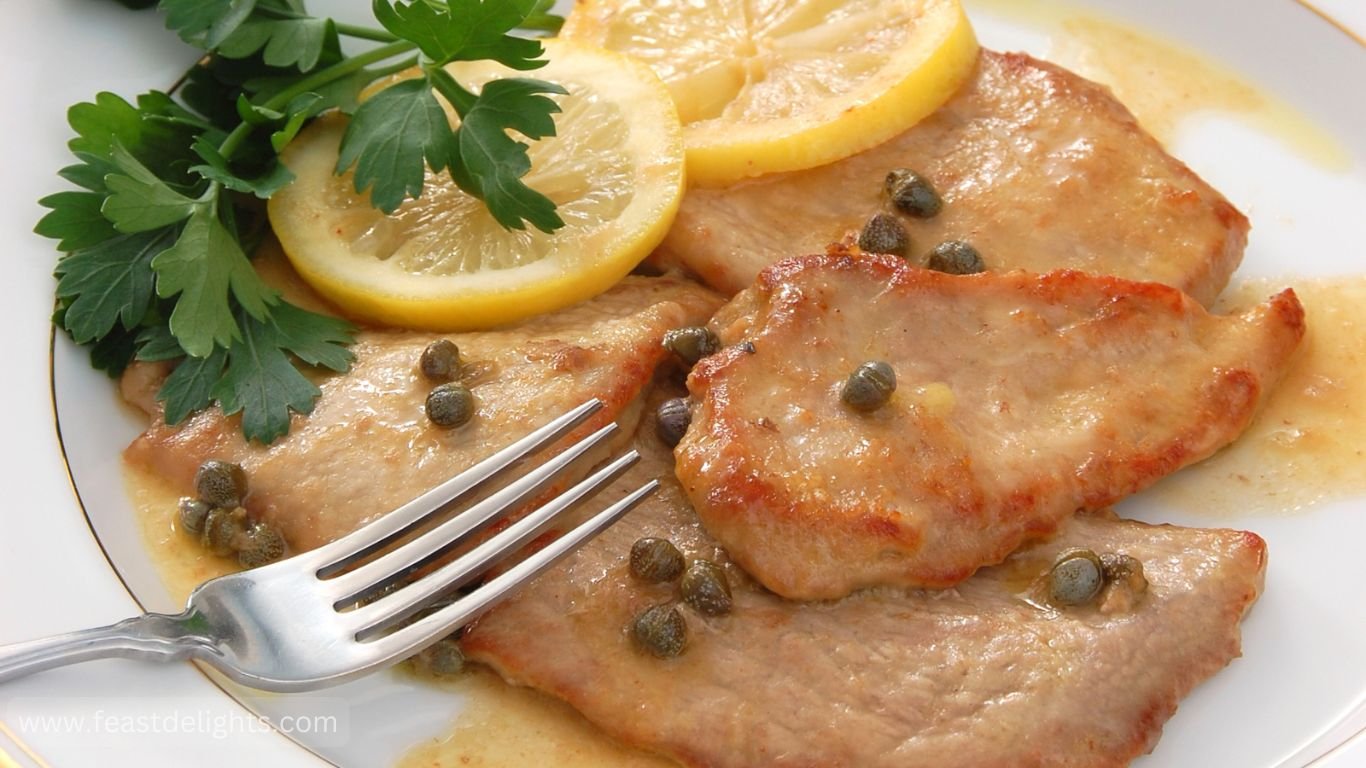
Recipe card
Chicken Piccata with Lemon, Capers and Sage
Allows two batches if needed; thickness and skillet size affect searing time.
Equipment: Wide 28–30 cm (11–12 inch) skillet, sharp knife, raw poultry cutting board, parchment, meat mallet or rolling pin, shallow dish, tongs, clean plate, whisk and instant-read thermometer.
Ingredients
Cutlets
For searing
Pan sauce and searing butter
To serve
Instructions
Prepare thin cutlets
Slice each breast horizontally into two cutlets if not already divided. Place between sheets of parchment and gently pound to an even 1 cm (⅜ inch) thickness. Pat dry. Mix flour, salt and pepper in a shallow dish, coat each cutlet lightly and shake off excess. Discard flour that touched raw chicken.
Sear until cooked through
Heat olive oil and half the butter in a wide skillet over medium-high heat. Cook cutlets in batches without crowding, about 3–4 minutes per side or until golden and the thickest part reaches 74°C (165°F). Lower heat if butter darkens too quickly. Transfer to a clean plate.
Reduce the lemon-caper sauce
Reduce heat to medium. Add stock and scrape up golden browned bits, avoiding any burnt residue. Add lemon zest, drained capers, sage and most of the juice from the two lemons, reserving some to adjust to taste. Simmer 3–4 minutes until slightly reduced.
Finish with butter
Remove pan from direct heat and whisk or swirl in remaining butter in small pieces. Taste, then add reserved lemon juice as needed. The sauce should be glossy and lightly coat a spoon.
Coat the cutlets
Return chicken and its cooked juices to the skillet for about 1 minute over low heat, turning gently to coat. Avoid boiling the finished butter sauce.
Serve promptly
Divide the four cutlets among plates, spoon over sauce and scatter optional parsley. Serve with pasta or vegetables.
How to get golden cutlets and a glossy sauce
Pat the chicken dry and shake off extra flour so loose flour does not burn in the pan. Heat oil and the first portion of butter until the fat shimmers, then add the chicken in batches. The cutlets should sizzle steadily without smoking. Cook to 74°C (165°F), inserting a thermometer horizontally into the thickest part of each cutlet. See FoodSafety.gov temperature guidance. Remove the chicken and deglaze the pan with stock, scraping up the golden residue that gives the sauce its savoury depth.
Simmer the stock, lemon, capers and sage until slightly concentrated. Lemons vary considerably in acidity and size, so reserve part of their juice for final adjustment. Whisk in the remaining butter off the heat to form a light emulsion. This is a pourable pan sauce, not a thick gravy. The flour transferred from the cutlets contributes some body.
Troubleshooting
The chicken browns before it cooks through
Lower the heat and continue cooking until the safe internal temperature is reached. Next time pound thicker areas evenly and avoid crowding.
The sauce separates or tastes too sharp
Remove the skillet from direct heat and swirl in a little warm stock to help bring the sauce together. If acidity is excessive, add a small amount of stock and taste again. Do not boil after the final butter goes in.
The coating becomes soft
Return the cutlets to the sauce only briefly, or serve sauce alongside them if you prefer a firmer crust. A thin flour coating will soften naturally when soaked.
Serving ideas and related recipes
Serve with linguine, mashed potatoes or steamed green beans. If you enjoy lemon-butter pan sauces, our veal piccata uses a different protein, and shrimp scampi linguine offers a seafood alternative. For another chicken skillet dish, try chicken Marsala with mushrooms. A little fresh thyme may replace sage for a different aroma.
Make ahead, storage and allergens
Prepare the sauce ingredients ahead and refrigerate raw cutlets separately until cooking. Dredge just before searing. Refrigerate in a shallow covered container at 4°C (40°F) or below within 2 hours, or 1 hour above 32°C (90°F). Use within 3 days. Reheat gently with a splash of stock to 74°C (165°F). Freeze for up to 2 months for best quality; thaw in the refrigerator. The butter sauce and coating may lose their original texture. Contains wheat and milk; check stock and other packaged ingredients for additional allergens. Follow official food safety advice when handling and storing poultry.
Frequently asked questions
Can I use chicken thighs?
Yes. Use boneless skinless thighs of similar thickness and cook to 74°C (165°F); timing may change.
Can I make piccata without capers?
Yes, although the characteristic briny flavour will be reduced. Finely chopped green olives are a possible alternative.
Can I use gluten-free flour?
A plain gluten-free flour blend can work as a light dredge. Check all packaged ingredients if avoiding gluten.
Why does my sauce taste bitter?
Burnt pan residue or white lemon pith can cause bitterness. Remove burnt particles and zest only the coloured peel.
Can I make this without wine?
Yes. This recipe uses chicken stock and lemon juice instead of wine.
Can I double the recipe?
Sear cutlets in batches and use a sufficiently wide pan for the sauce. Do not crowd the skillet.
More recipes to try






Spotted a detail that needs correcting? Contact the FeastDelights editors.