Brazilian Feijoada with Black Beans and Pork
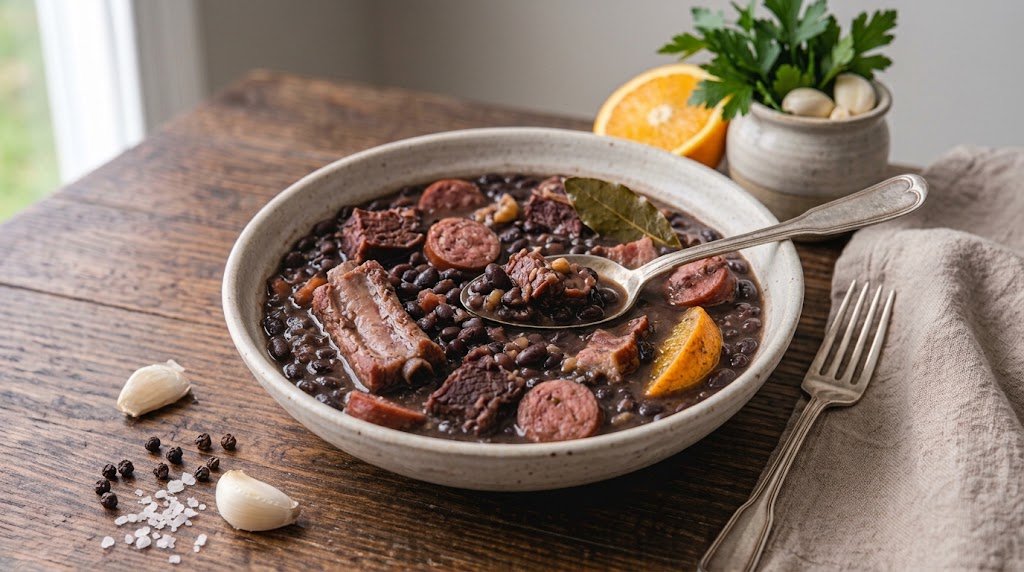
Brazilian feijoada is a substantial black bean stew with tender pork, smoky sausage and bacon in a thick, dark broth. This home-style adaptation uses readily available cuts and finishes with fresh orange segments to balance the richness. Soak the dried beans overnight, then simmer them gently with bay leaves before adding the browned meats and aromatics. The recipe makes six generous servings and is particularly suited to a leisurely lunch with rice and sautéed greens. Allow about three hours of preparation and cooking after soaking.
Brazilian feijoada is a slow-cooked black bean and meat stew. This home-style version uses pork shoulder, smoked sausage, bacon, onion and garlic for a rich broth and tender beans. It serves six. Allow overnight soaking and approximately three hours of preparation and cooking the next day.
Feijoada is often accompanied by white rice, greens, orange and farofa, a toasted cassava flour side. This version uses accessible pork cuts rather than claiming to reproduce every regional or family preparation. The Brazilian pork and bean stew in Saveur illustrates the wider serving tradition.
Recipe card
Brazilian Feijoada with Black Beans and Pork
Allow 8 hours for overnight soaking in the refrigerator. Simmering may take 2–3 hours depending on bean age and pork tenderness; the listed 160-minute cooking time is approximate.
Equipment: Large heavy-bottomed lidded pot (at least 5–6 litres), skillet, colander, knife, separate raw-meat cutting board, ladle, tongs and food thermometer
Ingredients
Beans
Meats
Aromatics and seasoning
To finish
Instructions
Soak and start the black beans
Sort and rinse the dried black beans, cover generously with cold water and soak in the refrigerator overnight (about 8 hours). Drain and discard the soaking water. Add beans, bay leaves and 1.5 litres of fresh water to a large pot. Bring to a full boil, then reduce to a steady simmer and cover partially. Cook for 60–90 minutes until almost tender, adding hot water as needed to keep beans submerged.
Brown the bacon, pork and sausage
While the beans cook, fry diced bacon over medium heat until it renders fat and turns golden. Remove bacon to a plate if needed to prevent burning. Brown the cubed pork in the fat in batches, then briefly brown sliced smoked sausage. Avoid crowding the skillet.
Soften the onion and garlic
Reduce heat to medium-low. Soften the onion in the remaining fat, then add minced garlic for the final minute, stirring to avoid scorching. Return all browned meats to the skillet briefly, then transfer everything to the bean pot. If needed, use a little bean cooking liquid to loosen the browned bits in the skillet.
Simmer until beans and pork are tender
Simmer gently for another 60–90 minutes, stirring occasionally and adding hot water if the broth becomes too thick. The beans should be creamy inside and pork shoulder fork-tender. Whole-muscle pork must reach at least 63°C/145°F with a 3-minute rest, though shoulder generally needs longer cooking to soften; if the sausage is sold raw, follow its safe cooking instructions (ground pork sausage 71°C/160°F). Remove excess surface fat if desired. Taste once cooked and add the measured salt gradually, then pepper.
Finish with orange and serve
Remove the bay leaves. For the original version, gently fold in peeled orange segments just before serving; alternatively offer them alongside so they retain their fresh texture. Serve hot with rice and sautéed greens if desired.
Choose dried beans and suitable pork
Dried black beans give the stew its dark broth and gradually release starch as they soften. Sort them for debris and rinse before soaking. Soaking in the refrigerator overnight makes hydration more even. Discard that water and start with fresh water for cooking. Beans that have been stored for a long time may take longer to soften, so use the cooking cues rather than relying on a timer alone.
Pork shoulder contains connective tissue that softens over a long simmer. Cut it into similar-sized cubes so the pieces become tender at roughly the same time. Bacon renders fat for browning and smoked sausage adds savoury depth. Check the sausage packaging: smoked does not necessarily mean fully cooked. The salt content of both meats varies widely, which is why the final seasoning belongs near the end of cooking.
Build the broth in stages
Bring the beans to a full boil before reducing the heat. Simmer with bay leaves and enough fresh water to keep them covered. While they soften, brown bacon and pork in a separate skillet. Crowding the pan causes the meat to steam, so work in batches if necessary. Lower the heat before adding onion and garlic; they should soften rather than scorch.
Transfer the browned meats and aromatics to the beans. A spoonful of the bean liquid can help release the flavourful browned residue from the skillet. Maintain a gentle simmer, not an aggressive rolling boil. Stir periodically, especially towards the end when the thickening broth can catch on the bottom. Add hot water a little at a time if the beans are no longer covered.
How to tell when feijoada is done
Press a bean against a spoon: it should crush readily with a creamy centre, not a chalky core. Pork shoulder should yield easily to a fork. Check the appropriate safe internal temperature for the meat and sausage; tenderness alone is not a food-safety test. Whole-muscle pork requires at least 63°C (145°F) and a three-minute rest, and raw ground pork sausage requires 71°C (160°F), according to FoodSafety.gov. Pork shoulder generally cooks well beyond its minimum safe temperature during braising.
Correct a thin, thick or salty stew
For a thin broth, crush a ladleful of beans and stir them back into the pot, then simmer uncovered briefly. For a thick stew, loosen with hot water and stir from the bottom. Avoid adding flour or other binders; bean starch can provide the desired body. If the stew tastes too salty, additional unsalted cooked beans or water can help dilute it. Do not add extra salt early in the simmer. If beans are still firm, continue cooking before adding orange.
Serving ideas
White rice absorbs the broth, while sautéed greens and fresh orange provide contrast. Farofa adds a dry, toasted texture. The original recipe folds orange segments into the finished stew; serving them separately is also a useful option, especially if planning leftovers. For other hearty legume dishes, try Louisiana red beans and rice, white bean and smoked sausage stew or black-eyed pea stew.
Make ahead, storage and reheating
Feijoada is practical for cooking ahead. Divide the hot stew into shallow containers for rapid cooling; refrigerate within two hours, or one hour if the surroundings exceed 32°C (90°F). Keep at 4°C (40°F) or below and use within three days. Freeze portions without orange for up to three months for best quality. Thaw in the refrigerator and reheat to 74°C (165°F), stirring to distribute heat. Add a splash of water if the broth has thickened during storage, and finish with fresh orange.
Allergens and food safety
The stew contains pork. Check sausage and bacon labels for ingredients such as milk, soy, wheat or mustard, depending on brand. Use separate utensils for raw meat and ready-to-eat foods. Keep the meat refrigerated until cooking and do not taste undercooked beans or meat.
Frequently asked questions
Why are my black beans still hard?
Bean age and water hardness can extend cooking. Keep the beans covered with enough simmering liquid and wait until they are soft before adding acidic ingredients such as orange.
Can I use canned black beans?
Yes, as an adaptation. Use drained canned beans and braise the pork with aromatics and liquid until tender before adding them toward the end. The original dry-bean timing no longer applies; the exact liquid amount needs adjustment.
How do I thicken feijoada without flour?
Mash a small ladleful of tender beans against the side of the pot and stir them into the broth, or simmer uncovered briefly. The released starch naturally thickens the stew.
Can feijoada be made the day before?
Yes. Divide it into shallow containers, refrigerate promptly and reheat to 74°C/165°F. Add orange fresh at serving.
Why is my stew too salty?
Bacon and smoked sausage contribute salt. Taste near the end before adding more; if already too salty, dilute with a little unsalted water or additional cooked unsalted beans.
What is usually served with feijoada?
White rice, sautéed collard greens, orange and farofa, a toasted cassava flour accompaniment, are familiar pairings. This recipe uses orange segments as a finishing ingredient or side.
More recipes to try






Spotted a detail that needs correcting? Contact the FeastDelights editors.