Black-Eyed Pea Stew with Sweet Potato and Carrot
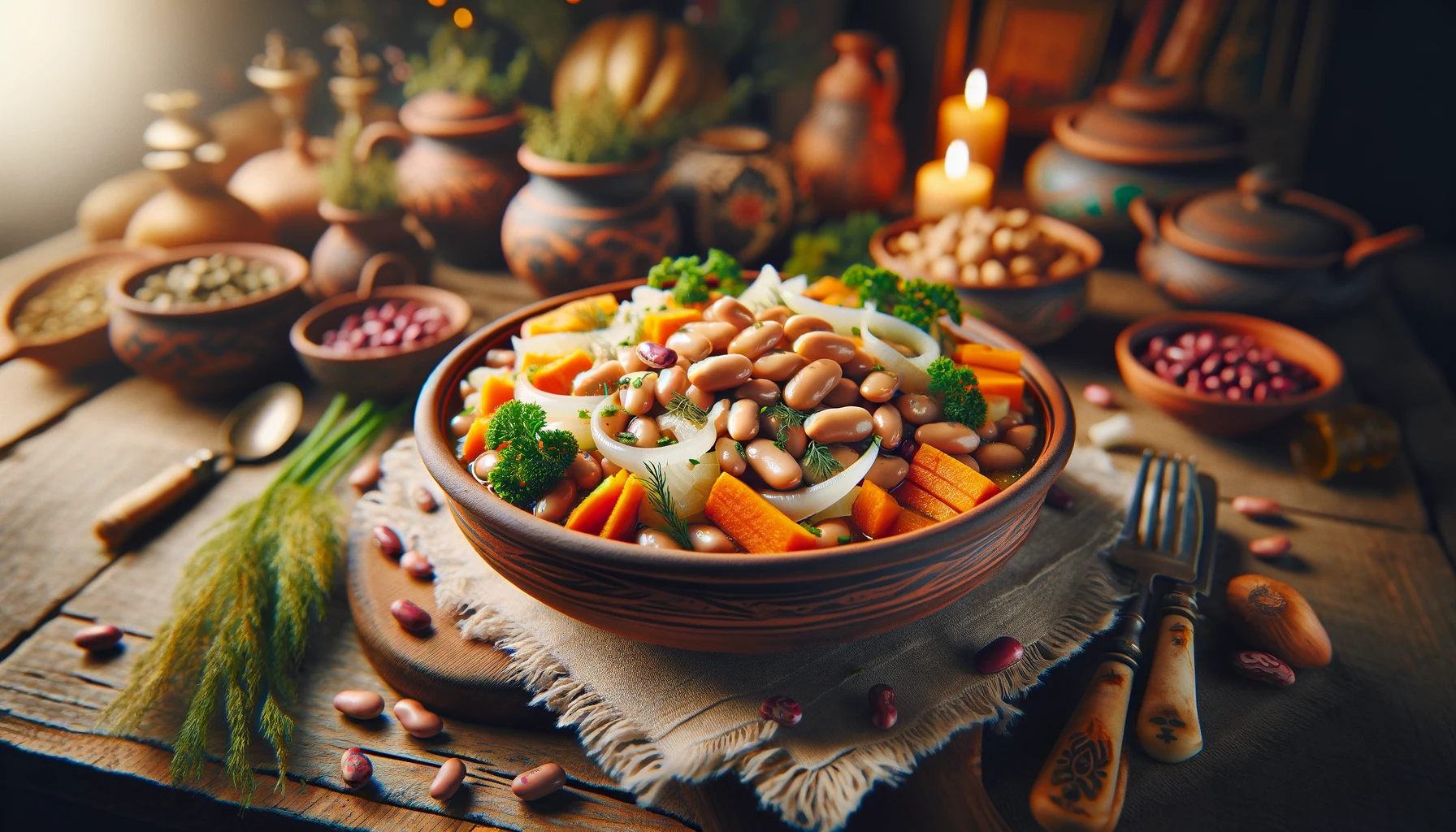
This black-eyed pea stew combines creamy beans, tender sweet potato and carrot in a savoury onion and garlic broth. Dried peas give the broth body as they soften, while the vegetables add a gentle sweetness. The recipe makes six servings and needs about 15 minutes of preparation and an hour on the stove, plus an overnight soak. Serve it with rice, cornbread or cooked greens for a satisfying meat-free meal or as a Southern-inspired New Year's Day side.
Black-eyed peas with sweet potato make a comforting, spoonable stew with earthy beans and naturally sweet vegetables. This Southern-inspired recipe makes six servings, with 15 minutes of preparation and about an hour on the stove after an eight-hour refrigerated soak. The trick is to soften the peas before adding the diced vegetables so they hold their shape.
Choosing the ingredients
Dried black-eyed peas, also called cowpeas, have a cream-coloured skin with a dark spot. Use 300 g (10.6 oz) dried peas, not the same weight of cooked beans. Onion and garlic form the savoury base, while olive oil carries their flavour without smoked meat. Cut the carrot and sweet potato into roughly 1.5 cm (½–¾ inch) cubes. Use 1.2 litres (about 5 US cups) of water or vegetable broth; low-sodium broth gives you more control over seasoning. Parsley or coriander leaves work equally well as the finishing herb.
Black-eyed peas are associated with New Year’s Day meals in the American South. This sweet-potato version is Southern-inspired, rather than traditional Hoppin’ John, which includes rice.
Recipe card
Black-Eyed Pea Stew with Sweet Potato and Carrot
Total time includes an eight-hour refrigerated soak. Older dried peas may need extra simmering.
Equipment: Large bowl, colander, knife, cutting board, 4–5 litre (4–5 quart) saucepan or Dutch oven, wooden spoon
Ingredients
Stew
Seasoning
Instructions
Soak and rinse the peas
Sort and rinse the peas. Cover generously with cold water in a large bowl and refrigerate for about eight hours or overnight. Drain and rinse.
Soften the onion and garlic
Heat the olive oil over medium heat in a large saucepan. Cook the diced onion for five minutes until translucent, stirring occasionally. Add the minced garlic and stir for 30 seconds without browning.
6 minSimmer the soaked peas
Add the drained peas and 1.2 litres of fresh water or broth. Bring to a boil, then reduce to a gentle simmer with the lid slightly ajar. Cook for about 25 minutes; if the peas are still very hard, simmer longer before adding the vegetables.
25 minCook the carrot and sweet potato
Add the diced carrot and sweet potato. Simmer gently for another 20–30 minutes, adding hot water if the beans become exposed. Check several peas for creamy centres and test the vegetables with a fork. Taste before adding salt and pepper, then scatter over the fresh herbs.
25 min
How to get creamy beans without mushy vegetables
Discard the soaking water and start with fresh liquid. After the pot comes to a boil, lower the heat until small bubbles break the surface. A vigorous boil can split the skins. Check a pea after about 25 minutes: it should be starting to soften but still need more cooking. If its centre is hard, continue simmering before adding the vegetables. Keep the liquid above the peas, topping up with hot water when needed. When the vegetables have cooked, press several peas against the side of the pot; their centres should be soft rather than chalky. A fork should slide through a sweet potato cube without resistance, but the cube should hold its shape.
Adjusting the consistency and seasoning
If the stew looks watery, simmer uncovered briefly after the peas are tender. To thicken it without overcooking the vegetables, mash a spoonful of peas and stir them back in. If too thick, add a splash of hot water. Avoid adding lemon juice or vinegar early because acid can delay softening. Taste before adding the full teaspoon of salt, especially with prepared broth.
Substitutions and variations
Butternut squash can replace the sweet potato by volume, although it may soften sooner. Smoked paprika adds depth without bacon. For a faster canned-pea variation, simmer the vegetables in broth until nearly tender, then add drained and rinsed cooked peas to heat through. Begin with less broth since cooked beans absorb less liquid. This variation changes timing and yield; the card applies to dried peas. Check broth labels for wheat, soy, celery and animal-derived ingredients if relevant to your dietary needs.
Serving and make-ahead ideas
Serve over rice or with soft buttery cornbread to soak up the broth. Try jalapeño cheddar cornbread if you prefer a spicy accompaniment. Steamed greens or crisp cabbage salad add contrast. Start soaking the night before or make the finished stew a day ahead. It thickens as it stands.
Storage and reheating
Divide the stew into shallow containers and refrigerate at 4°C (40°F) or colder within two hours, or one hour if the surroundings exceed 32°C (90°F). Use within three days. Freeze in portions for up to three months for best quality. Thaw in the refrigerator, then reheat to 74°C (165°F) throughout, bringing the broth to a boil. Add a little water if needed.
Finish with fresh herbs and serve while the peas are creamy and the sweet potato is tender. A squeeze of lemon at the table is especially good with the earthy beans.
Frequently asked questions
Do black-eyed peas need soaking?
Not necessarily. This version uses an eight-hour soak to shorten and even out cooking; unsoaked peas usually need more simmering and may need additional water.
Why are my peas still hard?
Older peas and acidic additions can slow softening. Keep simmering with sufficient liquid and postpone adding the sweet potato until the peas start to soften.
Can I leave the sweet potato skin on?
Yes, if scrubbed thoroughly. It adds texture; peeling gives a more uniform stew.
Can I make the stew spicy?
Add crushed chilli flakes to the softened onion or offer hot sauce at the table.
Can I double the recipe?
Use a larger pot and double the ingredients, seasoning to taste. Allow extra time to reach a boil but check tenderness rather than doubling the simmering time.
More recipes to try






Spotted a detail that needs correcting? Contact the FeastDelights editors.