Mushroom and Rice Cabbage Rolls with Tomato Sauce
These Ukrainian-style vegetarian cabbage rolls, or holubtsi, wrap tender cabbage leaves around a savoury filling of mushrooms, rice, onion and carrot. Tomato juice moistens the filling and forms a light sauce as the rolls bake under cover. Part-cooking the rice and softening the cabbage first help the parcels cook evenly without splitting. The recipe makes about twelve rolls in roughly two hours, with fresh herbs and spoonfuls of tomato cooking juices to finish. Serve them as a meatless main dish or alongside a fresh salad.
Mushroom and rice cabbage rolls are a meatless version of Ukrainian holubtsi. The filling is built around cooked-down mushrooms rather than minced meat. The important difference from simply wrapping raw rice in cabbage is that the rice is partly cooked before assembly, leaving it enough room and moisture to finish in the oven.
What are meatless holubtsi?
Holubtsi is the Ukrainian name for stuffed cabbage leaves, a dish with many variations. Rice, mushrooms and other vegetables provide a meatless filling in this version. The Library of Congress account of Ukrainian family foodways describes how stuffed cabbage can be adapted by changing the filling. This particular recipe uses tomato juice rather than a thick cream sauce, keeping the finished dish light enough to serve with bread or salad.
Choosing cabbage, rice and mushrooms
Choose a large head of green or white cabbage with intact outer leaves. Loose-leaved heads are easier to separate, but a tightly packed head works if softened gradually in hot water. Keep the smaller leaves for lining the dish or patching tears. Long-grain white rice is a practical choice because it partially cooks quickly and does not become overly sticky. One US cup of dry rice is roughly 185–200 g depending on variety; measure before cooking. Brown rice requires a longer precooking time and is not a direct substitution.
Use 500 g (about 1.1 lb) of cultivated edible mushrooms, such as button or cremini. Chop them finely enough that the filling packs together without large gaps. Onion and carrot add sweetness. Tomato juice supplies both liquid and acidity; use plain juice rather than heavily salted cocktail juice. Vegetable broth can replace the added water for more depth. If keeping the dish vegan, check that the broth contains no animal-derived ingredients.
Equipment
Use a large stockpot, tongs, colander, small rice saucepan, wide skillet, knife and a deep covered baking dish around 23 × 30 cm (9 × 12 inches). A tight-fitting lid or foil is important to trap steam during baking. Have a clean tray for laying out softened leaves.
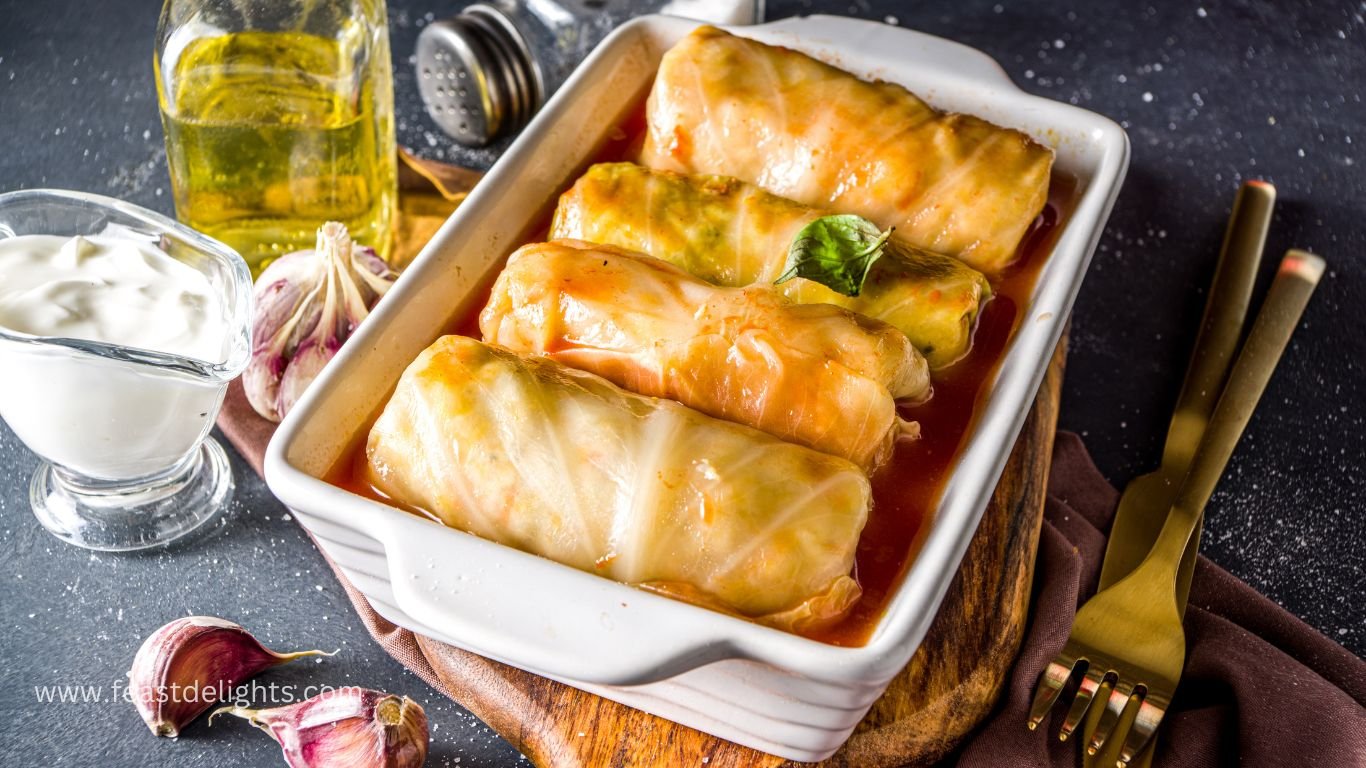
Recipe card
Mushroom and Rice Cabbage Rolls with Tomato Sauce
Blanch leaves, part-cook rice and prepare filling concurrently where possible. Allow extra covered baking time if rice is still firm.
Equipment: Large pot, tongs, colander, rice saucepan, wide skillet, knife, board and deep covered baking dish
Ingredients
Cabbage
Filling
Sauce
Seasoning
To finish
Instructions
Soften the leaves and part-cook rice
Carefully remove the cabbage core. Lower the head into gently simmering water using tongs and lift off leaves as they become pliable, until you have about 12 plus spare leaves. Drain. Rinse rice, simmer in plenty of water for 8–10 minutes until partly tender but still firm in the centre, and drain.
Cook the mushroom filling
Heat vegetable oil in a wide skillet over medium heat. Sauté onion and carrots for about 5 minutes, then add mushrooms and cook 8–10 minutes or until their released liquid evaporates. Mix with the drained rice, ½ cup tomato juice for the filling, salt and pepper.
Fill and roll the leaves
Trim the thick ribs of the softened cabbage leaves without cutting through them. Place a portion of filling near the stem end of each leaf, fold in the sides and roll without packing too tightly.
Bake covered in tomato liquid
Preheat oven to 180°C (350°F). Line a deep baking dish with spare leaves and arrange rolls seam-side down. Add the remaining ½ cup tomato juice and enough water or broth to reach approximately halfway up the rolls. Cover tightly and bake 50–60 minutes, or longer if needed, until the cabbage and rice in a test roll are fully tender. Add hot liquid if drying.
Check and serve
Open one roll to check the rice has no hard centre. Rest 5 minutes, spoon over the pan juices and scatter fresh herbs before serving.
How to soften cabbage without tearing it
Remove damaged outer leaves and carefully cut around the core with the cabbage on a stable board. Lower the head into gently simmering water using tongs and peel away outer leaves as they loosen. Keep your hands away from the hot water. Repeat until you have around twelve usable leaves, plus spare pieces. The leaf should bend around the filling without cracking but should not be falling apart. Drain well and shave down the raised thick rib with a knife held almost parallel to the leaf. Do not cut all the way through.
How to keep the mushroom and rice filling tender
Rinse the white rice and simmer in plenty of water for about 8–10 minutes, or until the outside is softened but the centre is still firm. Drain well. While the rice cooks, sauté the onion and carrots, then add mushrooms. Cook uncovered until most mushroom liquid evaporates. Combine with the rice, half the tomato juice and seasoning. The filling should hold together when spooned but should not be soupy. Do not pack rice tightly into the leaves because it will swell during cooking.
Rolling, arranging and baking
Lay a leaf rib-side down with its thicker end facing you. Spoon a portion of filling near that end, fold the lower edge over it, bring both sides in and roll towards the tip. Use less filling for smaller leaves. Arrange seam-side down, close together in a single layer, on a few spare cabbage leaves to help prevent sticking. Add the remaining tomato juice and enough water or broth to come roughly halfway up the rolls. Cover tightly and bake at 180°C (350°F). Check after 50 minutes; the cabbage should yield to a fork and the rice in a test roll should be tender, with no hard centre. Add hot liquid if the dish starts drying out and continue covered baking if necessary.
Troubleshooting
Leaves split: soften them longer, trim the thick rib and avoid overfilling. Patch small tears with spare cabbage. Filling is watery: cook the mushrooms in a wider pan or in batches until excess moisture evaporates. Rice remains hard: add hot broth, cover and continue baking until the centre is tender. Rolls unravel: place the seams down and fit the parcels snugly. Sauce tastes thin: after the rolls are cooked, spoon some liquid into a saucepan and reduce briefly before serving.
Variations and serving ideas
Try a mixture of cultivated mushrooms for a deeper flavour, or use dill and parsley together. Substitute vegetable broth for water. For a thicker tomato sauce, stir a spoonful of tomato paste into the cooking liquid; taste before adding more salt. Serve with cucumber salad with garlic and dill, homemade rye bread or a small bowl of vegetarian beetroot borscht. For a different filling, see potato and rice cabbage rolls; the meat and rice holubtsi are a separate non-vegetarian version.
Make ahead, storage and food safety
Blanch and chill the cabbage leaves a day ahead if convenient. Prepare the mushroom mixture separately and refrigerate promptly, but part-cook the rice immediately before assembly so it does not sit warm. Serve freshly cooked where possible. For leftovers containing rice, divide into shallow portions and cool quickly, ideally within one hour. Refrigerate at 4°C (40°F) or colder and eat within 24 hours, or freeze promptly for up to two months for best quality. Thaw in the refrigerator and reheat only once, until steaming hot throughout and at least 74°C (165°F). The stricter rice guidance is consistent with the UK Food Standards Agency’s recommendations. Check prepared broth and seasonings for wheat, celery and other allergens; the basic recipe does not require dairy or eggs.
Open one roll before serving to check the rice is soft at its centre. Finish with fresh herbs and enough tomato cooking liquid to keep each portion moist.
Frequently asked questions
Can I use Savoy cabbage?
Yes. Its thinner leaves often soften faster, so blanch only until pliable.
Can I make small rolls instead?
Yes. Use smaller leaves and less filling. The yield will increase, and you should begin checking doneness earlier.
Should the leaves be completely cooked before rolling?
No. They should be flexible enough to wrap, since they will soften further during covered baking.
Can I replace white rice with buckwheat?
Cooked or partly cooked buckwheat is used in some versions of holubtsi, but the liquid and cooking time may differ. Check the filling for tenderness.
Can I use tomato passata instead of juice?
Yes, dilute it with water to a pourable consistency before measuring the required amount.
Why do I need to part-cook the rice?
It reduces the risk of a hard centre and makes it easier to judge how much the filling will expand during baking.
More recipes to try


Spotted a detail that needs correcting? Contact the FeastDelights editors.