Cabbage Rolls with Potato, Rice and Tomato Sauce
These vegetarian cabbage rolls wrap tender leaves around grated potato, partly cooked rice, onion and carrot, then simmer them in a tangy tomato and sour cream sauce. The filling becomes soft and cohesive without meat, while the cabbage keeps each portion neatly enclosed. A large pot and a separate pan for the filling make the work easier. The recipe serves six and takes about 1 hour 55 minutes, including softening the leaves, preparing the filling and a gentle 50–60 minute simmer.
Potato and rice give these cabbage rolls a softer, starchier filling than meat-filled versions. Keep the leaves flexible, the rolls evenly sized and the cooking liquid at a gentle simmer so the potatoes soften without the parcels falling apart.
Potato and rice cabbage rolls at a glance
Plan for six portions. Allow about 55 minutes for preparing the cabbage, rice and vegetables and up to 60 minutes for simmering. The number of individual rolls depends on leaf size and how generously each is filled. This is a meat-free version with dairy in the sauce.
Choosing ingredients
Choose a large firm cabbage with intact outer leaves. A loose savoy cabbage may be easier to separate, though its leaves are thinner. Peel and grate 500 g potatoes (about 18 oz). Use 100 g rice (about ½ US cup, depending on the grain) measured dry before partly cooking; the older ingredient label was ambiguous, and this interpretation follows its instruction to cook the rice before mixing. Confirm the resulting filling yield during kitchen review.
Use one medium onion, one medium carrot, two tablespoons neutral oil, one teaspoon fine salt and half a teaspoon black pepper. For the sauce, measure 150 ml tomato sauce, 150 g sour cream and 200 ml water (about ¾ US cup plus 1 tablespoon). The water was already specified in the original method and is now included in the ingredient list. Use plain tomato sauce rather than concentrated tomato paste in the same volume.
How to soften leaves without tearing
Remove damaged outer leaves. Carefully cut around the core and lower the cabbage into a pot of simmering water with tongs. As the outer leaves loosen, lift each out and place on a tray. Work gradually rather than pulling tightly attached leaves. Trim the thick central rib without cutting a hole through the leaf. Allow the leaves to cool enough to handle. Keep small or torn leaves to line the base of the cooking pot.
Recipe card
Cabbage Rolls with Potato, Rice and Tomato Sauce
55 minutes preparation includes leaf blanching, partly cooking rice and sautéing vegetables; up to 60 minutes simmering. Timing and rice measurement interpretation require kitchen review.
Equipment: Large pot for cabbage, tongs, paring knife, grater, sieve, skillet, mixing bowl, heavy lidded casserole and thermometer.
Ingredients
Cabbage
Filling
Sauce
Filling
Sauce
Instructions
Soften leaves
Core cabbage carefully. Lower into simmering water with tongs and remove leaves as they soften. Trim thick ribs and cool leaves enough to handle.
Prepare filling
Partly cook 100 g dry rice in water and drain. Sauté onion and carrot in 2 tbsp oil until soft. Grate peeled potatoes and drain excess liquid. Mix potato, rice, vegetables, salt and pepper.
Roll
Place 1–2 tbsp filling on each softened leaf, fold sides inward and roll snugly but leave room for expansion.
Make sauce
Line the pot with spare leaves. Arrange rolls seam-side down. Mix 150 ml tomato sauce, 150 g sour cream and 200 ml water, then pour around rolls.
Simmer
Cover and gently simmer 50–60 minutes, checking liquid levels. Test that cabbage, rice and potato filling are fully tender. Extend cooking if needed.
Making the potato and rice filling
Partly cook the measured rice in water until the outer part softens but the centre remains firm. Drain thoroughly. Soften diced onion and grated carrot in the oil. Grate the potatoes close to shaping time and drain any substantial pool of liquid; do not squeeze them completely dry. Combine the vegetables, drained rice, salt and pepper. Keep the mixture cool if there is a delay; do not leave partly cooked rice standing at room temperature.
Folding and simmering
Put one or two tablespoons of filling near the base of a softened leaf. Fold the sides inward and roll towards the tip. Leave a little room for rice to expand. Arrange seam-side down in a heavy pot, using spare cabbage leaves on the bottom to reduce sticking. Whisk tomato sauce, sour cream and 200 ml water together and pour around the rolls. Bring to a gentle simmer, cover, and cook for 50–60 minutes. Avoid rapid boiling, which can break the parcels and separate the cream. Check liquid levels partway through and add a little hot water only if necessary.
Test a representative roll: the cabbage rib should cut easily, rice should be tender with no hard centre, and the grated potatoes should be soft rather than crunchy. Extend simmering if necessary. Do not judge readiness solely by the colour of the outer leaf.
Troubleshooting
Leaves split: blanch longer and trim the central rib. Rolls uncoil: put them seam-side down close together. Filling is hard: keep the pot covered and gently simmer longer; rice needs sufficient moisture. Sauce separates: reduce heat and avoid a rolling boil. A grainy sauce is largely a texture issue, but check food safety and temperature separately.
Serving and substitutions
Serve with extra chopped dill or parsley if desired. For a vegetarian meal, pair with king oyster mushrooms in sour cream sauce or a crisp salad. For another potato-based dish see sweet cheese varenyky as a contrasting course, or serve honey and kefir cake afterwards. Plain unsweetened plant-based sour cream can be tried for a dairy-free adaptation; follow its heating instructions. Do not substitute dry rice directly into the filling without allowing for extra liquid and cooking.
Make ahead, storage and allergens
Blanch the leaves and cool them promptly if preparing ahead. Prepare the partly cooked rice close to assembly and refrigerate promptly if delayed. Contains milk; verify packaged sauces for additional allergens. For safe cooling and reheating, see FoodSafety.gov’s handling guidance.
Refrigerate within 2 hours (1 hour above 32°C/90°F), at 4°C/40°F or colder; use within 3 days. Reheat to 74°C/165°F throughout. Freeze cooked rolls for up to 2 months for quality, though potatoes and cream sauce may change texture; thaw in the refrigerator.
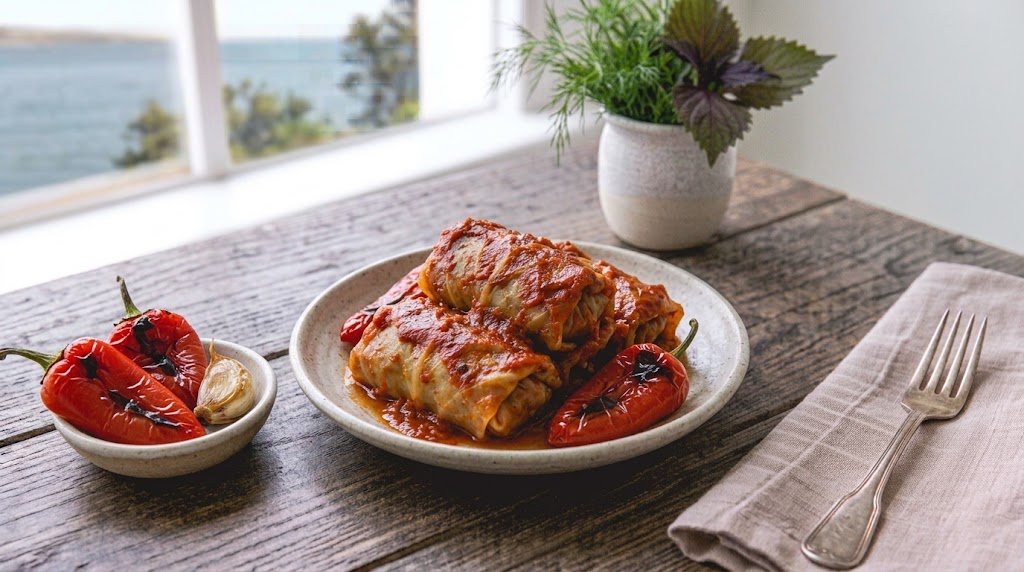
Lift the tender rolls carefully into shallow bowls and spoon the tomato cream sauce over them.
Frequently asked questions
Do I have to cook the rice first?
Yes, partly cook and drain the measured dry rice so it can finish softening inside the rolls.
What if my cabbage leaves tear?
Use the torn leaves to line the pot, or patch small tears with an overlapping piece.
Can I use savoy cabbage?
Yes, its leaves can separate more easily, but may need shorter blanching.
Can I bake the rolls instead?
This formula is written for a covered stovetop simmer; an oven adaptation needs its own timing and liquid checks.
Why is the potato filling still firm?
Continue gentle covered simmering with enough liquid until the grated potato and rice are tender.
Can I make the sauce dairy-free?
Try plain unsweetened plant-based sour cream and follow its heating guidance; texture may differ.
More recipes to try






Spotted a detail that needs correcting? Contact the FeastDelights editors.