Vegetarian Ukrainian Borscht with Beetroot and Cabbage
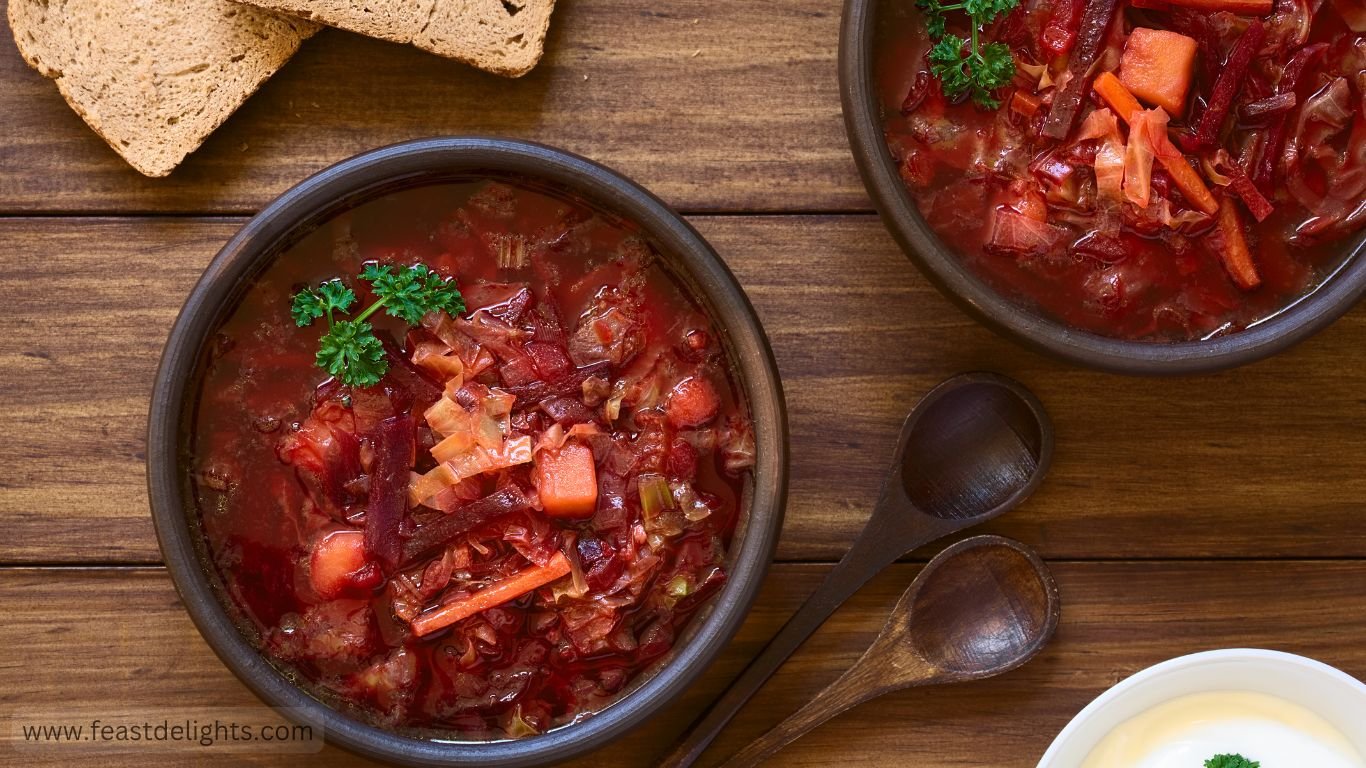
This vegetarian Ukrainian borscht combines earthy beetroot, tender potatoes, cabbage, sweet red pepper and tomatoes in a bright, gently tangy vegetable broth. Cooking the beetroot separately with tomato paste and a little vinegar helps preserve its deep red colour without overcooking the cabbage. The recipe makes six servings in about 80 minutes, including a short covered rest. Serve it hot with fresh dill and a spoonful of sour cream, or omit the dairy for a plant-based bowl.
Prepare the beetroot mixture and the soup base in separate pans. This lets the potatoes soften while the beetroot cooks with tomato paste and vinegar. Combining them near the end keeps the vegetables distinct and lets you adjust the sweet-sour balance.
What makes this vegetarian borscht different?
Unlike versions made with meat stock, this soup relies on the sweetness of beetroot, onion and carrot, the savoury depth of tomato paste and the acidity of vinegar. It is a vegetable-forward version of Ukrainian borscht, not a claim that all Ukrainian families prepare it the same way. Choose firm beetroot that is easy to cut evenly.
Ingredients and equipment
Use raw beetroot, not pickled beetroot, for the stated vinegar quantity. Cut the roots into thin matchsticks so they soften quickly. Dice potatoes into roughly 2 cm (¾ inch) pieces and slice the cabbage finely. Choose a genuinely vegetarian vegetable broth; stock cubes can already contain plenty of salt. Tomato paste contributes concentrated flavour while fresh tomatoes provide liquid and acidity. Sugar is there to balance the vinegar, not make the soup sweet. Use a 4–5 litre (roughly 4–5 quart) pot, a covered skillet, a knife, board, grater and measuring spoons.
Recipe card
Vegetarian Ukrainian Borscht with Beetroot and Cabbage
Beetroot cooks alongside the soup base; cooking time includes heating the broth. Allow extra time if vegetables are cut thickly.
Equipment: 4–5 litre pot, covered skillet, knife, cutting board, grater, measuring spoons and jug
Ingredients
For both pans
Beetroot base
Soup base
To serve
Instructions
Soften the beetroot
Heat 1 tablespoon oil in a skillet over medium heat. Add beetroot, tomato paste, vinegar, sugar and 100 ml water. Cover, reduce to medium-low and simmer about 15 minutes, stirring occasionally, until the matchsticks are nearly tender.
Cook the onion and carrot
Meanwhile heat the remaining tablespoon of oil in a large pot over medium heat. Add onion and carrot and cook about 6 minutes, stirring, until softened but not browned.
Simmer potatoes and cabbage
Add broth, potatoes and bell pepper. Bring to a boil, then reduce to a gentle simmer for about 10 minutes. Add cabbage and tomatoes and simmer another 10 minutes, until a knife slides into a potato piece without resistance.
Combine the two bases
Stir in the beet mixture, salt and black pepper. Simmer gently for 5 minutes, until the beetroot is tender. Taste and adjust salt or vinegar in small increments.
Rest and serve
Turn off the heat, stir in dill and cover for 15 minutes. Ladle into six bowls and offer sour cream separately.
How to get a deep red colour and tender vegetables
Keep the beetroot mixture at a gentle simmer with the lid on, adding a splash of water only if it starts to catch. The vinegar helps protect the red beet pigments. Add the potatoes to the main pot before the tomatoes, since acidic ingredients can slow potato softening. Check a potato with the tip of a knife before combining the pans. Once the beetroot goes in, avoid prolonged vigorous boiling. A finished spoonful should contain tender beetroot, potatoes that hold their shape and cabbage with a little texture.
Troubleshooting
Too sour: add a little unsalted broth, taste, then add a small pinch of sugar if necessary. Too sweet: add vinegar a teaspoon at a time. Too thick: stir in hot broth or water, then check the seasoning. Too thin: simmer the vegetable base uncovered before adding the beet mixture rather than boiling the finished red soup for a long time. If the potatoes are still firm, cook them longer before combining the pans.
Substitutions and variations
Use lemon juice instead of red wine vinegar, adjusting to taste. White cabbage works in place of green cabbage. For a heartier meal, stir in drained, cooked white beans with the beet mixture. Use water instead of stock if needed, but expect a lighter flavour and adjust the salt. Omit the sour cream or use an unsweetened plant-based alternative for a vegan version, checking the broth ingredients too.
Serving ideas
Ladle into warm bowls and finish with dill. A spoonful of sour cream makes the broth creamy as it is stirred in. Serve with homemade rye and wheat bread or Ukrainian garlic pampushky. For a different soup on another day, try green borscht with sorrel and egg. The pork or beef borscht is a separate meat-based option.
Make ahead, storage and reheating
The soup can be made a day ahead; keep the garnish separate. Divide leftovers into shallow containers and refrigerate within two hours (one hour above 32°C/90°F). Keep at 4°C/40°F or colder for 3–4 days. Freeze without sour cream for up to 3 months for best quality; potatoes may soften. Thaw in the refrigerator and reheat to 74°C/165°F throughout. Follow USDA reheating guidance when warming leftovers. The sour cream contains milk; check stock for celery, wheat or other allergens and bread accompaniments for gluten.
Finish with fresh dill and adjust the vinegar at the table if you prefer a sharper bowl. Keep the sour cream separate so each person can choose their own topping.
Frequently asked questions
Can I use canned beetroot?
Use plain cooked beetroot, drained, and add it near the end. Pickled beetroot is not a direct substitute because its acidity varies.
Can I prepare the vegetables ahead?
Yes. Refrigerate the chopped vegetables in separate covered containers overnight; keep peeled potatoes covered with cold water in the refrigerator and drain before cooking.
Is this a cold borscht?
No. This is a hot vegetable soup; chilled beet soups use different techniques and often different ingredients.
Do I need to peel beetroot?
Peeling is recommended for this version, as the thin matchsticks will have a more uniform texture. Scrub the roots before peeling.
Can I grate the beetroot instead?
Yes. Coarsely grated beetroot will soften sooner than matchsticks, so check it early and keep the final simmer brief.
How can I avoid beetroot staining my hands?
Wear food-safe gloves if desired, and use a washable board. Clean surfaces and tools promptly after cutting.
More recipes to try

Russian Pelmeni Recipe with Soft Buttermilk Dough

Belyashi Recipe with Juicy Beef and Soft Yeast Dough

Turkey Jambalaya with Rice, Corn and Crispy Bacon

Otbivnaya Chicken Tenders with a Crisp Pan Fried Coating

Easy Mushroom Gravy with Browned Mushrooms and Thyme

Chicken and Vegetable Skewers with Lemon Herb Marinade
Spotted a detail that needs correcting? Contact the FeastDelights editors.