Ukrainian Holubtsi with Meat, Rice and Tomato Sauce
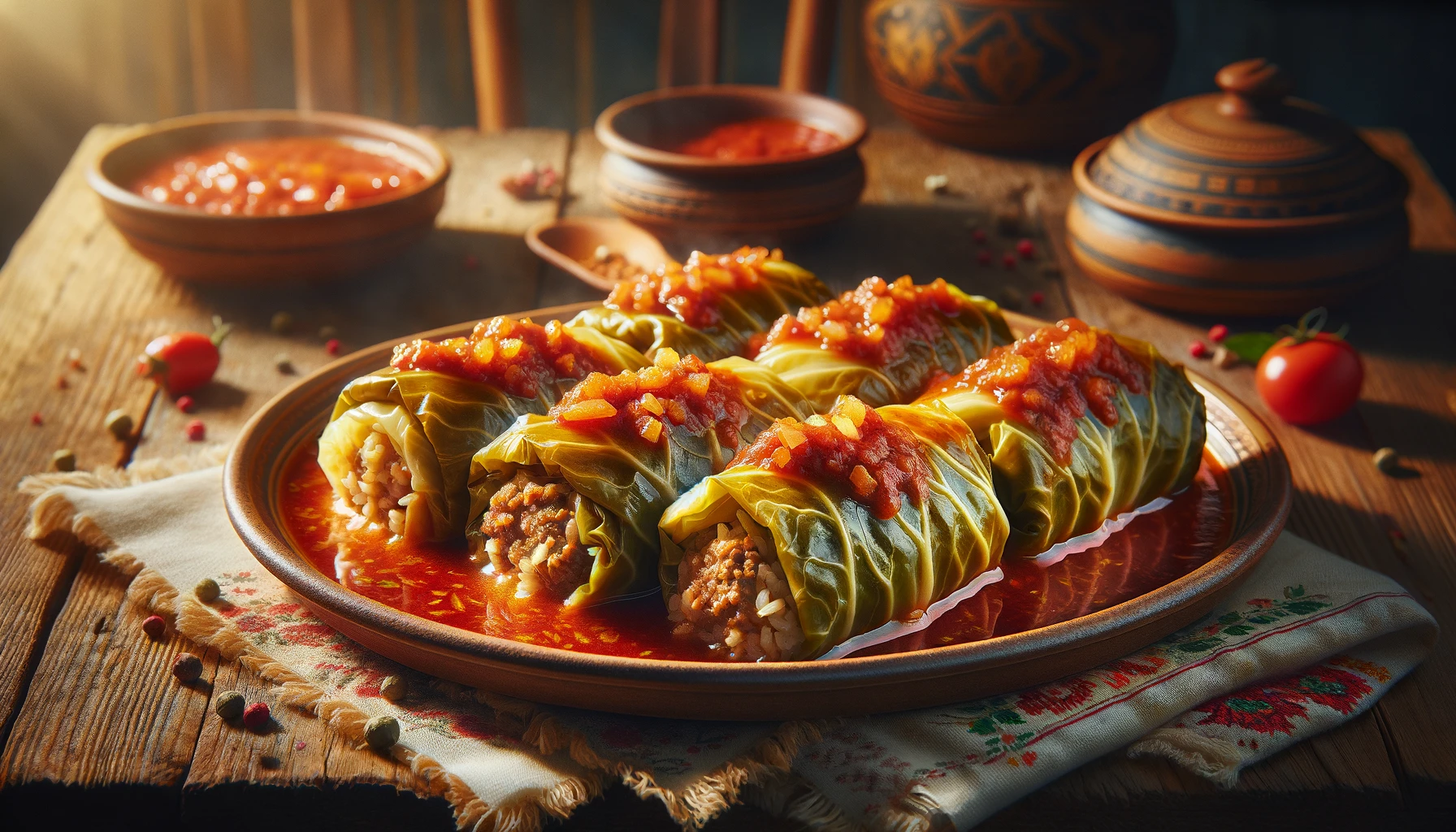
Ukrainian holubtsi are tender cabbage rolls wrapped around a savoury filling of ground pork and beef, partially cooked rice, onion and carrot. The rolls simmer gently in tomato sauce until the cabbage softens and the meat is cooked through. This stovetop version makes eight servings and needs no oven. Softening the cabbage leaves before rolling helps them fold without tearing, while the rice finishes cooking inside the filling. Serve the warm rolls with their tomato sauce and a spoonful of sour cream.
Ukrainian holubtsi are stuffed cabbage rolls made by wrapping softened cabbage leaves around a filling, then cooking the parcels until the cabbage is tender and the filling is fully cooked. This version combines ground pork and beef with rice, onion and carrot, and simmers the rolls in a tomato-based sauce. It makes eight servings, with an estimated total time of about 1 hour 55 minutes. Serve hot with sour cream and plenty of sauce.
Holubtsi are part of Ukrainian home cooking, with different fillings, sauces and sizes found in different households. This particular meat-and-rice version is distinct from our mushroom and rice cabbage rolls, which uses a meat-free filling. It is a stovetop recipe, so a deep lidded pot is more useful than a baking dish.
Choose the cabbage and filling ingredients
Look for a large green cabbage with broad outer leaves and no extensive damage. Very small or tight heads may yield fewer usable leaves. Removing the tough core helps the leaves loosen as they soften. Blanching the whole cabbage lets you remove leaves gradually without trying to pull stiff raw leaves apart. Use spare inner leaves to line the pot and protect the rolls from direct heat.
Use 500 g (about 1.1 lb) ground pork and beef. The mixture provides richness and a tender texture, while the rice absorbs moisture as it finishes cooking. Use 180 g dry long-grain white rice and par-cook it first. The grains should still be firm in the centre after draining. Fully cooked rice may become too soft in the filling; dry rice requires different liquid proportions and more space to expand.
Two onions and one grated carrot give the dish sweetness and depth. One onion goes into the filling with the carrot; the second is softened for the tomato sauce. This makes use of both onions in the original ingredient list. Tomato paste provides concentrated flavour, and tomato sauce and water make a liquid suitable for gentle simmering. Sour cream is served separately for a cool, tangy contrast.
Equipment and cooking order
You need a deep pot large enough to blanch the cabbage, a sharp knife, tongs, a slotted spoon, a colander, a skillet, a mixing bowl, and a deep lidded pot for simmering. Use a food thermometer with a narrow probe to check the centres of the largest rolls. If the same pot is used for blanching and cooking, drain it and clean it before preparing the sauce.
Start softening the cabbage and par-cooking the rice while preparing the onions and carrot. Let the rice and cooked vegetables cool rapidly before adding raw meat. Keep the meat chilled until needed and avoid contact between raw filling and foods that will be served without cooking. Roll the cabbage on a clean board and wash hands, utensils and surfaces after handling the raw mixture.
Recipe card
Ukrainian Holubtsi with Meat, Rice and Tomato Sauce
Includes cabbage and rice preparation and about 45–55 minutes gentle simmering. Some preparation can overlap; allow more time for thick cabbage or larger rolls.
Equipment: Deep blanching pot, tongs, knife, colander, skillet, mixing bowl, lidded cooking pot, slotted spoon, instant-read food thermometer.
Ingredients
Wrappers
Filling
Filling and sauce
Filling
Filling and sauce
Filling
Serving
Filling and sauce
Tomato sauce
Cooking
Instructions
Soften and trim the cabbage leaves
Remove damaged outer leaves and cut around the cabbage core with a sharp knife. Bring a deep pot of lightly salted water to a boil. Carefully lower the whole head with tongs or a large slotted spoon. As the outer leaves become flexible, lift them out one by one, returning the head to the pot as needed. Drain leaves and shave thick central ribs with a knife without cutting through the leaf.
Partially cook the rice
Rinse the 180 g dry rice. Simmer in plenty of water for about 8 minutes until the outside softens but the centre remains firm. Drain well and spread in a shallow dish to cool quickly. Use promptly in the filling; refrigerate if it will not be used immediately.
Prepare the meat filling
Heat 1 tablespoon of the oil in a skillet over medium heat. Cook one diced onion and grated carrot for 5–8 minutes until softened. Cool promptly. Mix with the ground pork and beef, drained rice, about three-quarters of the measured salt and the pepper. Mix gently until evenly distributed. Keep chilled until rolling, and wash hands and surfaces after handling raw meat.
Fill and roll the cabbage
Lay a softened leaf with its trimmed rib facing you. Place about 2 tablespoons of filling near the base, adjusting to leaf size. Fold the sides inward and roll away from you to enclose the filling. Leave a little room for the rice to expand. Use smaller leaves for smaller rolls; do not force a torn leaf to hold a large filling.
Prepare the tomato sauce and arrange the rolls
Heat the remaining tablespoon of oil in the cooking pot. Soften the second diced onion over medium heat, then stir in the tomato paste for about 1 minute. Add the tomato sauce and 500 ml (about 2 cups) water, stir and season with the remaining salt to taste. Transfer sauce temporarily to a jug or bowl. Line the pot with spare cabbage leaves and arrange the rolls seam-side down, snug but not crushed. Pour the sauce over the rolls.
Simmer gently and check the filling
Bring the sauce to a gentle simmer, cover and cook for about 45–55 minutes, or longer if needed. Check occasionally that there is enough liquid to prevent scorching, adding a little hot water if necessary. Check several of the largest rolls with a food thermometer: the centre of the pork and beef filling must reach at least 71°C (160°F), and the cabbage and rice must be tender. Serve hot with sour cream and spoonfuls of tomato sauce.
How to soften and roll cabbage leaves without tearing
Cut around the core rather than cutting deeply through the outer leaves. Carefully lower the cabbage into boiling water and use tongs to peel away the leaves as they soften. Work gradually; the outside will become flexible before the inside. Do not overcook the entire head until it falls apart. Drain and cool each leaf enough to handle it.
The raised central rib is thicker than the rest of the leaf. Lay the leaf flat and carefully shave the rib with a sharp knife until it bends easily. Do not remove a large section of the leaf unless necessary. A small tear can sometimes be folded inward or covered with an overlapping piece of cabbage.
Place the filling near the leaf base, fold the sides towards the middle and roll to form a closed parcel. Use about two tablespoons for a medium leaf; adjust according to the actual leaf size. The roll should feel secure but not packed tightly, because the rice needs room to finish cooking. Keep the rolls seam-side down as you arrange them.
Simmering the rolls in tomato sauce
Use the remaining oil to soften the second onion. Briefly cook the tomato paste with it, then add the sauce and water. A thin sauce is appropriate at the start: it provides moisture for the cabbage and rice during cooking. If the sauce is thick before simmering, add a little more water.
Line the pot with spare leaves. Arrange the rolls snugly, seam-side down, in one or two layers depending on pot size. Pour over the tomato sauce and bring to a gentle simmer. Cover the pot to trap steam and reduce evaporation. Do not boil vigorously, as movement can undo the seams. Check occasionally that the pot is not drying out, and add hot water as needed.
After about 45–55 minutes, use a thermometer inserted into the centre of several large rolls, particularly those in different layers. For this ground pork and beef filling, the minimum temperature is 71°C (160°F), consistent with FoodSafety.gov guidance. The rice should also be tender and the cabbage easy to cut. If any roll is below the safe temperature or the rice remains firm, continue simmering and check again. A poultry filling requires 74°C (165°F).
Troubleshooting cabbage rolls
Leaves crack when folding: Blanch a little longer and shave the thick rib. Use a larger leaf or reduce the amount of filling. Very small leaves can be used for lining the pot rather than rolling.
Filling is dry: Avoid compacting the meat tightly. Check that there is enough simmering liquid. Lean meat may need a slightly different balance of fat and moisture, so do not expect an identical texture when substituting poultry.
Rice remains firm: Check the amount of liquid, keep the pot covered and continue simmering. Par-cooking rice as directed reduces this risk. If the meat has reached its safe temperature but the rice is still hard, the rolls are not yet finished.
Rolls open: Arrange seam-side down, avoid overfilling and use a gentle simmer. Lift cooked rolls with a broad spoon rather than piercing them with a fork.
Serving ideas and variations
Spoon the tomato sauce over the cabbage rolls and add sour cream at the table. Chopped dill or parsley adds freshness. A fresh cucumber salad or vinegret beet salad provides contrast to the rich filling. For a larger Ukrainian-inspired meal, serve a smaller portion alongside potato varenyky with fried onion.
Ground beef alone can replace the meat mixture, although the flavour and texture will change. Ground poultry requires a higher safe internal temperature. For meat-free rolls, use a recipe specifically developed for vegetables and grains rather than assuming the same filling proportions will work. Use plant-based sour cream or omit it if avoiding dairy.
Make ahead, storage and freezing
Blanch leaves and refrigerate them promptly if preparing ahead. Cook the rice shortly before assembling, cool it rapidly and keep the filling cold until the rolls go into the pot. Do not hold a raw meat and partially cooked rice filling at room temperature for an extended period.
For leftovers, follow a conservative rice-storage approach: divide the rolls and sauce into shallow containers, cool quickly, ideally within one hour, and refrigerate at 4°C (40°F) or below. Use refrigerated rolls within 24 hours, or freeze portions promptly. This follows the principle in UK food safety guidance for cooked rice. Reheat only once, covered with sauce or a splash of water, until the centre reaches 74°C (165°F).
Freeze cooked rolls with their sauce in labelled portions at −18°C (0°F) or colder. Use within two to three months for best quality. Thaw in the refrigerator and heat thoroughly. The sour cream is best added fresh after reheating.
Contains milk if served with sour cream. Check packaged tomato sauce, meat and other ingredients for unexpected allergens and cross-contact. The original proportions are retained, but the second onion and 500 ml sauce water are now explicitly accounted for in the method and ingredient list. The timing estimate includes preparation and simmering; cooking may take longer depending on the cabbage size and roll thickness.
Frequently asked questions
What does holubtsi mean?
Holubtsi is the Ukrainian name for stuffed cabbage rolls. Fillings and cooking liquids vary by region and household; this version uses meat, rice and tomato sauce.
Which cabbage is easiest to roll?
A large green cabbage with flexible outer leaves is a good choice. Avoid very tightly packed small heads if you need broad wrappers. Savoy cabbage can work but may soften more quickly.
Can I use raw rice instead?
This version is designed for partially cooked rice. Raw rice needs more liquid and space to expand, so substituting it without adjusting the method can make the filling hard or split the rolls.
Why are my cabbage rolls falling apart?
The leaves may be too stiff, the ribs too thick or the rolls overfilled. Blanch until flexible, shave the thick ribs, fold the sides in and arrange seam-side down.
Can I use ground turkey?
Yes, though the filling may be leaner and drier. Use the same rice method and cook any poultry filling to at least 74°C (165°F) throughout.
Can I cook them in the oven?
A covered ovenproof dish is possible, but this recipe is written for stovetop simmering. Baking times vary with dish depth and oven; use a thermometer and check cabbage tenderness rather than relying on the stovetop timing.
Can I make holubtsi without meat?
Yes. For a distinct meat-free version, use a recipe designed for mushroom and rice filling rather than simply removing the meat from this one.
Can I freeze cooked cabbage rolls?
Yes. Cool rapidly, portion with sauce and freeze promptly. Thaw in the refrigerator, then reheat once until the centre reaches 74°C (165°F).
More recipes to try






Spotted a detail that needs correcting? Contact the FeastDelights editors.