Greek Vasilopita-Style New Year Cake with Orange and Nuts
This vasilopita-style Greek New Year cake is a moist orange and olive oil cake with ground walnuts or almonds, vanilla and a simple citrus glaze. Its round shape is suitable for the festive cutting tradition, while any celebratory coin or token is kept outside the food. The recipe makes 10–12 slices in a 23 cm round cake tin. Allow about two hours including baking and cooling, and serve with coffee or fresh orange segments.
This vasilopita-style Greek New Year cake is a round orange and olive oil cake with ground walnuts or almonds and a simple sugar glaze. It makes 10–12 slices in a 23 cm tin and takes approximately two hours and ten minutes, including cooling. The flavour is gently citrusy with a rich, tender crumb.
The Greek New Year tradition
Vasilopita is associated with Saint Basil and the New Year. Visit Greece’s account of Saint Basil’s cake describes regional variations and the lucky-coin custom. This orange and nut cake is one inspired version, not a single definitive traditional formula. Keep any hard coin or token separate from the cake to avoid an unexpected choking or dental hazard.
Choosing the oil, orange juice and nuts
A mild olive oil lets the orange and vanilla come through; a strongly peppery oil will be more noticeable. Use the measured orange juice, preferably freshly squeezed and strained. Ground walnuts contribute a richer flavour, while ground almonds give a milder result. Do not substitute nut butter, which changes the moisture and fat distribution. Weigh the flour and nuts, and measure baking powder level rather than heaped.
Equipment and preparation
Choose a deep 23 cm round cake tin, grease it and line the base with parchment. Have a scale, whisk or mixer, spatula and cooling rack ready. If your tin is shallow, do not fill it more than about two-thirds full; bake excess batter separately and check it sooner.
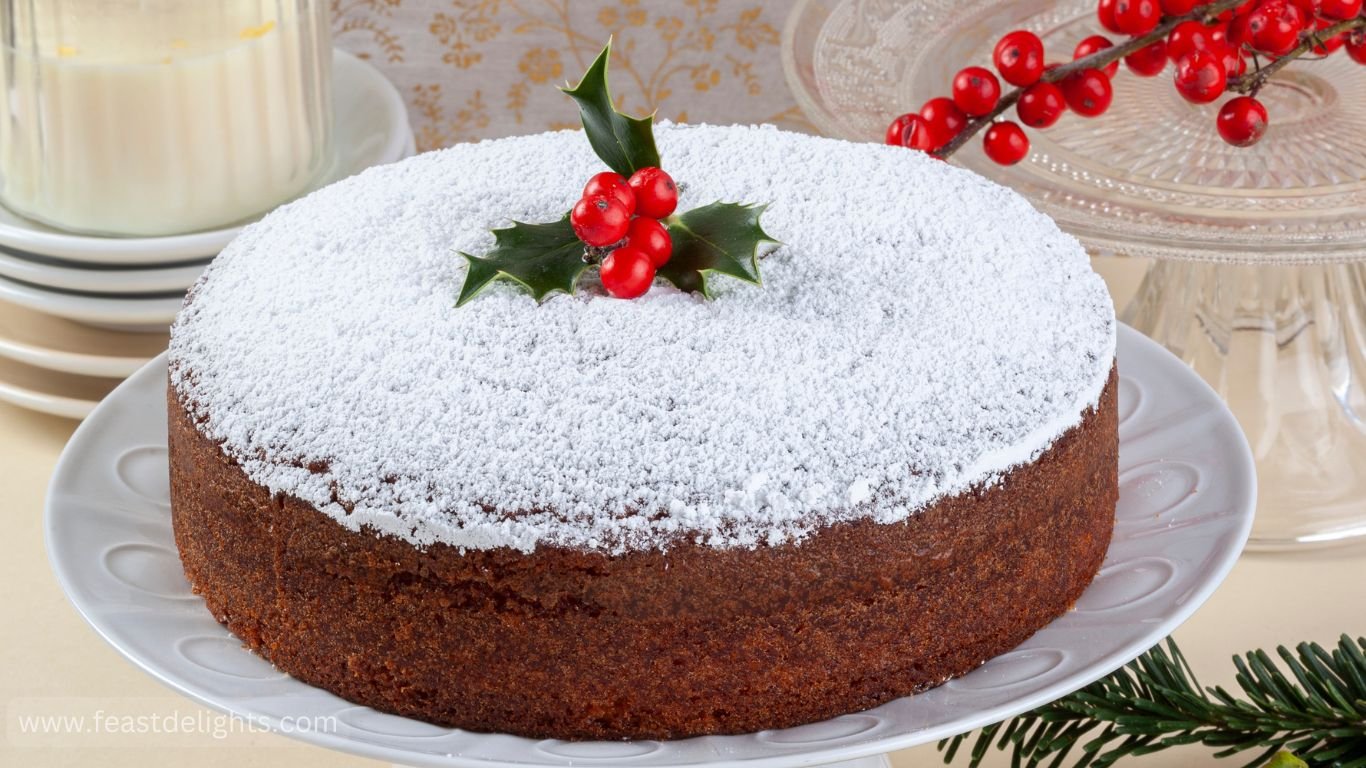
Recipe card
Greek Vasilopita-Style New Year Cake with Orange and Nuts
Includes about 15 minutes cooling in the tin and 45 minutes on a rack. Actual baking and cooling time depends on tin depth and room temperature.
Equipment: Kitchen scale, deep 23 cm round cake tin, parchment, two mixing bowls, mixer or whisk, spatula, skewer and wire rack.
Ingredients
Cake batter
Glaze
Cake batter
Instructions
Prepare the tin
Preheat the conventional oven to 180°C (350°F). Grease and line a deep 23 cm (9-inch) round cake tin with parchment.
Combine dry ingredients
Whisk the flour, baking powder and salt in a mixing bowl to distribute the raising agent evenly.
Whisk the wet ingredients
Beat the eggs and granulated sugar until thick and pale. Slowly whisk in the olive oil, then add the orange juice and vanilla extract.
Finish the batter
Fold the flour mixture and ground walnuts or almonds into the wet ingredients just until no dry streaks remain. Pour into the prepared tin and level gently. Do not mix in a coin or hard token.
Bake until set
Bake for about 45–50 minutes, checking from 45 minutes. The top should be golden and spring back lightly, and a skewer inserted in the centre should come out without wet batter. Continue in short intervals if needed; loosely shield the top if it browns too quickly.
Cool and glaze
Cool in the tin for 15 minutes, then transfer to a rack and cool completely, allowing about 45 minutes more or longer as needed. Mix icing sugar with the water or orange juice, adding the liquid gradually. Drizzle over the cooled cake. Keep any ceremonial token separate from the food.
How to mix and bake the cake
Beat the eggs and sugar until pale and thick, then add the oil gradually. Whisk in juice and vanilla. Fold the dry mixture and nuts into the wet ingredients only until combined; excessive mixing can toughen a flour-based cake. Bake in a fully preheated oven until the centre is set. King Arthur Baking’s cake doneness guidance explains the value of combining visual, tactile and skewer checks. A golden surface alone does not establish that the middle is cooked.
Troubleshooting
The centre remains wet
Continue baking in short intervals and protect the top loosely with foil if needed. Avoid opening the oven repeatedly early in baking.
The crumb is dense
Check that the baking powder is fresh. Beat the eggs and sugar adequately and fold the flour gently rather than mixing for a prolonged period.
The glaze runs off
Wait until the cake is completely cool. Add liquid gradually to the icing sugar to reach a thick, pourable consistency.
Serving ideas and related cakes
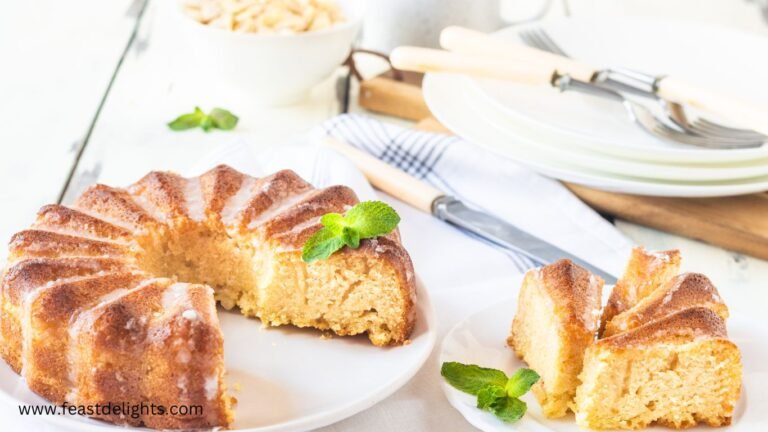
Serve with coffee or orange segments. For a different citrus dessert, try our Italian lemon ciambella. Our vanilla sponge cake with oil uses a simpler batter, while Romanian cozonac offers a distinct festive yeast bread.
Make ahead, storage and allergens
Once completely cool, store the plain glazed cake covered at cool room temperature for up to 2 days, or refrigerate for up to 5 days. Freeze unglazed slices, well wrapped, for up to 2 months for best quality; thaw covered. Refrigerate any separately served yoghurt promptly. Contains wheat, eggs and tree nuts. Check packaged ingredients for additional allergens and avoid cross-contact. Do not taste raw batter.
Frequently asked questions
What is vasilopita?
Vasilopita is a Greek New Year cake or bread associated with Saint Basil and a lucky-token tradition. Regional versions differ.
Can I use a neutral oil?
Yes. A mild neutral oil can replace the olive oil in the same measured volume, producing a less pronounced olive oil flavour.
Can I use almonds instead of walnuts?
Yes. Both are included as alternatives in this recipe; use the same weight of finely ground nuts.
Why did my cake sink in the middle?
The centre may have been underbaked or the oven opened too early. Check the centre for wet batter before removing the cake.
Can I skip the glaze?
Yes. Serve plain or dust the completely cooled cake with a little icing sugar.
Can I bake a lucky coin inside?
For safer serving, keep hard coins and decorative tokens separate from the food, particularly when children are present.
More recipes to try


Spotted a detail that needs correcting? Contact the FeastDelights editors.