Simple Vanilla Sponge Cake with Oil
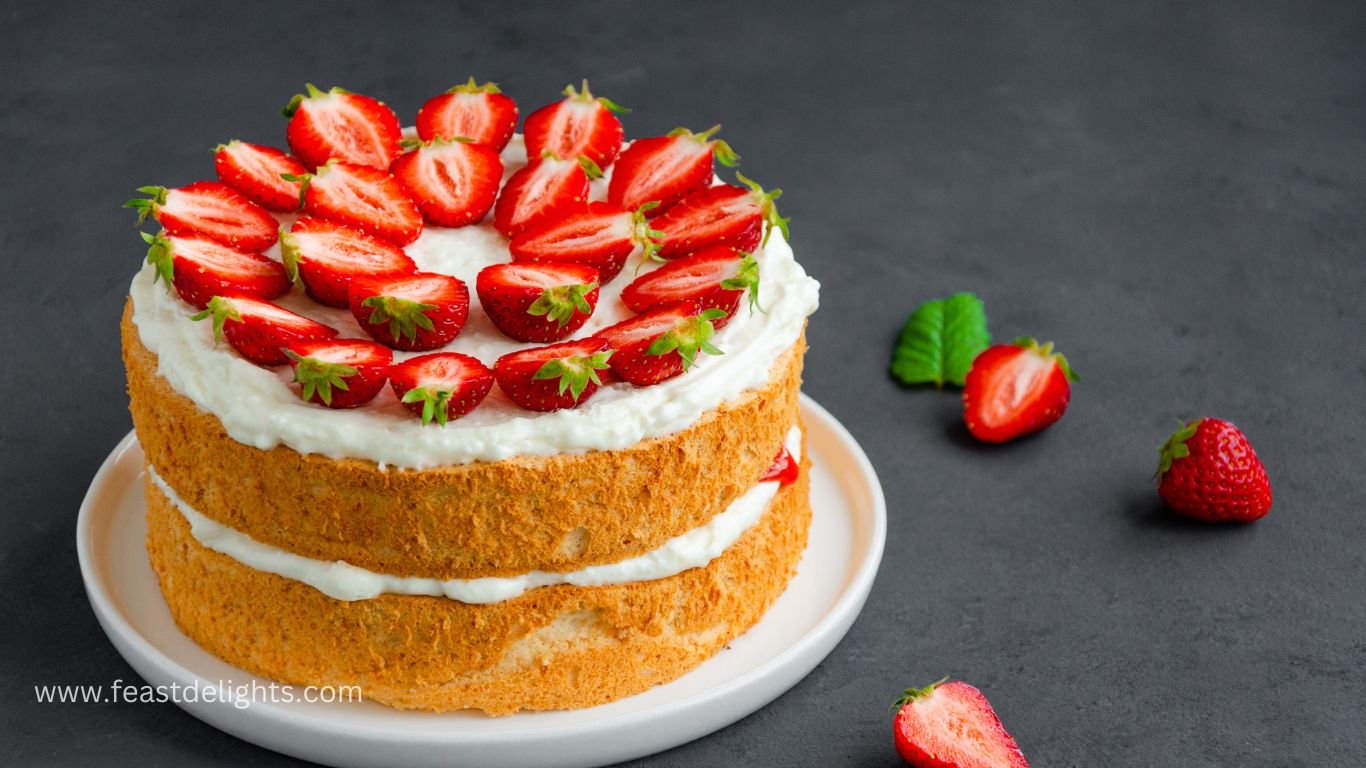
This simple vanilla sponge cake uses whole eggs whipped with sugar, plain flour, baking powder and neutral oil. The oil adds tenderness, while the thick egg foam helps the batter rise without making it heavy. Bake one 20 cm (8 inch) round cake, then serve eight slices plain or split the cooled sponge for a filled dessert. Allow about one hour and 55 minutes, including cooling. The most important techniques are whipping to a visible ribbon, incorporating the oil gently and folding the flour without deflating the batter.
This simple vanilla sponge cake with oil makes one soft, sliceable 20 cm (8 inch) round cake. Whisk whole eggs and sugar to a thick foam, incorporate neutral oil, fold in flour and bake at 180°C (about 350°F). The recipe makes eight slices. Allow about 1 hour 55 minutes, including cooling before serving or filling.
What makes this sponge different?
A classic genoise commonly uses whipped eggs and a little butter, while other traditional sponges omit added fat. This version keeps the original 120 ml of neutral oil and teaspoon of baking powder, producing a more enriched cake. Its crumb may be more substantial than a very lean, airy sponge. For a cake designed around butter instead, see our genoise sponge cake.
Ingredient choices and measurements
Four large eggs provide both moisture and foam. Use the specified size rather than four unusually small eggs. Let them lose their refrigerator chill briefly before whipping; keep them out only as long as needed for preparation. Weigh the 200 g flour and 200 g sugar for consistency. Packed cups can add excess flour, which reduces tenderness. Use a mild oil such as sunflower or canola. Strong olive oil will change the flavour. Check that the baking powder is fresh, and do not replace it with an equal amount of baking soda.
Whip the eggs to ribbon stage
Preheat the oven and line the pan before mixing, because the foam begins to lose volume as the batter stands. Beat eggs and sugar for about five to seven minutes, or until pale and thick. Lift the whisk: the mixture should fall in a wide trail that remains briefly visible on the surface. This is called the ribbon stage. The exact whipping time depends on the mixer and egg temperature. See King Arthur Baking’s explanation of ribbon stage for the visual principle.
Recipe card
Simple Vanilla Sponge Cake with Oil
Allow 30–35 minutes baking and approximately 60 minutes cooling, including 10 minutes in the pan. Cool fully before filling; allow extra time if necessary.
Equipment: Kitchen scale, electric mixer with whisk, mixing bowls, sieve, flexible spatula, 20 cm (8 inch) round cake tin, parchment, skewer and wire rack.
Ingredients
Cake batter
Instructions
Prepare the pan and oven
Preheat the oven to 180°C (about 350°F). Grease and line a 20 cm (8 inch) round cake tin with parchment.
Whip eggs and sugar
Beat eggs and sugar for about 5–7 minutes until pale, voluminous and thick enough to leave a visible ribbon.
Incorporate the vanilla and oil
Mix vanilla with the oil. Whisk a small amount of egg foam into the oil, then gently incorporate the lightened mixture into the remaining foam.
Fold in dry ingredients
Sift flour, baking powder and salt together. Fold into the egg mixture in three additions, scraping the bottom gently until no dry streaks remain.
Bake until the centre is set
Transfer to the tin and bake for 30–35 minutes until golden, springy and a skewer comes out without wet batter.
Cool before serving or filling
Rest in the tin for 10 minutes, then turn onto a rack, remove parchment and cool fully before slicing or frosting.
Incorporating oil without losing the foam
Mix vanilla with the oil. To limit deflation, first whisk a small scoop of the egg foam into the oil to lighten it, then incorporate that mixture into the rest gently. This preserves the original ingredient ratios while making the mixing instruction clearer. Sift flour, baking powder and salt together. Add in three portions, folding from the bottom upward with a flexible spatula. Rotate the bowl and check the bottom for pockets of dry flour. Stop when the batter is uniform; continued mixing will release the air you worked to incorporate.
How to tell when the cake is baked
Transfer the batter to the prepared pan without banging it against the counter. Bake on the middle rack for 30–35 minutes, checking near the end. The top should be lightly golden, the centre spring back when touched gently and a skewer come out without wet batter. If the centre is still wet, continue baking in short intervals. If the top is already dark, tent it loosely with foil once the structure has set. Cool ten minutes in the pan, then turn onto a rack, remove the paper and let the cake cool fully.
Troubleshooting
Dense or greasy base: The oil may not have been distributed evenly, or the foam may have collapsed. Lighten the oil with a small amount of batter and fold carefully. Sunken centre: Check for underbaking and avoid opening the oven early. Dry cake: Weigh flour and remove the sponge as soon as the centre is baked. Large flour pockets: Sift the dry ingredients and scrape the bottom while folding. Cake sticks to the tin: Grease and line the base and loosen the sides after the short cooling rest.
Filling, serving and variations
Serve plain with icing sugar and berries, or split the fully cooled cake into two layers if it is tall enough. A thin layer of jam, vanilla pastry cream or whipped cream works well. Do not spread a cold cream filling over warm cake. For lemon flavour, add finely grated zest to the sugar. A gluten-free flour blend is not a guaranteed direct substitute; use a separately verified formula. This recipe contains egg and wheat. Check additional fillings for dairy, nuts and other allergens.
Make ahead and storage
Allow the cake to cool completely before wrapping to avoid condensation. Plain cake can be covered at room temperature for up to two days for best quality, refrigerated for up to four days, or frozen well wrapped for up to two months. Thaw wrapped in the refrigerator. A cream or custard-filled cake needs refrigeration at 4°C (40°F) or below. Return perishable portions within two hours, or one hour above 32°C (90°F). Do not taste uncooked flour and egg batter.
More sponge cake ideas
Try airy vanilla sponge with whipped eggs for a different sponge formula or a sponge cake roll with fruit jam for a rolled dessert.
Frequently asked questions
Can I use a hand mixer?
Yes. Beat until the ribbon stage is visible rather than relying solely on the stated time.
Can I replace oil with melted butter?
It changes the batter and texture. This formula is designed for neutral oil; use a separately checked butter sponge recipe instead.
Can I make two thinner layers?
Yes, divide the batter between compatible tins and begin checking earlier. Exact baking time needs a kitchen trial.
Why did my sponge sink?
It may have been underbaked, deflated during mixing or disturbed before the structure set.
Can I split the cake while it is warm?
No. Cool it completely and use a long serrated knife to avoid tearing or compressing the crumb.
Can I make a chocolate version?
Replacing flour with cocoa changes the structure. Use a chocolate sponge formula rather than adding an arbitrary amount of cocoa.
More recipes to try






Spotted a detail that needs correcting? Contact the FeastDelights editors.