Homemade Turkish Delight
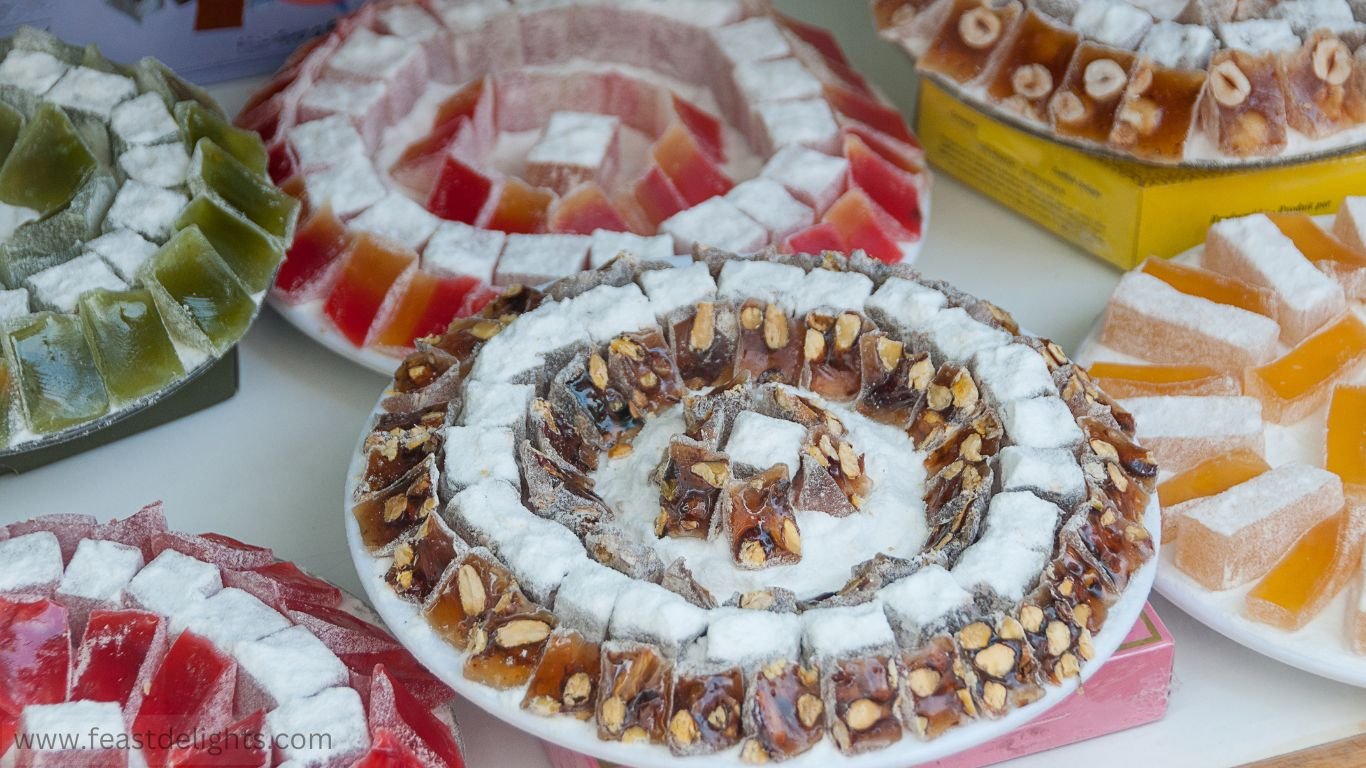
Soft rose-scented Turkish delight with pistachios, cut into pieces and dusted against sticking.
Turkish delight, or lokum, is a soft confection made by slowly cooking sugar syrup and starch until the mixture turns thick and translucent. The source adds baking soda, which is unnecessary, and combines steps in a way that risks lumps and scorching. This version uses a tested-style syrup approach with lemon juice, a separate cornflour slurry and steady low heat; a candy thermometer makes the long cook easier to manage. Rosewater and pistachios are optional flavourings. Let the confection set overnight before cutting it with an oiled knife and coating each piece in starch and icing sugar. Line a 20 cm square pan with parchment. Mix coating icing sugar and cornflour; dust parchment generously. In a heavy saucepan combine sugar, 350 ml water and lemon juice. Stir over low heat until dissolved, then boil without stirring to 115°C (239°F).
Recipe card
Homemade Turkish Delight
Equipment: Two heavy saucepans, candy thermometer, whisk, parchment-lined square pan, oiled knife
Ingredients
Instructions
Prepare pan
Line a 20 cm square pan with parchment. Mix coating icing sugar and cornflour; dust parchment generously.
Cook syrup
In a heavy saucepan combine sugar, 350 ml water and lemon juice. Stir over low heat until dissolved, then boil without stirring to 115°C (239°F).
Cook starch base
In a second heavy pan whisk cornflour, cream of tartar and 900 ml water until smooth. Cook over medium heat, whisking, until thick and translucent.
Combine and cook
Carefully stream hot syrup into starch mixture while whisking. Lower heat and cook, stirring continuously, 45 to 60 minutes until very thick, glossy and pale amber.
Flavour and set
Stir in rosewater and pistachios if using. Spread in pan and smooth top. Cool, cover loosely and leave at room temperature overnight.
Cut and coat
Lift out, cut into small squares with an oiled knife, then coat all sides in the starch-sugar mixture. Store airtight.
How to tell when it is ready
The sugar syrup reaches 115°C (239°F); final mixture is glossy, translucent and very thick.
Tips
- Use a reliable candy thermometer.
- Whisk the starch slurry until completely smooth before heating.
- Stir constantly after syrup is added to prevent scorching.
- Let the slab set overnight before cutting.
Troubleshooting
- If the mixture is too thick, add liquid a little at a time.
- If browning too quickly, lower the heat and cover loosely.
Substitutions
- Use a similar neutral cooking oil.
- Choose a suitable dairy-free alternative where practical.
Variations
- Adjust the seasoning to taste.
- Add a suitable seasonal ingredient without changing the cooking cues.
Serving suggestions
- Serve with Turkish coffee or tea.
- Add to a small sweets platter.
- Pair with dried apricots.
- Offer plain pieces alongside fresh berries.
Make ahead
Prepare suitable components ahead and store them safely. Store airtight in a cool, dry place for up to 2 weeks; keep pieces coated and separated.
Storage
Store airtight in a cool, dry place for up to 2 weeks; keep pieces coated and separated.
Food safety
Hot sugar syrup causes severe burns. Use a candy thermometer, keep children away from the stove and avoid touching or tasting the hot mixture. Contains optional nuts.
Frequently asked questions
Why is the mixture not setting?
It may need a longer cook to evaporate water; cook until very thick and glossy, then let it set overnight.
How should I store homemade turkish delight?
Store airtight in a cool, dry place for up to 2 weeks; keep pieces coated and separated.
Serve with Turkish coffee or tea. Store airtight in a cool, dry place for up to 2 weeks; keep pieces coated and separated.
More recipes to try

Spotted a detail that needs correcting? Contact the FeastDelights editors.