Potato Gratin with Gouda, Onion and Egg Custard
This potato gratin layers thin slices of waxy potato and onion with garlic, a savoury egg-and-milk custard and a golden Gouda topping. Cover the dish for the first stage so the potatoes become tender, then uncover and add grated cheese for a browned finish. The recipe serves six from a roughly 2-litre baking dish and takes about 1 hour 45 minutes, including resting. It uses ordinary potatoes rather than sweet potatoes and works as a substantial side dish.
Potato gratin with Gouda is a savoury layered potato bake with onion, garlic, a milk-and-egg custard and melted cheese. It serves six in about 1 hour 45 minutes. This recipe uses ordinary waxy potatoes, not sweet potatoes; the custard sets around the tender slices while the cheese becomes golden on top.
Choosing potatoes and cheese
Waxy potatoes hold their shape as they cook, giving the finished dish visible layers. Slice them to a consistent thickness of about 2–3 mm. A sharp knife works well, or use a mandoline with its safety guard. Young or medium Gouda melts readily and gives a mild, slightly nutty flavour. Very mature Gouda can melt differently; grate it finely if using. Onion and garlic add flavour without a separate sauce preparation.
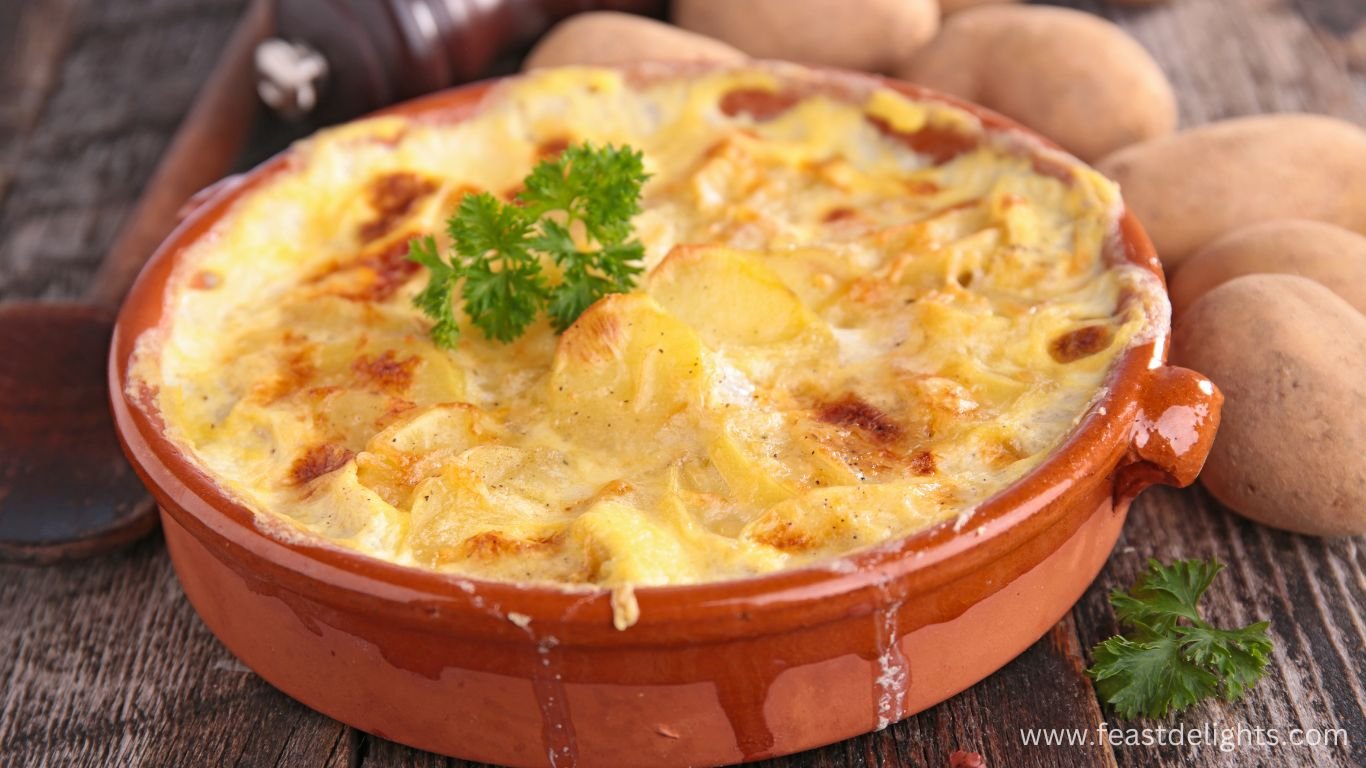
Recipe card
Potato Gratin with Gouda, Onion and Egg Custard
Includes 45 minutes covered baking, 20–30 minutes uncovered and 10 minutes resting. A deep or crowded dish may require additional cooking; use a larger dish if the ingredients do not fit with room at the rim.
Equipment: Vegetable peeler, sharp knife or mandoline with hand guard, chopping board, mixing bowl, whisk, grater, roughly 2-litre oven-safe baking dish, foil, thermometer
Ingredients
Potato layers
Custard
Cheese topping
Seasoning
For the dish
Instructions
Prepare the baking dish
Preheat the conventional oven to 180°C (350°F, rounded). Grease a roughly 2-litre oven-safe dish with the butter; use a slightly larger dish if needed to leave room for bubbling.
Layer the sliced potatoes
Peel and slice potatoes approximately 2–3 mm thick, using a hand guard if using a mandoline. Arrange half the potatoes and onion in overlapping layers. Sprinkle with half the garlic, salt and pepper. Repeat with remaining ingredients.
Add the custard
Whisk the eggs and milk until combined. Pour evenly over the layers and press the potatoes down gently so the liquid reaches the spaces between slices.
Bake covered
Cover tightly with foil and bake about 45 minutes, until a knife begins to slide into the central layers. If they remain very firm, continue covered before adding cheese.
Brown the Gouda topping
Remove foil and scatter grated Gouda evenly over the top. Bake another 20–30 minutes until the cheese is golden, a knife slides readily through the potatoes and the egg custard reaches at least 71°C (160°F) at the centre. Tent if cheese darkens too early; extend baking if needed.
Rest and serve
Let stand 10 minutes before dividing into six portions. The custard should be set rather than liquid.
How to assemble a potato gratin
Grease the baking dish and overlap slices evenly, dividing the onion and seasoning between two layers. The original milk and egg quantities make a set custard rather than a loose cream sauce. Whisk them together before pouring over the potatoes. Press gently to distribute the liquid, but avoid filling the dish to the very rim. A wider dish may be more practical than a deep one for the full kilogram of potatoes.
Why bake covered first?
Potatoes take longer to soften than grated cheese takes to brown. Cover the dish tightly for the first 45 minutes to retain moisture and heat. Check the centre with a thin knife before adding the topping. If there is considerable resistance, extend the covered stage. Once the slices are beginning to soften, scatter the Gouda and finish uncovered until the surface browns. The centre must reach 71°C (160°F) for the egg custard and the potatoes should be fully tender. Rest ten minutes to allow the layers to settle.
Troubleshooting
Firm potatoes: Slice thinner next time and continue covered until tender. Watery base: Avoid wet additions and cook until the custard is set. Burnt cheese: Add cheese later or tent loosely with foil. Rubbery custard: Avoid prolonged baking after the potatoes and eggs are cooked. Gratin overflowing: Choose a wider oven-safe dish with headroom.
Serving ideas and related recipes
Serve with roast chicken with walnut dressing and a fresh cucumber salad. For another layered potato dish with a different filling, see Swedish potato and sprat gratin. A pinch of thyme or nutmeg complements the Gouda. If adding mushrooms, sauté them first to remove excess moisture.
Make ahead, storage and allergens
For advance preparation, bake the gratin completely and refrigerate portions promptly. Reheat to 74°C (165°F), covering the dish initially to limit drying. The gratin contains milk and eggs. Check the cheese rennet if preparing a vegetarian meal. Nutrition is omitted because the composition of the cheese and final portion weights vary.
Frequently asked questions
Is this a sweet potato casserole?
No. It uses ordinary waxy potatoes, milk, eggs and Gouda. The recipe is a savoury potato gratin.
Which potatoes are best?
Use waxy or general-purpose potatoes that hold their shape when thinly sliced. Very floury potatoes may break down more.
Why cover the dish first?
Covering traps steam, helping the potatoes soften before the cheese topping browns.
Can I substitute cheddar or Gruyère?
Yes, use a comparable weight of a good melting cheese. Their saltiness and flavour vary.
Why are my potatoes still hard?
Slices may be thick or the dish too deep. Continue covered until a knife slides in easily, then brown the topping.
Can I prepare the gratin ahead?
For best quality, bake fully, cool promptly and refrigerate, then reheat. If assembling ahead, keep covered at 4°C or below and bake within a day, allowing extra time from cold.
Is this traditional gratin dauphinois?
Not strictly. This version uses eggs, milk, onion and Gouda, whereas classic dauphinois commonly uses cream and garlic without an egg custard.
More recipes to try






Spotted a detail that needs correcting? Contact the FeastDelights editors.