Jansson’s Temptation: Swedish Potato and Sprat Gratin
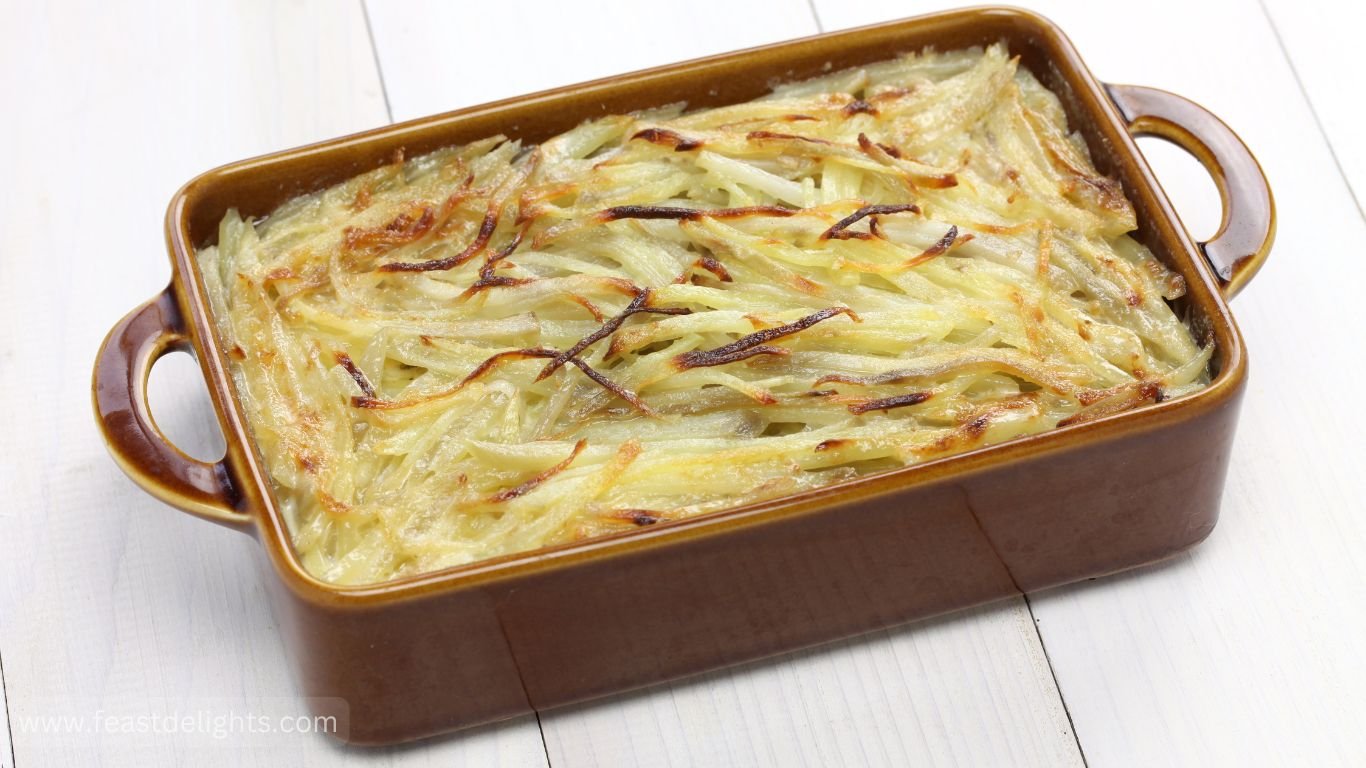
Jansson's temptation is a creamy Swedish potato casserole with softened onions and spiced pickled sprats tucked between layers of thin potato strips. The cream and milk soften the potatoes while their starch helps thicken the sauce, and the exposed top bakes to a golden finish. Swedish ansjovis give the dish its distinctive sweet-savoury seasoning. This version serves six and takes at least 85 minutes, including a ten-minute rest. Serve hot as part of a festive meal or with a crisp salad.
Jansson’s temptation (Janssons frestelse) is a Swedish potato and sprat gratin with tender strips of potato, softened onions and a creamy, savoury sauce. This recipe serves six, with a minimum estimated time of 85 minutes. Its distinctive ingredient is Swedish ansjovis, a spiced sprat product rather than ordinary Mediterranean anchovies.
Recipe card
Jansson’s Temptation: Swedish Potato and Sprat Gratin
Minimum estimate includes 10 minutes softening onions, 45 minutes baking and 10 minutes resting; baking can take 60 minutes or longer, bringing the total to 100 minutes or more. Suggested dish capacity is an editorial estimate to allow safe headroom.
Equipment: Kitchen scale, sharp knife or mandoline with hand guard, chopping board, skillet, measuring jug, deep 2.5–3 litre ovenproof dish, foil and oven gloves.
Ingredients
Potato and fish layers
Cream mixture
Optional topping
Instructions
Cut the potatoes
Preheat conventional oven to 200°C (400°F). Cut peeled potatoes into even 5 mm matchsticks; do not rinse after cutting.
Soften the onions
Melt 1 tablespoon butter over medium-low heat. Soften sliced onions about 10 minutes until lightly golden.
Layer the gratin
Grease a deep 2.5–3 litre ovenproof dish with a little remaining butter. Layer one-third of the potatoes, half the onions and half the drained sprats. Repeat and finish with potatoes.
Add the cream mixture
Mix cream and milk with pepper; add salt only if needed. Pour over potatoes, dot with remaining butter and sprinkle optional breadcrumbs.
Bake until tender
Bake uncovered 45–60 minutes until a knife slides easily through potatoes at centre and the top is golden. Cover loosely with foil if browning too quickly; continue until tender.
Rest and serve
Rest for 10 minutes and serve hot.
What makes this Swedish casserole distinctive?
Jansson’s temptation is commonly served on the Swedish Christmas table, alongside other festive dishes. The matchstick potatoes distinguish it from gratins built with overlapping round slices. The spiced fish brings a sweet, salty, aromatic note to the cream. For culinary context, see Swedish Food’s guide to Janssons frestelse. There are competing stories about the dish’s name, so no single origin story is assumed here.
Choosing potatoes and Swedish ansjovis
Use 1.2 kg (about 2.6 lb) waxy potatoes, peeled. Cut them into strips roughly 5 mm (¼ inch) thick so they soften evenly. A sharp knife works well; use the guard if using a mandoline. Do not rinse the strips after cutting because their surface starch helps bind the dairy. Slice the onions thinly so they soften without leaving large firm pieces in the finished gratin.
Choose 200 g (about 7 oz) drained Swedish ansjovis or mild spiced pickled sprats. Look for the fish species and seasoning on the tin rather than relying on an English label saying anchovies. Mediterranean anchovies have a much stronger, saltier taste and are not an equivalent substitute by weight. Mild pickled sprats are preferable if Swedish ansjovis is unavailable. Follow the packaging directions for storage, especially once opened.
The 300 ml heavy cream (about 1¼ US cups) and 100 ml milk (a scant half cup) provide enough richness without requiring cheese or flour. The original method uses drained fish; some Swedish recipes also use its seasoned brine, but this version retains the existing proportions. Taste a small portion of the dairy mixture with a piece of sprat before deciding whether extra salt is needed.
Layering the potatoes and onions
Heat a conventional oven to 200°C (400°F). Melt one tablespoon of the measured butter in a skillet over medium-low heat. Cook sliced onions about ten minutes, stirring until soft and lightly golden rather than crisp. Use a little of the remaining butter to grease a deep ovenproof dish. The original suggests two litres, but with 1.2 kg of potatoes and the other ingredients a 2.5–3 litre dish is a safer starting size. Leave enough space below the rim for bubbling cream.
Arrange one-third of the potatoes over the base, followed by half the onions and half the sprats. Repeat, finishing with the last third of potatoes. Distribute the fish evenly rather than leaving salty clusters. Combine cream and milk with pepper and optional salt, then pour over the layers. Dot the top with the remaining butter and sprinkle optional breadcrumbs for a more textured crust.
Baking until the potatoes are tender
Bake uncovered for 45–60 minutes. The edges should bubble and the top should colour, but the centre is the important test. Insert a thin knife through several layers near the middle; it should slide through without a hard potato centre. If the surface is browning before the potatoes soften, cover loosely with foil and continue baking. The sauce may look loose immediately after removing the dish from the oven. Rest ten minutes to allow it to settle.
Troubleshooting
Potatoes remain firm: cut thinner, even strips next time; cover and continue baking until tender. Top is too dark: shield loosely with foil. Sauce is watery: avoid rinsing cut potatoes, and allow the gratin to rest before serving. Too salty: avoid adding salt before tasting the sprats; do not replace them with the same weight of ordinary anchovies. Dry gratin: check that the dish is not excessively wide or shallow, and cover if liquid evaporates before the potatoes are cooked.
Serving ideas and variations
Serve as a festive side with Swedish meatballs with creamy pan gravy or roast ham, alongside a fresh salad or refrigerator cabbage and beet kryzhavky for a tangy cross-cuisine accompaniment. Omit breadcrumbs if preferred, or use suitable gluten-free breadcrumbs after checking the label. White pepper can replace black pepper; it gives a slightly different aroma.
Make ahead, storage and allergens
Soften onions ahead and refrigerate them promptly. Cut potatoes shortly before assembling to limit discolouration. For a make-ahead meal, bake the gratin completely, cool promptly in shallow portions, refrigerate and reheat thoroughly. Follow USDA leftover guidance. Contains fish and milk; breadcrumbs normally contain wheat. Check fish packaging for other allergens. This dish is not vegetarian.
Frequently asked questions
Are Swedish ansjovis the same as anchovies?
No. In this dish the Swedish product is usually spiced pickled sprats, not intensely salted Mediterranean anchovies.
Why cut potatoes into matchsticks?
Thin even strips cook through consistently and give the gratin its characteristic texture.
Can I omit the breadcrumbs?
Yes. They add a crunchy topping but are optional in this recipe.
Why should I not rinse the potatoes?
The surface starch helps thicken the cream mixture during baking.
Can I make the gratin a day ahead?
Yes. Bake completely, cool promptly, refrigerate and reheat to 74°C (165°F) throughout before serving.
More recipes to try




Spotted a detail that needs correcting? Contact the FeastDelights editors.