Oven-Roasted Sweet Chestnuts with Tender Centres
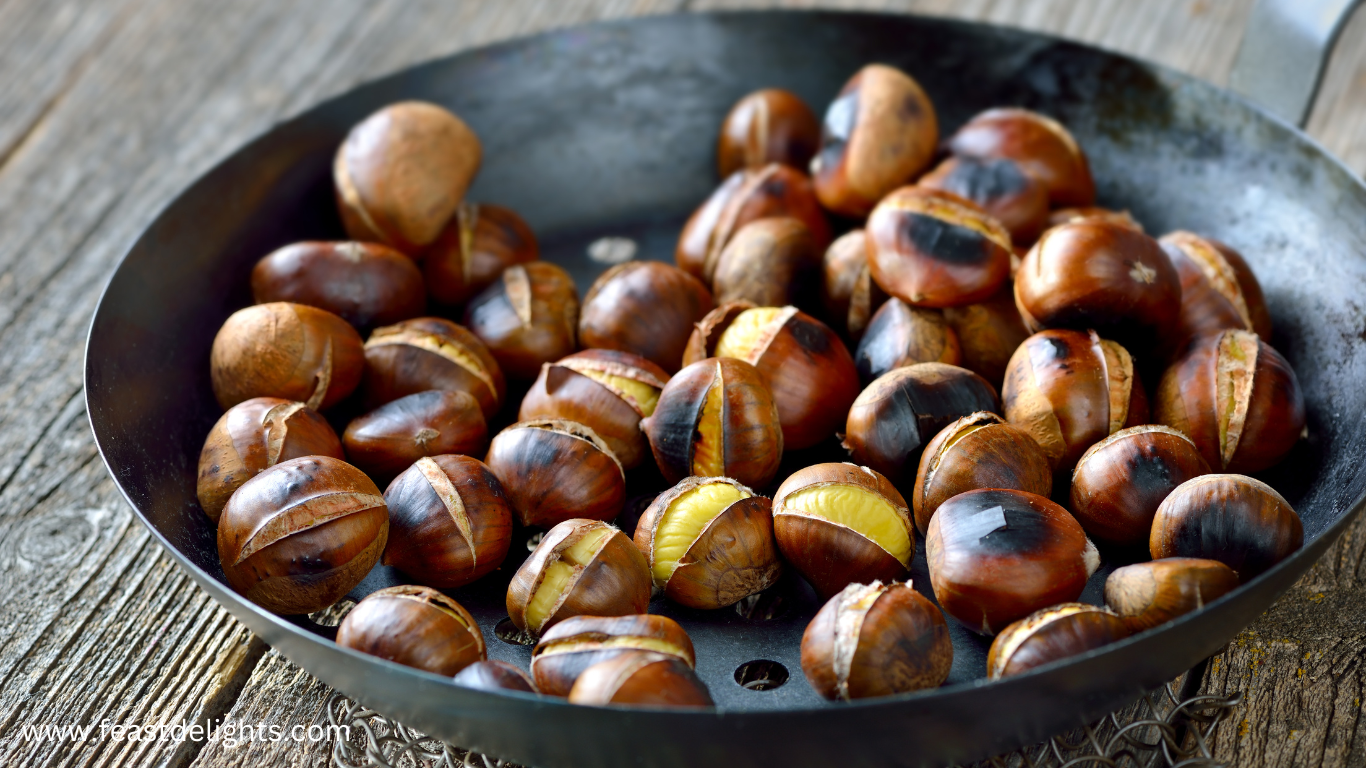
Oven-roasted sweet chestnuts have a gently sweet, earthy flavour and a soft, almost potato-like centre. This simple method uses fresh edible chestnuts, salt and optional melted butter. Score every shell before heating so steam can escape, then roast in a single layer until the shells curl back and the kernels soften. A brief rest under a clean towel helps with peeling. The recipe serves four as a snack in about 45 minutes, depending on nut size and peeling speed.
Which chestnuts are safe to roast?
Buy fresh edible sweet chestnuts from a food shop or market. Do not substitute horse chestnuts, also known as conkers, or buckeyes: they are poisonous and roasting does not make them safe to eat. If you are unsure of the identity of collected nuts, do not eat them. The French food safety agency ANSES explains this distinction.
Choose firm, relatively heavy nuts with intact shells. Discard any with mould, holes or obvious signs of spoilage. Chestnuts contain more moisture than many other culinary nuts, so they are perishable. Keep unroasted chestnuts refrigerated according to the supplier’s advice.
How to score chestnuts safely
The hard shell traps steam during cooking. Make an X through each shell and the thin brown skin just underneath before putting the tray in the oven. Place the nut securely on its flat side on a board rather than holding it in your palm. A chestnut knife can make the task easier. Keep the blade away from your fingers and avoid forcing it if the nut slips. Scoring also creates a starting point for peeling.
Dry roasting needs no cooking oil. Arrange the nuts in a single layer with the cuts facing upwards. Keep nuts of similar size together where practical, because smaller ones may finish before larger ones.
Recipe card
Oven-Roasted Sweet Chestnuts with Tender Centres
The active time includes scoring and peeling. Allow extra time for large batches or difficult shells.
Equipment: Stable cutting board, chestnut knife or sturdy small serrated knife, rimmed baking tray, oven gloves, clean tea towel and serving bowl.
Ingredients
Chestnuts
Instructions
Preheat and sort edible chestnuts
Preheat oven to 220°C (425°F). Use sweet chestnuts sold as edible food, never horse chestnuts or buckeyes. Discard nuts with mould, holes or obvious spoilage. Rinse and dry thoroughly.
Score every shell
Set a chestnut flat-side down on a stable board. Using a chestnut knife or sturdy small serrated knife, carefully cut an X through the rounded shell and thin inner skin, without cutting far into the flesh. Keep fingers away from the blade; never cut toward your hand. Repeat for every nut so steam can escape.
Roast until tender
Arrange cut-side up in a single layer on a rimmed baking tray. Roast 20–25 minutes, checking smaller nuts earlier. The cuts should open and the exposed flesh should yield easily to a small knife. Continue briefly if large nuts are still firm.
Rest briefly in a towel
Using oven gloves, transfer the nuts into a clean tea towel and fold it around them for 5 minutes. Open carefully to avoid hot steam.
Peel and season
When comfortable to handle, peel away both the hard shell and brown inner skin. Keep the remaining nuts warm under the towel as you work. Sprinkle with salt to taste and toss with melted butter if desired.
How to know the chestnuts are ready
The scored shells should curl back, revealing the pale kernels. Check the flesh of a large nut with a knife; it should be tender rather than chalky or hard. Do not rely solely on the opening shell. Extend roasting briefly if necessary. After cooking, a five-minute rest under a clean tea towel retains some warmth and moisture, making peeling easier. Uncover carefully because steam can burn.
Peeling and troubleshooting
Begin peeling as soon as the nuts are comfortable to handle. Work from the cut and remove both the hard shell and the thin inner skin. Keep the rest warm under the towel. If the skin clings, check that the nuts were scored and cooked thoroughly; a brief gentle rewarming may help. Avoid excessive roasting, which dries the kernels and makes them harder. Discard any peeled kernel that appears mouldy or spoiled.
Serving ideas and storage
Serve the warm kernels with a little salt or optional melted butter. They pair well with hot spiced apple cider and can accompany Greek Christmas almond cookies or honey lebkuchen on a festive snack table. Chopped peeled chestnuts can also be added to stuffing or grain dishes.
Cool leftovers promptly and refrigerate or freeze peeled kernels. This recipe contains chestnuts, which can cause allergic reactions, and milk if butter is added. Do not assume it is safe for anyone with a nut allergy. Check cross-contact on packaged products and avoid serving large whole pieces to young children.
Frequently asked questions
Can I roast chestnuts without scoring them?
No. Steam can build up inside intact shells and cause them to burst. Score every nut before heating.
Can I use chestnuts collected from a park?
Do not use unidentified nuts. Horse chestnuts and buckeyes are poisonous. Buy edible sweet chestnuts from a food retailer.
Why are my chestnuts difficult to peel?
The inner skin may not have been scored, the nuts may be undercooked, or they may have cooled too much. Keep the batch warm and check tenderness.
How do I tell when chestnuts are cooked?
The shell edges open and the kernel becomes tender enough to pierce easily. The inside should not be hard or chalky.
Do I need butter or oil?
No. Dry roasting works well; butter is optional for serving.
Can I use pre-cooked chestnuts?
Yes, but they are already peeled and cooked. Follow the packet's warming instructions rather than using this raw-in-shell method.
More recipes to try


Spotted a detail that needs correcting? Contact the FeastDelights editors.