Greek Kourabiedes Almond Butter Christmas Cookies
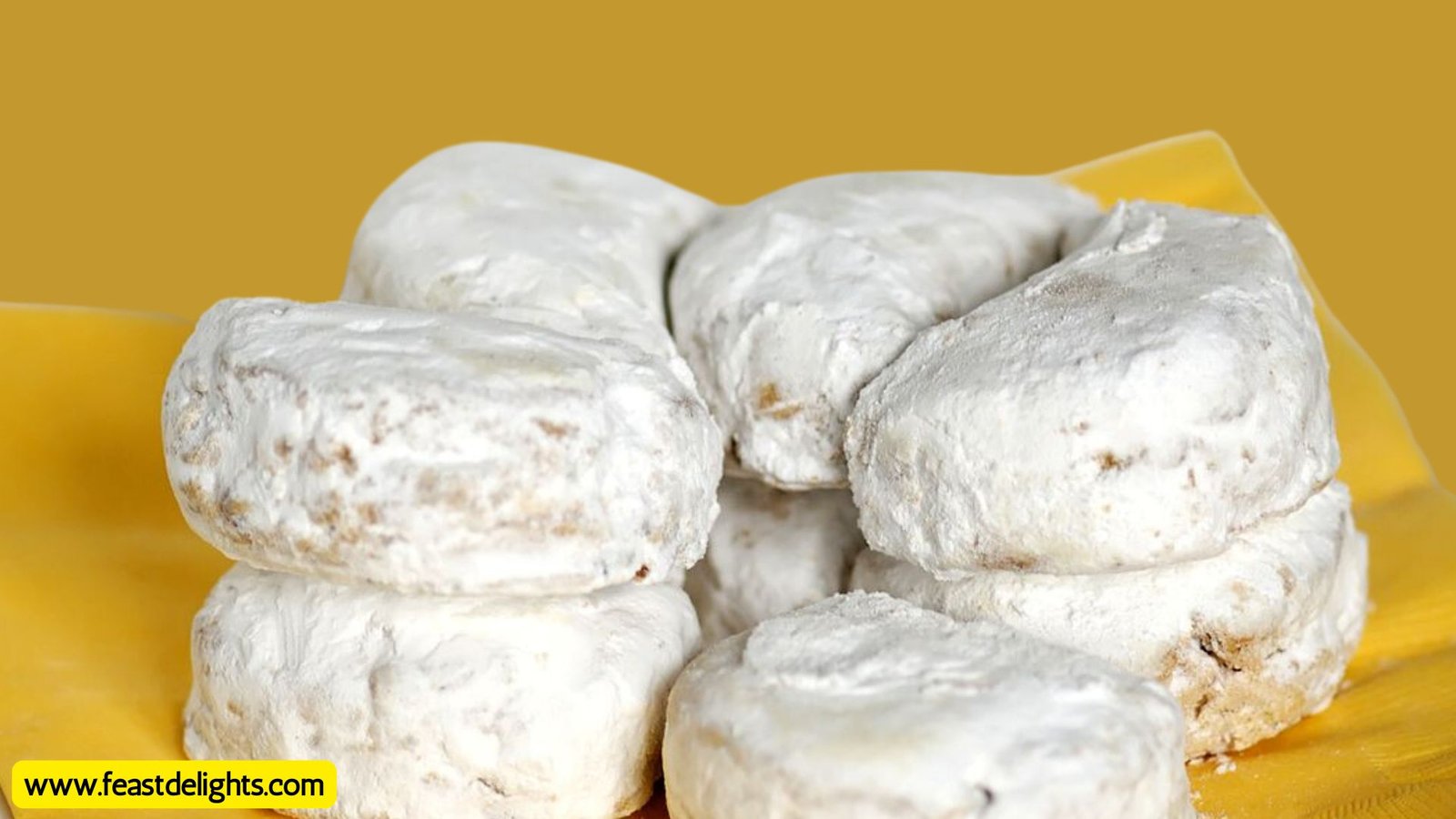
Kourabiedes are Greek holiday butter cookies with a delicate, crumbly texture and a generous snowy coating of icing sugar. This version uses ground almonds, a little cornstarch, egg yolk, lemon zest, vanilla and a splash of brandy. The dough is shaped into rounds or crescents and baked until set but still pale on top. Makes 20 substantial cookies, with about 25 minutes of preparation and 15–18 minutes in the oven per tray. Allow time for cooling before the final dusting.
What makes kourabiedes so tender?
Kourabiedes are closely associated with Greek Christmas baking. Their pale, sugar-coated appearance contrasts with a rich butter-and-almond crumb. Recipes vary: some use chopped roasted almonds, rosewater or different fats. This version keeps the existing ground almonds, cornstarch, yolk and citrus. Cornstarch dilutes the wheat flour’s gluten-forming proteins, helping create a delicate crumb.
Choosing and measuring the ingredients
Use softened unsalted butter that yields to a fingertip but is not greasy or melted. Icing sugar, also called powdered or confectioners’ sugar, blends readily into the butter. Weigh the 80 g used in the dough separately from the extra coating. Ground almonds should be finely ground and not defatted almond flour; coarse pieces will change the texture. Measure wheat flour and cornstarch separately. Lemon zest gives a light fragrance, while brandy and vanilla contribute aroma. Baking does not guarantee all alcohol is removed.
Mixing and shaping without overworking
Beat the butter and sugar until visibly lighter, scraping the sides. Mix in the yolk and flavourings before adding the dry ingredients. Once flour is incorporated, avoid vigorous beating. The dough should hold together when gently pressed. If it is very soft, cool it briefly rather than adding a large quantity of flour. Divide the dough evenly; this formula makes 20 relatively substantial cookies, so keep rounds or crescents low enough to bake through. Space them apart so hot air can circulate.
Recipe card
Greek Kourabiedes Almond Butter Christmas Cookies
Allows two 18-minute baking batches and an estimated 30 minutes cooling. If both trays bake evenly together, total time is shorter. Cool fully before the final coating.
Equipment: Digital scale, electric mixer, mixing bowls, spatula, two baking trays, parchment, wire rack and fine sieve.
Ingredients
Cookie dough
Instructions
Cream softened butter and sugar
Preheat oven to 170°C (340°F) and line two trays. Beat softened butter and the measured 80 g icing sugar for 3–4 minutes or until pale and fluffy, scraping the bowl as needed.
Mix the flavourings
Beat in the egg yolk, brandy, vanilla, lemon zest and salt until evenly combined.
Fold in the dry ingredients
Whisk flour, ground almonds and cornstarch in another bowl. Fold into butter mixture just until no dry streaks remain and a soft dough forms. Avoid kneading. If too soft to shape, refrigerate briefly.
Shape the cookies
Divide into 20 portions of about 37–39 g. Roll into rounds or gently form crescents of similar thickness. Arrange with space on lined trays.
Bake until pale and set
Bake each tray for 15–18 minutes, or until edges are set and the bases lightly golden. Larger shapes may need a little longer; keep tops pale. Cool 5 minutes on the tray before transferring carefully to a rack.
Dust with icing sugar
Sift extra icing sugar over slightly warm cookies. When fully cool, sift generously a second time. Handle carefully because the crumb is delicate.
Baking and getting the snowy finish
Watch the bases and edges rather than waiting for deeply browned tops. The surface should look set and the underside lightly golden. Larger cookies can need additional time. Leave the fragile cookies on the tray briefly, then lift them carefully onto a rack. Sift the first coating while they are slightly warm, then let them cool entirely before the final dusting. A fine sieve gives an even layer without crushing the cookies. Do not pack them while warm, as trapped moisture dissolves sugar and softens the crumb.
Troubleshooting
Cookies spread: Check the butter temperature and chill the shaped dough briefly if needed. Dry or hard: Weigh flour and stop mixing once combined. Dough cracks: Warm refrigerated dough briefly and press it together gently. Sugar disappears: Wait until the cookies are fully cool for the second coating. Undercooked centre: Keep shapes evenly thick and allow the largest cookies extra baking time until set.
Serving and related holiday baking
Arrange on a platter with Linzer almond sandwich cookies, honey lebkuchen or crunchy almond biscotti. Greek coffee or unsweetened tea balances the sweet coating. For gift boxes, separate layers with parchment and avoid packaging alongside moist cakes.
Storage and allergens
Store fully cooled cookies in a dry airtight container; refrigeration is not needed for this plain baked cookie. Freeze uncoated cookies for longer keeping and dust after thawing. Contains wheat, milk, egg and almonds. Check all flavourings and flour labels for cross-contact. Avoid tasting raw dough, and wash utensils after handling flour and egg. Refer to CDC raw dough advice.
Frequently asked questions
Can I skip the brandy?
Yes. Replace it with a tablespoon of water or omit if dough holds together. Use alcohol-free vanilla flavouring if avoiding alcohol entirely.
Why did the cookies spread?
Butter may have been too warm, or flour undermeasured. Use softened rather than melted butter and chill very soft dough briefly.
Why are the cookies tough?
Too much flour or mixing after the flour is added can make them firm. Weigh dry ingredients and fold gently.
Can I use chopped almonds?
Finely chopped almonds will give more crunch than ground almonds. For best consistency, retain the original ground-almond quantity.
When should I add the icing sugar?
Dust lightly while cookies are warm, then generously after they cool. Sugar added only when hot may dissolve.
Can I make the dough ahead?
Cover and refrigerate overnight. Let it soften enough to shape, then bake until set.
Can I freeze these cookies?
Yes, preferably before the final sugar coating. Thaw at room temperature and dust again.
More recipes to try






Spotted a detail that needs correcting? Contact the FeastDelights editors.