Crispy Potato Latkes with Grated Onion for Hanukkah
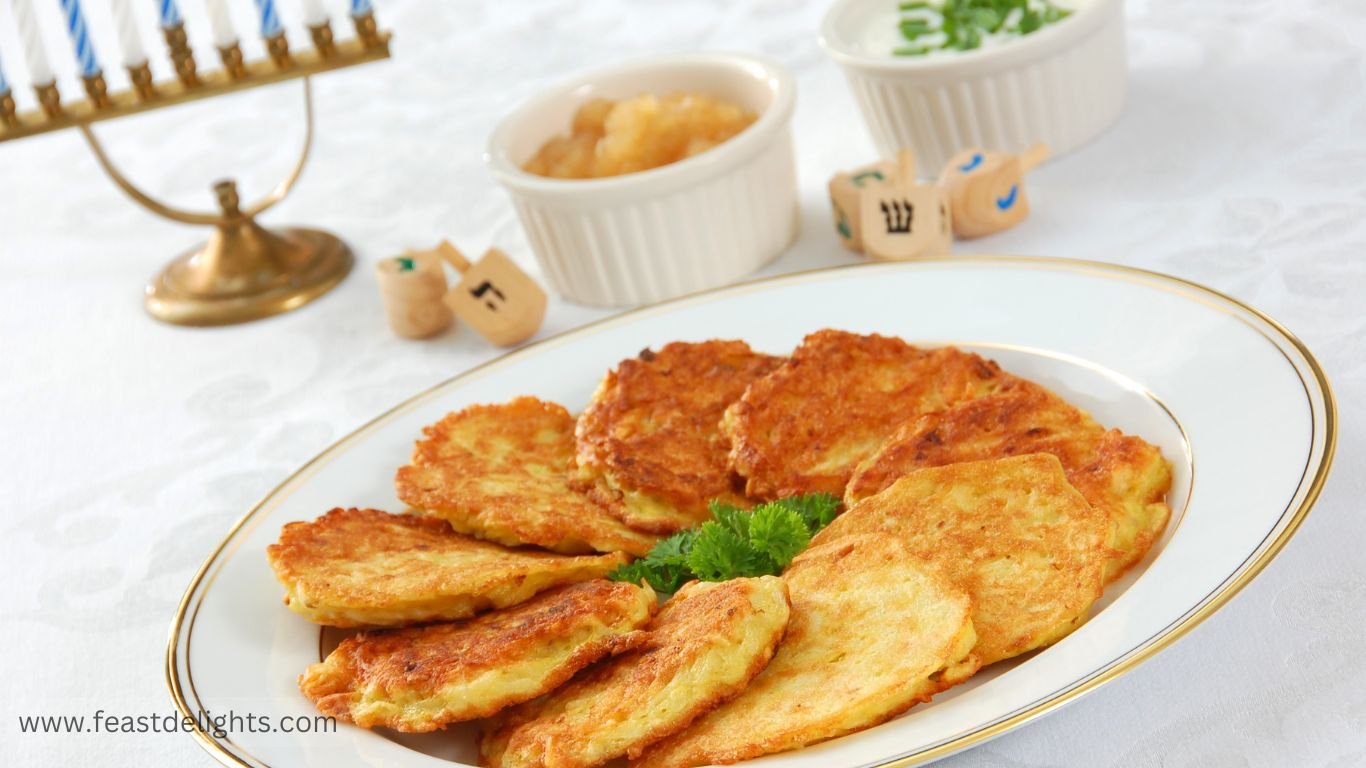
These potato latkes have lacy, golden edges and tender centres, made from coarsely grated potatoes and onion bound with eggs and flour or matzo meal. Squeezing out excess liquid is the key to a crisp result, while frying small batches keeps the oil hot enough to brown the pancakes evenly. This recipe is intended to make 12 to 14 latkes in about 55 minutes, depending on portion size and skillet capacity. Serve freshly fried with applesauce or sour cream.
Crispy potato latkes are shallow-fried pancakes made with shredded potatoes, grated onion and eggs. This Hanukkah version uses plain flour or matzo meal as a binder and makes an estimated 12 to 14 pancakes in about 55 minutes. The key is to remove excess potato moisture before frying so the edges crisp rather than steam.
Recipe card
Crispy Potato Latkes with Grated Onion for Hanukkah
Cooking time assumes several latkes fit in the skillet without crowding; smaller pans may require extra batches. Yield of 12–14 is an estimate based on portion size and needs kitchen confirmation.
Equipment: Kitchen scale, box grater or food processor, clean kitchen towel, mixing bowl, heavy skillet, frying thermometer if available, spatula, wire rack and baking tray.
Ingredients
Latke mixture
Frying
Instructions
Grate the potatoes and onion
Coarsely grate peeled potatoes and onion into a bowl just before cooking.
Squeeze out excess liquid
Transfer shreds in batches to a clean towel and squeeze firmly until little liquid emerges.
Mix with egg and flour
Mix drained shreds with eggs, flour or matzo meal, salt and pepper. Stir briefly before each batch.
Heat oil and prepare rack
Heat a thin layer of neutral oil in a heavy skillet over medium heat (about 175°C/350°F). Set a rack over a tray and preheat oven to 100°C (210°F) if holding batches.
Fry in small batches
Divide mixture into about 12–14 portions for the estimated yield, or use smaller two-tablespoon portions for more latkes. Flatten each to about 1 cm thick. Fry 3–4 minutes per side until golden, potato tender and egg mixture fully set.
Drain and serve
Drain on a rack. Serve hot, or hold briefly in the warm oven while frying the remaining mixture.
Latkes and Hanukkah
Potato latkes are closely associated with Jewish Hanukkah celebrations, particularly Ashkenazi food traditions. Fried foods recall the holiday’s tradition of the miracle of the oil; the Smithsonian Center for Folklife and Cultural Heritage explains how potato latkes developed among other varieties. Recipes differ in whether the potato is grated finely or coarsely and in the binder used.
Choosing potatoes and a binder
Use 1 kg (about 2.2 lb) peeled starchy potatoes, such as russets or a floury baking variety. Their starch helps the shreds adhere while the outside becomes crisp. Coarsely grate them with a medium onion. Two eggs hold the mixture together and 40 g plain flour or matzo meal absorbs some remaining moisture. Matzo meal is finely crushed matzo; it is not automatically gluten-free, so check the label if needed. The 120 ml oil (half a US cup) is a frying allowance, not an amount assumed to be eaten.
Squeeze out the liquid
Grate the potatoes shortly before cooking to minimise discolouration. Put the potato and onion shreds into a clean tea towel in manageable batches. Twist and squeeze over a bowl or sink until very little liquid emerges. This is worth doing thoroughly: the Jewish Food Society’s latke guide likewise emphasises moisture removal. If you collect the liquid, you can optionally let the starch settle, pour off the water and stir the settled starch back into the mixture. Mix the drained shreds with beaten eggs, flour or matzo meal, salt and black pepper. Stir again before each batch, since potatoes can release more liquid as they stand.
Fry until the centres are cooked
Heat a thin layer of neutral oil in a heavy skillet over medium heat, aiming for roughly 175°C (350°F) if using a thermometer. Use just enough oil to cover the base generously; replenish in small amounts as needed. Keep water away from hot oil. Place portions of the mixture into the pan and flatten to a thin, even pancake, approximately 1 cm thick. For the estimated yield of 12–14, divide the mixture accordingly; smaller two-tablespoon portions will make more pancakes. The actual count depends on how much moisture was removed.
Fry for about three to four minutes per side, turning carefully once the first side is set and golden. Check the centre of a thicker latke: the potato should be tender, the egg mixture fully set, and no raw paste should remain. If measuring the egg-containing centre with a thermometer, aim for 71°C (160°F). Avoid overcrowding, which lowers the oil temperature. Drain on a rack over a tray. Keep finished batches briefly in a 100°C (210°F) oven if needed.
Troubleshooting
Latkes fall apart: drain the shreds thoroughly and avoid turning before the first side sets. Soggy edges: let oil recover its temperature between batches and drain on a rack. Dark outside, raw centre: flatten more thinly and reduce the heat. Mixture turns grey: grate closer to frying; some oxidation is normal. Too much oil splatter: remove more moisture and lower portions carefully away from yourself.
Serving ideas and variations
Serve with applesauce or sour cream, and optional chopped chives. For a Hanukkah dessert, try jam-filled sufganiyot. Other styles of savoury pancakes include Ukrainian deruny and Korean vegetable buchimgae. A little grated carrot can be added as a variation, but squeeze it dry too. If keeping kosher, use suitably certified ingredients and select accompaniments appropriate to the meal.
Make ahead and allergens
For best texture, grate and fry shortly before serving. Cooked latkes can be chilled promptly and reheated in a hot oven rather than microwaved, which softens the crust. Follow FoodSafety.gov temperature guidance for leftovers. Contains egg and wheat; sour cream adds milk. Check the matzo meal and oil labels if cooking for someone with allergies.
Frequently asked questions
Which potatoes make the crispiest latkes?
Starchy potatoes such as russets work well. Remove as much excess liquid as possible before mixing.
Can I use matzo meal instead of flour?
Yes. Both are listed in this recipe; matzo meal gives a slightly different texture and is generally wheat-based.
Why do latkes fall apart?
Excess moisture, insufficient binding or turning too early can cause them to break. Squeeze shreds well and wait for the first side to set.
Can I grate potatoes ahead?
It is best to grate shortly before frying. If briefly holding them in cold water, drain and squeeze them very thoroughly.
How do I keep latkes crisp for guests?
Drain on a rack and hold briefly in a warm oven. Avoid stacking them while hot.
More recipes to try


Spotted a detail that needs correcting? Contact the FeastDelights editors.