Vegetable Buchimgae with Rice Flour and Cabbage
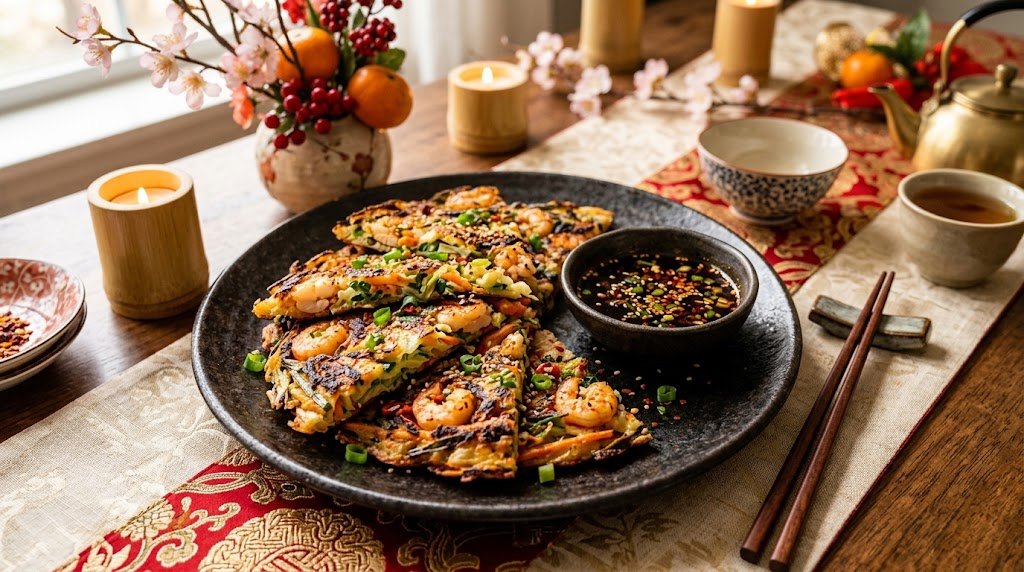
These vegetable buchimgae are Korean-style savoury pancakes with crisp golden edges and a tender vegetable centre. Rice flour, water and egg form the batter, while finely sliced carrot, cabbage and onion add sweetness and texture. The recipe makes four small pancakes served with a simple soy-vinegar dipping sauce. Allow about 45 minutes for chopping, mixing and pan-frying. Serve them freshly cooked, cut into wedges for sharing, as a snack or alongside other Korean-style dishes.
Vegetable buchimgae are Korean-style savoury pancakes with golden edges and tender strips of vegetables. This home-style recipe uses rice flour, egg, carrot, cabbage and onion to make four small pancakes, served with a quick soy-vinegar dip. Allow about 45 minutes, including frying in four batches. Korean savoury pancakes encompass many variations, and this one retains its specific rice-flour batter rather than claiming to represent all regional or festive versions.
Choosing the flour and vegetables
Use ordinary rice flour rather than glutinous rice flour, which creates a noticeably different sticky texture. The egg helps bind the batter. Finely shred cabbage and carrot so they soften during the short frying time, and slice the onion thinly to avoid bulky pieces that make turning difficult. Soy sauce seasons both the batter and the separate dip. Keep those two measurements distinct.
Equipment and preparation
A 20–24 cm nonstick skillet, wide spatula, bowl and whisk are sufficient. Prepare all vegetables before mixing the batter. Avoid leaving the egg batter at room temperature for extended periods, and stir it again between batches.
Recipe card
Vegetable Buchimgae with Rice Flour and Cabbage
Four pancakes cooked separately for approximately 6–8 minutes each; heating time and individual pancake thickness may affect the total.
Equipment: Knife, cutting board, mixing bowl, whisk, ladle, 20–24 cm nonstick skillet, wide spatula, small dipping bowl and thermometer.
Ingredients
Batter
Vegetables
Frying
Dipping sauce
Instructions
Mix the vegetable batter
Whisk the rice flour, water, egg and 1 teaspoon soy sauce until smooth. Finely shred the carrot and cabbage and slice the onion thinly. Fold into the batter and stir again before each pancake because rice flour may settle.
Heat the skillet
Heat a 20–24 cm (8–9½ inch) nonstick skillet over medium heat. Add a little of the measured vegetable oil and swirl to coat the base. The oil should shimmer without smoking.
Cook four pancakes
Spoon one-quarter of the mixture into the skillet and spread to about 15 cm (6 inches) across. Cook for 3–4 minutes on the first side, until the edges are set and the underside is golden. Turn carefully and cook another 3–4 minutes, reducing heat if needed, until the vegetables are tender and batter is fully cooked. Egg dishes should reach 71°C (160°F). Repeat with remaining batter and oil.
Prepare the dip
Stir the separate tablespoon of soy sauce and teaspoon of rice vinegar together in a small bowl.
Serve immediately
Drain briefly on a rack if needed, cut the pancakes into wedges and serve hot with the dip. Avoid stacking while steaming hot if you want to retain crisp edges.
How to fry crisp vegetable pancakes
Heat a thin layer of oil over medium heat. Spread a quarter of the batter into a modest 15 cm round, making the vegetable layer reasonably even. Let the underside become golden and the edges set before turning. If the surface browns before the centre cooks, reduce the heat. Cook the egg batter through; the FoodSafety.gov temperature chart recommends 71°C (160°F) for egg dishes. The pancake should have no wet batter inside. Use the remaining oil gradually for subsequent batches.
Troubleshooting
The pancake falls apart
Spread it slightly thinner and wait until the underside releases easily before turning. Very thick vegetables or premature flipping can cause breaks.
The centre remains wet
Reduce the heat and continue cooking until the centre is fully set. Next time slice the vegetables more finely.
The edges are not crisp
Allow the skillet to heat before adding batter. Cook one pancake at a time and serve promptly rather than stacking hot pancakes, which traps steam.
Serving ideas and variations
Cut the pancakes into wedges and offer the soy-vinegar dip separately. Serve alongside our Korean-style cucumber salad or refrigerator napa cabbage kimchi. For a larger meal, pair them with Korean bibimbap with beef and vegetables. Add thinly sliced spring onions for variety, or replace a little cabbage with squeezed shredded courgette.
Make ahead, storage and allergens
Refrigerate cooked pancakes in a covered container at 4°C (40°F) or below within 2 hours (1 hour above 32°C/90°F), and use within 2 days. Reheat in a lightly oiled skillet until crisp and the centre reaches 74°C (165°F). Freeze separated with parchment for up to 1 month for best quality; thaw in the refrigerator. Contains egg and soy; conventional soy sauce often contains wheat. Check packaged ingredients for allergen information. Do not taste uncooked batter.
Frequently asked questions
What is buchimgae?
Buchimgae refers to Korean pan-fried savoury pancakes. Ingredients vary; this particular home-style version uses vegetables in a rice flour and egg batter.
Can I use ordinary wheat flour?
It will produce a different batter texture and may need a little water adjustment. Rice flour is the intended flour for this version.
Why are my pancakes breaking when flipped?
Make smaller, thinner pancakes and wait until the first side is set. Use a wide spatula and turn in one controlled movement.
Can I use other vegetables?
Yes. Thinly sliced spring onions or well-drained shredded courgette can replace part of the cabbage. Avoid adding too much wet vegetable matter.
Can I make the batter ahead?
Chop the vegetables in advance and refrigerate them separately. Mix the batter shortly before frying and stir before each pancake.
Is this recipe gluten-free?
Not automatically. Rice flour itself does not contain gluten, but ordinary soy sauce commonly contains wheat. Use certified gluten-free ingredients and prevent cross-contact if needed.
More recipes to try






Spotted a detail that needs correcting? Contact the FeastDelights editors.