Goan-Style Pork Vindaloo with Vinegar and Garlic
This Goan-inspired pork vindaloo is a slowly braised shoulder stew with a pronounced vinegar tang, garlic, golden onions and a warming blend of cumin, coriander, turmeric and cayenne. The pork marinates in the refrigerator for at least four hours before being simmered until fork-tender. It serves six, with about seven hours needed from the start of preparation using the minimum marinade time. Adjust cayenne to your preference and serve the thick, tangy sauce with steamed rice or flatbread. The recipe uses cider vinegar as an accessible adaptation.
What is pork vindaloo?
Vindaloo is closely associated with Goa in western India. Its Portuguese antecedent, carne de vinha d’alhos, used wine or vinegar and garlic with meat; Goan versions developed their own chilli, vinegar and spice combinations. Culinary accounts such as Saveur’s Goan pork vindaloo document that connection. This recipe is a home adaptation using cider vinegar and ground pantry spices, not a claim to represent every Goan household’s method. It retains the existing proportions and long braise.
Choosing the pork and vinegar
Boneless shoulder is well suited to slow cooking. The connective tissue gradually softens and the meat becomes succulent. A modest amount of marbling is helpful; removing every trace of fat can leave the dish dry. Cut into roughly 3 cm pieces so they cook evenly. Cider vinegar supplies acidity, and its flavour is milder than some other vinegars. Traditional versions may use local palm or coconut vinegar. Use ordinary culinary vinegar, not a concentrated product. The marinade is for flavour, not preservation: acidic raw meat still requires refrigeration.
How the spices and onions work
Cumin and coriander supply earthy, aromatic notes, while turmeric brings colour and warmth. Cayenne is more concentrated in heat than many mild dried red chillies, so adjust it to your preference. Garlic provides the pungent backbone of the marinade. Three sliced onions form the body of the gravy as they soften and brown. Cook them until golden, stirring regularly; blackened onions create bitterness that vinegar cannot hide.
Prepare everything before heating the pot. The marinade can stain reactive surfaces, so use glass or another food-safe nonreactive container. Keep it covered on a low refrigerator shelf, away from ready-to-eat food. When transferring the pork and its marinade to the pot, bring the liquid to a boil before reducing to a simmer. Never use uncooked marinade as a serving sauce.
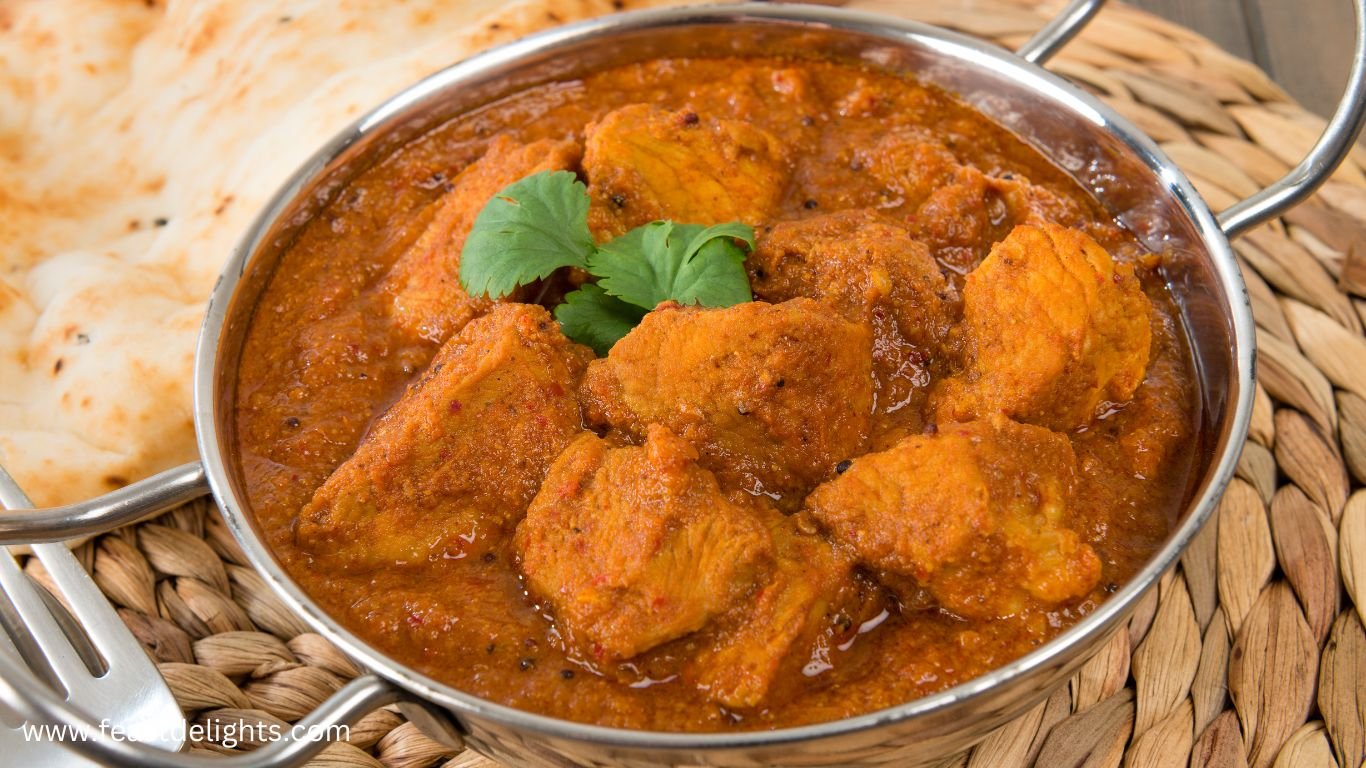
Recipe card
Goan-Style Pork Vindaloo with Vinegar and Garlic
Includes 4 hours marinating, 25 minutes preparation and an estimated 150 minutes cooking. Marinate up to 12 hours if desired; braising time varies with the pork.
Equipment: Kitchen scale, measuring jug and spoons, nonreactive covered marinade bowl, separate raw-meat cutting board, knife, heavy 4–5 litre casserole with lid, wooden spoon and food thermometer
Ingredients
Pork
Marinade
Braising
Instructions
Marinate the pork in the refrigerator
Combine cider vinegar, garlic, turmeric, cumin, coriander, cayenne, salt and black pepper in a glass or other nonreactive bowl. Coat the 3 cm pork cubes, cover and refrigerate 4–12 hours at 4°C (40°F) or below. Wash hands and utensils after handling raw pork.
Brown the sliced onions
Heat neutral oil in a heavy pot over medium heat. Add sliced onions and cook 15–20 minutes, stirring regularly, until deeply golden but not burnt. Reduce heat or add a small splash of water if they catch.
Cook the pork and spice mixture
Add the pork with its marinade. Stir over medium heat until the exterior loses its raw appearance and spices smell fragrant, about 5–10 minutes. Avoid scorching the spice paste; the raw-meat marinade must be thoroughly cooked as part of the stew.
Braise gently until fork-tender
Add the measured water or broth, bring the entire mixture to a boil, then reduce to a gentle simmer. Partly cover and braise 90–120 minutes, stirring occasionally and adding a little water if needed. The pork must be cooked through and should pull apart easily with a fork; tenderness takes longer than reaching the minimum safe temperature.
Reduce and balance the sauce
Uncover as needed and simmer until the sauce coats the pork. Taste only once the marinade and meat are fully cooked. Adjust salt and serve hot with rice or flatbread.
How to judge the braise
A gentle simmer means small bubbles rise occasionally rather than the whole surface boiling violently. A rolling boil can evaporate liquid too quickly and leave the spices stuck to the bottom. Check periodically, especially toward the end. The pork is ready for serving when cooked through and easily pierced with a fork. For whole cuts of pork the official minimum is 63°C (145°F) with a three-minute rest, but shoulder generally needs much longer cooking for the texture of a braise. Follow official temperature guidance and check several large pieces rather than relying on colour.
Balancing the finished sauce
The gravy should taste distinctly tangy rather than sweet or creamy. If it is too sharp, dilute slightly with water or unsalted broth and simmer gently; evaporation alone can concentrate acidity as well as mellow some aromas. If it tastes flat, check the salt before adding more spice. When it is watery, lift tender pork out briefly and reduce the sauce, then return the meat. Do not cook already-tender pork for a long time just to evaporate liquid.
Substitutions and serving
Wine vinegar can be substituted for cider vinegar if its concentration is suitable for food. Kashmiri chilli powder offers a different colour and generally milder heat than cayenne, so add according to taste. Chicken thighs may be adapted to a shorter cooking method, but must reach 74°C (165°F); do not apply the full pork braising time automatically. Serve this vindaloo with rice or soft skillet naan. A simple cucumber side is useful with a hot curry. For a milder contrasting main dish, try chicken korma, or serve spiced red lentil stew as a separate plant-based dish.
Make ahead, storage and allergens
Marinate the pork overnight only under refrigeration. The cooked stew can be made ahead and reheated, which makes the timing easier for guests. Divide into shallow containers to cool, then refrigerate promptly. The official safe-handling guidance explains refrigerator marinating and separation of raw and cooked foods. Vinegar does not make the stew shelf-stable, so never leave it at room temperature overnight. Check packaged broth and spices for allergens such as celery, wheat, soy or mustard, and check vinegar for sulphites if relevant. Keep yoghurt toppings separate if serving someone who avoids milk.
Frequently asked questions
Is vindaloo always extremely hot?
No fixed heat level defines every version. Vinegar and garlic are important to the flavour; adjust cayenne to taste without removing the tang.
Can I use a lean pork cut?
Shoulder is preferable for long braising because it contains connective tissue and fat. Lean loin may dry out with this method.
Can I shorten the marinade?
The recipe allows at least four hours for flavour. A shorter refrigerated marinade may still be usable but will produce a different result.
Does vindaloo need potatoes?
No. The name is associated with a Portuguese garlic-and-wine preparation, not the Hindi word for potato. Potatoes are an optional variation.
Can I use another vinegar?
Wine vinegar of ordinary culinary strength can replace cider vinegar; flavour changes. Do not use concentrated vinegar or cleaning vinegar.
Why is my pork still tough?
Shoulder needs time at a gentle simmer. Add water if necessary and continue cooking until tender.
Can I make vindaloo a day ahead?
Yes. Chill it promptly in shallow portions and refrigerate. Reheat thoroughly before serving.
More recipes to try






Spotted a detail that needs correcting? Contact the FeastDelights editors.