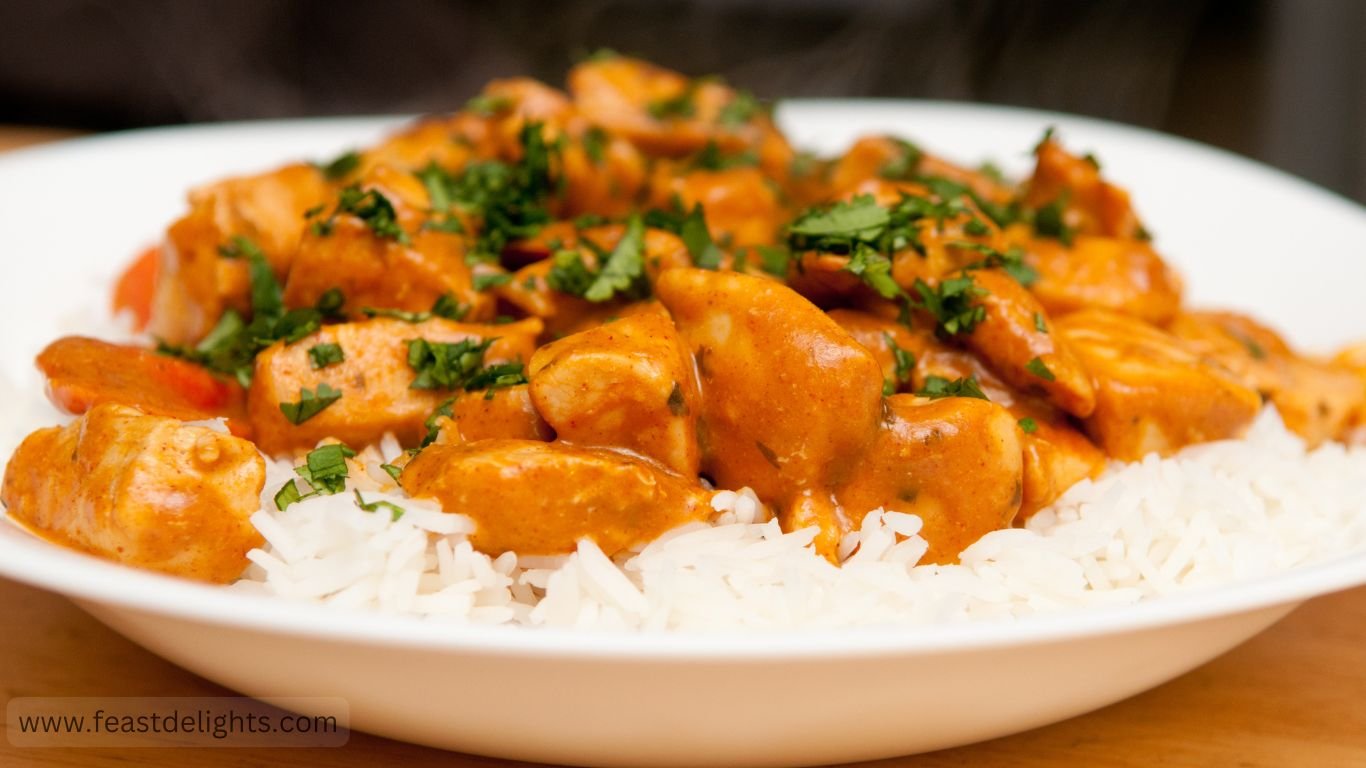
Chicken Korma with Creamy Almond and Yoghurt Sauce
This South Asian-inspired chicken korma features tender chicken pieces in a mild, creamy sauce made with plain yoghurt, almond butter and fragrant ground spices. Cumin, coriander and garam masala give the sauce warmth without requiring intense chilli heat. The recipe serves four and takes about 75 minutes, including a 30-minute refrigerated marinade. Use chicken thighs for a richer result or breast for a leaner option. Serve with basmati rice or naan to scoop up the sauce.
Chicken korma with almond and yoghurt sauce is a mild, fragrant curry with tender chicken and a creamy, nut-rich gravy. This recipe serves four in approximately 75 minutes, including a half-hour marinade. It is a simplified South Asian-inspired preparation, with ground spices and nut butter supplying flavour and body.
What makes this korma different?
Korma recipes vary across South Asia; yoghurt, nuts, aromatics and gentle braising appear in many forms. This version preserves the existing almond paste and yoghurt formula rather than introducing a new onion or cream base. Its flavour is milder and more nut-forward than our tomato and yoghurt butter chicken-style curry.
Recipe card
Chicken Korma with Creamy Almond and Yoghurt Sauce
Includes 30 minutes marinating, and allows time for batch browning and sauce simmering. Cooking time depends on chicken piece size.
Equipment: Mixing bowl, cutting board, knife, heavy deep skillet with lid, spatula, small bowl, measuring tools, instant-read thermometer
Ingredients
Marinated chicken
Sauce
Garnish
Instructions
Marinate in the refrigerator
Mix chicken with 75 g yoghurt and turmeric. Cover and refrigerate for 30 minutes. Reserve the other 75 g yoghurt separately in a clean container.
Mix the almond-spice paste
Stir almond butter, cumin, coriander, chilli powder and garam masala with a few tablespoons taken from the measured water or stock until spreadable.
Brown the chicken
Heat oil in a deep skillet over medium-high heat. Lift the chicken from the marinade and brown in batches, allowing excess marinade to drip off. Transfer to a plate reserved for partially cooked chicken and continue cooking immediately. Discard unused raw-chicken marinade.
Cook the sauce base
Lower heat to medium-low. Add the spice paste, stir for about 1 minute without scorching, then gradually stir in the remaining water or stock. Simmer 3 minutes until smooth.
Simmer and finish with yoghurt
Return the chicken and its juices to the pan. Cover and simmer gently for 12–18 minutes or until the largest pieces reach 74°C (165°F). Lower heat; whisk a little warm sauce into the reserved clean yoghurt, then stir it gradually into the pan. Heat gently without boiling.
Season and serve
Taste the fully cooked sauce and add the measured salt as needed. If too thick, loosen with a splash of warm stock. Garnish with chopped coriander and serve.
Choosing chicken, yoghurt and spices
Boneless breast cooks relatively quickly, while thigh meat remains tender during a longer simmer. Cut whichever you use into similar-sized pieces. Use plain, unsweetened yoghurt; full-fat yoghurt is generally more resistant to separating than low-fat varieties. Reserve half in a clean bowl before the other half touches raw chicken. Choose smooth almond butter without sugar, or use the listed cashew alternative. Thick nut paste needs some of the measured stock to loosen before heating.
Cumin and ground coriander contribute an earthy, citrus-like aroma, turmeric adds colour, and garam masala gives the sauce complexity. The chilli measure is a starting point because brands differ. Do not substitute sweetened nut spread or flavoured yoghurt; their added sugar and flavourings alter the sauce.
Building a smooth sauce
Marinate the chicken in the refrigerator. Brown the pieces in batches rather than crowding the pan, then continue cooking immediately. A thin coating of yoghurt may stick slightly, so moderate the heat if the pan begins to scorch. Briefly cook the loosened spice paste, then stir in the remaining stock. Nut paste can catch on the bottom if heated dry, so stir frequently.
Return the chicken and simmer gently. Test the largest piece with a thermometer: poultry must reach 74°C (165°F). Do not rely on the colour of the sauce to judge doneness. Once the chicken is cooked, lower the heat and stir a spoonful of the warm gravy into the reserved yoghurt. This reduces the temperature difference before it enters the pan. Stir the yoghurt in gradually without bringing the sauce back to a vigorous boil.
Troubleshooting
Grainy sauce: Reduce heat and stir gently; separated yoghurt may not become completely smooth again. Too thick: Add warm stock a tablespoon at a time. Too thin: Simmer the nut-and-stock base a little longer before adding the final yoghurt. Dry chicken: Avoid long boiling after it reaches its safe temperature. Too hot: Reduce chilli next time, or dilute the cooked sauce with a little stock and clean yoghurt over low heat.
Serving and variations
Serve with basmati rice or soft skillet naan. A fresh cucumber salad with dill and vinegar offers a crisp contrast. Cashew paste can replace almond butter at the same weight. A pinch of cinnamon is optional; do not overwhelm the delicate nut flavour.
Make ahead, storage and allergens
Measure spices ahead and keep raw poultry and dairy chilled separately. Refrigerate cooked portions promptly and reheat gently to 74°C (165°F). The sauce contains milk and tree nuts; check stock and spice labels for other allergens. Do not reuse uncooked marinade. Nutrition is omitted because chicken cut, yoghurt fat and nut-paste composition vary.
Frequently asked questions
Is this korma very spicy?
It is intended to be mild, but chilli powder and garam masala vary in strength. Reduce chilli if needed.
Can I substitute cashew paste?
Yes. Use 60 g unsweetened smooth cashew paste. It gives a slightly different nut flavour and remains a tree-nut allergen.
Why does yoghurt curdle?
High heat and sudden temperature changes may separate yoghurt. Use plain full-fat yoghurt, temper it with warm sauce and avoid boiling after adding it.
Can I use chicken thighs?
Yes. Cut into even pieces and cook until they reach 74°C (165°F). Thighs may take longer than breast.
Can I marinate overnight?
Yes, keep covered at 4°C (40°F) or below and within the safe storage life of the raw chicken. A long marinade may change the surface texture.
Can I make it nut-free?
The nut paste is central to this sauce. A nut-free version needs a separately developed thickener and allergen-checked ingredients.
Can I freeze chicken korma?
Yes, freeze promptly. Yoghurt may separate during thawing; stir over gentle heat and reheat to 74°C (165°F).
More recipes to try






Spotted a detail that needs correcting? Contact the FeastDelights editors.