Baked Beef and Cheese Lavash Rolls
These baked beef and cheese lavash rolls combine browned ground beef and onion with creamy cottage cheese and melted mozzarella inside thin, crisp flatbread. Two large lavash sheets make eight portions, ideal for a snack platter or a light meal with salad. The meat is fully cooked before rolling, and the oven crisps the outside while warming the centre. Allow about 55 minutes including a short rest. Use flexible lavash and drain excess filling moisture for neat slices.
Baked beef and cheese lavash rolls wrap a savoury filling of cooked ground beef, onion, cottage cheese and mozzarella in thin flatbread. The outside turns crisp while the cheese melts into the filling. Two large lavash sheets make eight snack-size portions, or four larger meal portions. Allow about 55 minutes including a brief rest before slicing. Cook the beef thoroughly in a skillet first, then bake the assembled rolls seam-side down until golden and hot throughout.
Lavash rather than pocket pita
Lavash is a thin flatbread that can be wrapped around fillings when soft and flexible. This recipe makes filled rolls using prepared sheets, not a batch of flatbread dough. Thick pocket pita is not a direct substitute because it does not roll in the same way. If you want to make the bread yourself, see the thin skillet lavash recipe; its smaller sheets may require a different number of rolls.
Choose a filling that stays inside the bread
Use 300 g (about 10.6 oz) ground beef, one small onion and the two cheeses in the measured recipe. The onion should be finely chopped so it softens quickly. Beef with moderate fat content is practical, but drain pooled fat after cooking. Too much liquid softens the bread and can cause the bottom to tear. The filling should be moist enough to hold together but not dripping.
Cottage cheese adds a soft, creamy contrast to the stretchy mozzarella. If there is loose whey in the container, drain it briefly in a sieve before weighing. Low-moisture shredded mozzarella is easier to distribute than fresh mozzarella packed in water. Use half in the filling and half over the filled sheets as directed. The cheese contributes salt, so taste the cooked meat before deciding whether all the measured salt is needed.
Use large pliable lavash sheets, ideally rectangular. Their exact dimensions vary by brand; the recipe assumes sheets large enough to hold half the filling each. If yours are small, divide the filling among more sheets rather than forcing a thick roll. Keep unused sheets covered while working so the edges do not dry out. A tray lined with baking parchment makes it easier to lift the finished rolls without tearing them.
Cook the meat before assembly
Heat half the measured olive oil in a skillet over medium heat. Soften the onion, then add the beef and break it into small pieces. Stir as it cooks so there are no large compact clumps. Ground beef must reach 71°C (160°F), checked with a food thermometer in several thicker portions of the meat; colour alone is not reliable. This temperature follows FoodSafety.gov’s cooking guidance. Drain excess fat and season, then let the filling settle briefly while preparing the tray. Do not leave cooked meat standing for an extended period.
Mix the cooked beef with cottage cheese and half the mozzarella. Use a separate clean bowl and utensils rather than reusing anything that contacted raw beef without washing. The mixture should be spreadable without puddles of liquid. If the cheese is very wet, draining it before mixing is much easier than trying to rescue a wet filling afterwards.
Roll tightly and bake until crisp
Lay each sheet flat. Spread half the filling across it in an even layer, leaving a small bare border at the sides and far edge. Sprinkle over the remaining mozzarella, divided evenly. Fold the sides in if the sheet is wide enough, then roll firmly without stretching the bread. Place seam-side down on the tray so the weight holds the roll closed. Brush the outside with the rest of the olive oil for an even golden finish.
Bake in a preheated conventional oven at 180°C (350°F) for 20–25 minutes. Look for a golden, crisp surface and a hot centre; check the thickest part of each roll reaches 74°C (165°F). Extend the bake if needed, loosely covering a browned surface with foil while the centre heats. Rest five minutes before cutting each roll into four portions with a sharp serrated knife. Resting allows the melted cheese to settle and reduces squeezing at the cut edges.
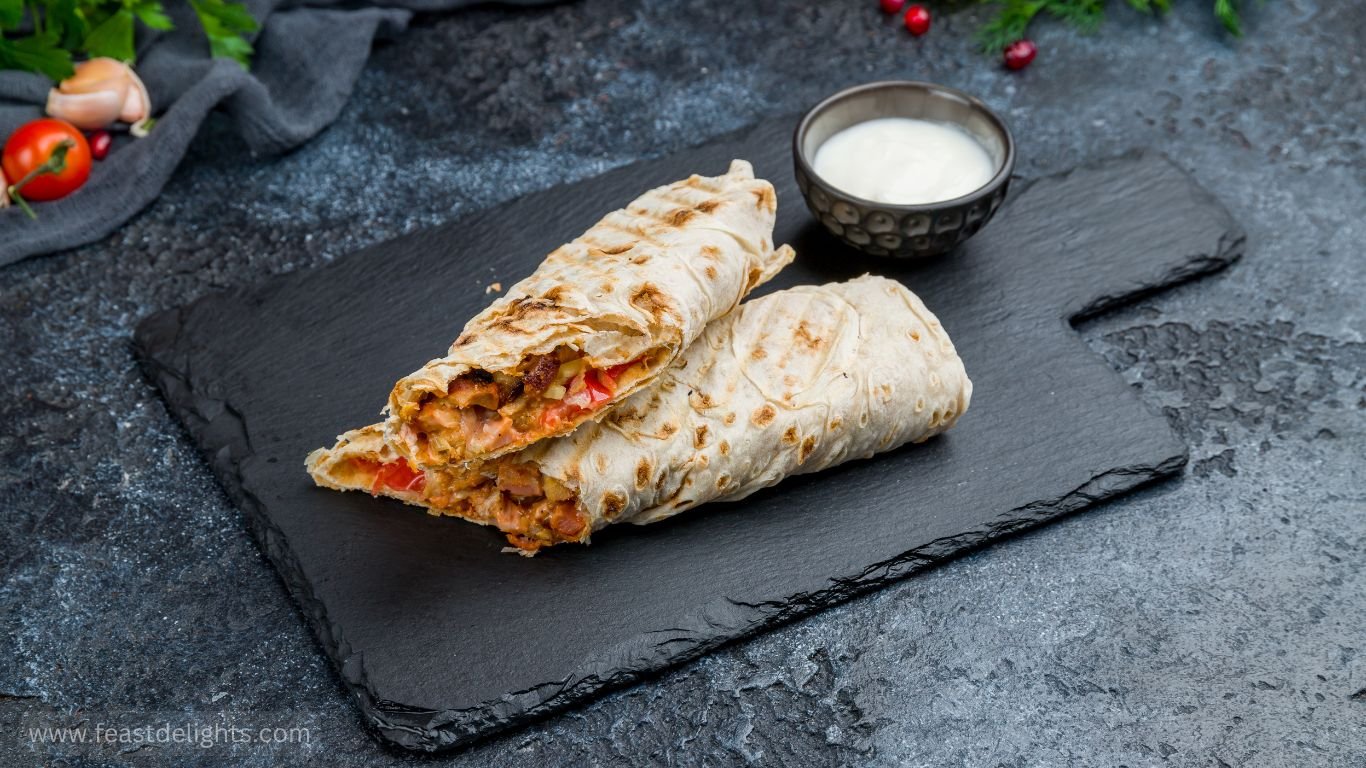
Recipe card
Baked Beef and Cheese Lavash Rolls
Allow about 20 minutes preparation, 10 minutes skillet cooking and 20–25 minutes oven baking (30 minutes cooking is a typical estimate), plus a 5-minute rest. Actual time depends on thickness and safe internal temperature.
Equipment: Skillet, spatula, knife, cutting board, mixing bowl, baking tray, parchment, pastry brush, food thermometer and serrated knife.
Ingredients
Flatbread
Filling
Cooking and brushing
Seasoning
Instructions
Cook the beef and onion
Preheat conventional oven to 180°C (350°F). Heat half the olive oil in a skillet over medium heat. Soften onion, add ground beef and break into small pieces. Cook to 71°C (160°F) in several thick portions, using a food thermometer. Drain pooled fat, season and cool briefly.
Combine the filling
Combine cooked beef and onion with drained cottage cheese and half the shredded mozzarella in a clean bowl.
Fill and roll the lavash
Lay out two pliable lavash sheets. Divide filling evenly, leaving a small border. Divide remaining mozzarella between sheets, roll firmly and place seam-side down on a parchment-lined tray.
Bake until crisp and hot
Brush with remaining olive oil. Bake 20–25 minutes or until golden and crisp with a centre temperature of 74°C (165°F). Cover browned tops loosely with foil if the centre needs longer.
Rest and slice
Rest five minutes, then use a serrated knife to cut each roll into four portions. Serve warm.
Fix common rolling and baking problems
The sheet cracks: cover it with a barely damp clean towel for a short time or warm according to the package instructions until pliable. Do not soak it. The base is soggy: drain the meat and cottage cheese, avoid overfilling and bake on a metal tray rather than in a deep covered dish. Cheese leaks out: leave a border and position the seam underneath. A little escaped cheese can be trimmed once the rolls have rested.
The top is brown but the centre is cool: use a thermometer and bake longer under loose foil. Very cold or oversized rolls take longer to heat. The slices flatten: use a serrated knife with gentle sawing motions rather than pressing straight down while the cheese is still fluid.
Serving and variations
Serve eight small portions with cucumber, tomato salad or a yoghurt dip. For a fuller meal, allow two portions per person. Add chopped parsley to the beef or fold in a small amount of cooked, thoroughly squeezed spinach. Drained ricotta can replace cottage cheese by weight, though it gives a smoother filling. Ground turkey is another option; cook it to 74°C (165°F) before assembling. For other ways to fill flatbread, try chicken and mushroom lavash rolls or layered mylina lavash bake.
Check the lavash and cheese labels for allergens. Wheat and milk are present in the standard recipe; other allergens may be present depending on the bread and cheese. A gluten-free wrap must be flexible enough to roll and may crisp differently.
Make ahead and storage
Cook the beef in advance if convenient, then refrigerate it promptly in a shallow covered container. Assemble shortly before baking to prevent the bread absorbing moisture. Refrigerate leftovers at 4°C (40°F) or below within two hours, or within one hour if the surroundings exceed 32°C (90°F). Use within three days of cooking the earliest component. For freezing, wrap individual cooled baked portions; thaw in the refrigerator and expect a softer bread texture. Reheat in the oven until the centre reaches 74°C (165°F); a microwave heats quickly but softens the bread. Do not rely on the crisp surface as a temperature check.
Let the rolls rest briefly, slice and serve while the filling is warm and the lavash still has its crisp edges.
Frequently asked questions
Can I use tortillas?
Large flexible flour tortillas can work, but you may need more than two because they are usually smaller. Divide filling accordingly and check the centre temperature.
Why does lavash tear while rolling?
Dry sheets or excessive filling cause tearing. Warm the bread briefly according to its label and spread the filling in a thinner layer.
Can I assemble the rolls a day ahead?
It is better to chill the cooked beef separately and assemble shortly before baking. Long contact with cottage cheese can soften the bread.
Can I use fresh mozzarella?
Drain it very well and blot dry first. It releases more moisture than low-moisture shredded mozzarella, so the bread may be softer.
How do I keep the rolls from uncoiling?
Leave an unfilled edge and place the seam against the tray. Rest before slicing.
Is this a recipe for homemade pita?
No. It uses prepared thin lavash as a wrapper. The filling and baking method are for stuffed rolls.
More recipes to try






Spotted a detail that needs correcting? Contact the FeastDelights editors.