Moules Marinières with White Wine and Garlic
Moules marinières is a French mussel dish with a fragrant broth of dry white wine, onion, garlic and parsley. Live mussels release their own briny juices as they steam, creating a light sauce that is especially good with crusty bread. This recipe uses a little vegetable stock or water and optional butter for a richer finish. One kilogram of shell-on mussels makes four starter portions or two more substantial servings. Allow about 35 minutes, including checking and cleaning the shells. Serve immediately with lemon wedges and bread or fries.
Moules marinières is a French dish of live mussels steamed in a wine and aromatic broth. The shells open during cooking and release salty juices that mingle with onion, garlic and parsley. This recipe takes about 35 minutes and uses 1 kg (2.2 lb) of shell-on mussels, enough for four starters or two larger portions. Serve immediately with bread to soak up the broth.
Buying and cleaning mussels
Buy live mussels from a reputable supplier and check storage and use-by instructions. Keep them cold until cooking. Discard broken shells and any open mussels that fail to close when tapped. The FDA seafood handling guidance recommends these checks. They do not guarantee freedom from contamination, which is why the source of the shellfish matters. Avoid recreationally collected mussels unless local authorities confirm the harvesting area is safe.
Scrub shells under running cold water just before cooking. Remove the fibrous beard by pulling towards the hinge. Drain them instead of soaking in fresh water. Keep raw shellfish and utensils separate from clean serving bowls.
Ingredients for a light wine broth
Dry white wine brings acidity and aroma without the sweetness of dessert wine. A little vegetable stock or water extends the broth. Choose unsalted stock because mussels release their own salty juices. Onion and garlic should soften without turning dark, and parsley is added at the end for freshness. Butter is optional; the original olive oil is sufficient to cook the aromatics.
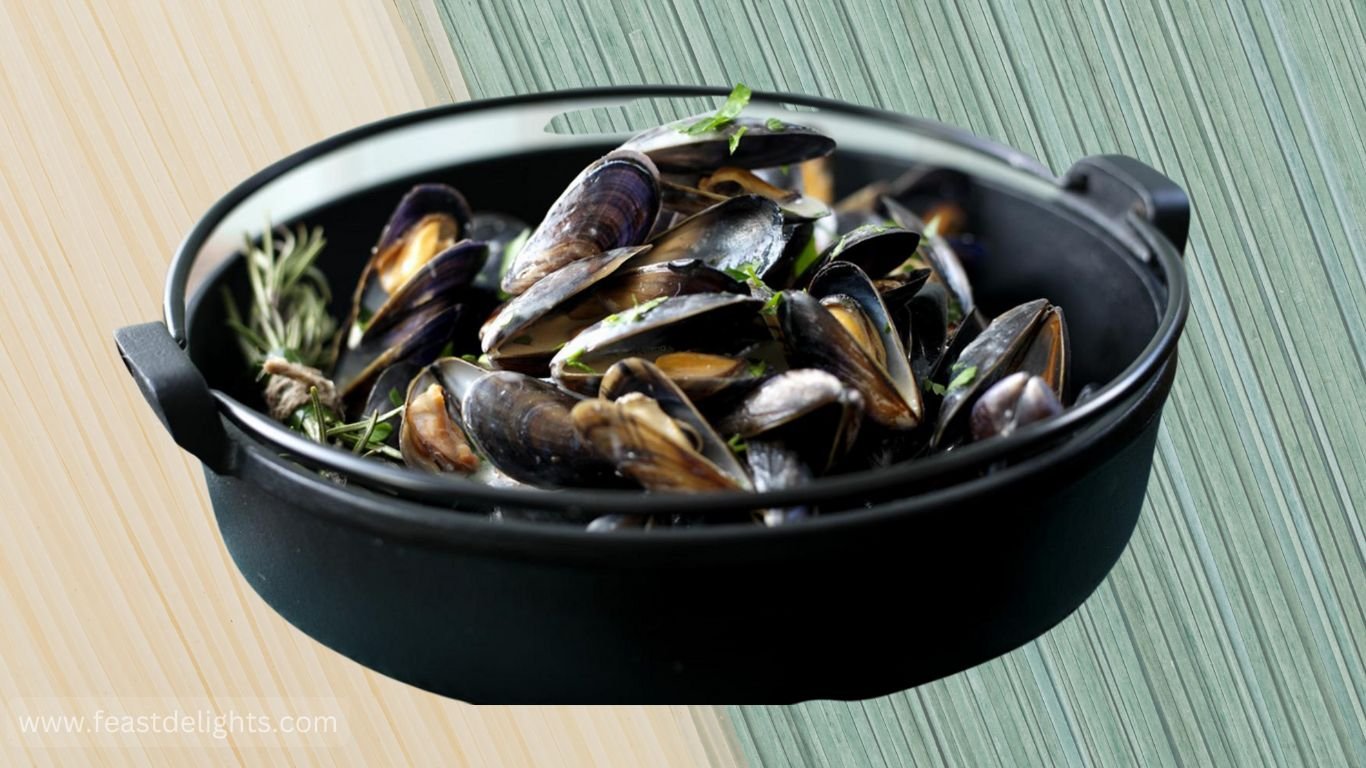
Recipe card
Moules Marinières with White Wine and Garlic
Allow 4–5 minutes for aromatics, a few minutes to bring the broth to a boil and about 5–9 minutes of covered steaming. Cleaning time varies.
Equipment: Large heavy 4–5 litre pot with lid, colander, stiff clean brush, small knife, cutting board, tongs, ladle, warm serving bowls
Ingredients
Mussels
Steaming broth
Finishing
Instructions
Inspect, scrub and debeard live mussels
Keep live mussels refrigerated until preparation. Discard cracked or broken shells and any open mussels that fail to close when tapped. Scrub under cold running water and pull off beards towards the hinge. Do not soak in fresh water or leave at room temperature. Drain well.
Soften the onion and garlic
Heat olive oil over medium heat in a large lidded pot. Cook onion about 4 minutes until soft, without heavy browning. Add garlic and stir 30 seconds.
5 minSteam in the boiling wine broth
Pour in wine and stock or water and bring to a vigorous boil. Add mussels, cover immediately and steam about 5–9 minutes, shaking the closed pot gently once if safe. The shells should open and the flesh should be cooked through. Allow the steam to build again after adding cold mussels; do not eat partially cooked shellfish.
9 minDiscard unopened shells and finish broth
Turn off heat and open lid away from your face to avoid steam. Discard any mussels that remain closed. Stir parsley, pepper and optional butter into the broth. If grit is present, carefully ladle clear broth without disturbing sediment.
Serve immediately
Divide opened mussels and broth among four starter bowls, or serve two as a main. Add lemon wedges and crusty bread if desired. Serve immediately.
How to steam mussels safely
Use a large pot so steam can circulate. Bring the wine and stock to a vigorous boil before adding the drained mussels. Cover and steam until the shells open and meat is cooked through. The CDC recommends cooking shellfish thoroughly, including steaming for 4–9 minutes in an already steaming vessel. This recipe allows about 5–9 minutes after adding the mussels; pot size and heat may affect timing. Discard shells that remain closed after cooking. Lift the lid away from your face because escaping steam can burn.
Troubleshooting
If the broth is salty, add a little hot water after the mussels have cooked. If grit settles at the bottom, ladle the clear broth carefully or strain it through a fine sieve. If mussels cook unevenly, use a larger pot or smaller batches. Do not continue cooking opened mussels for an unnecessarily long time once they are thoroughly cooked, as the meat can toughen.
Serving ideas and variations
Serve with crusty French baguette or fries. For another seafood preparation, see bouillabaisse-style seafood soup or seafood spaghetti with mussels and shrimp. Replace the wine with unsalted stock and a little lemon juice for an alcohol-free version; brief cooking does not remove all alcohol. Shallot can replace onion, and optional cream produces a richer variation.
Storage and allergens
Serve freshly cooked mussels whenever possible. Refrigerate leftovers within two hours, or one hour above 32°C (90°F), and use within one day. Reheat once to 74°C (165°F). This dish contains molluscan shellfish; optional butter adds milk, and wine may contain sulphites. Check stock labels for further allergens. People at increased risk from foodborne illness should avoid raw or undercooked shellfish.
Frequently asked questions
How do I check live mussels before cooking?
Discard cracked shells and open mussels that do not close when tapped. Buy from a reputable supplier; a tap test alone cannot establish that shellfish are safe.
What is a mussel beard?
It is the thread-like material that attaches the mussel to surfaces. Pull it towards the hinge shortly before cooking.
Can I use frozen cooked mussels?
They require a different heating method. Follow the package instructions rather than using the live mussel tap test or steaming time.
Why is my mussel broth salty?
Mussels release naturally salty liquor. Use unsalted stock and taste the fully cooked broth before adding any salt.
Can I make moules marinières without wine?
Yes. Replace the wine with unsalted stock and add a little lemon juice to taste. It is an adaptation with a different flavour.
Should I force open closed cooked mussels?
No. Discard mussels that remain closed after cooking, following FDA shellfish guidance.
More recipes to try






Spotted a detail that needs correcting? Contact the FeastDelights editors.