Beef and Pork Lasagna with Béchamel and Cheese
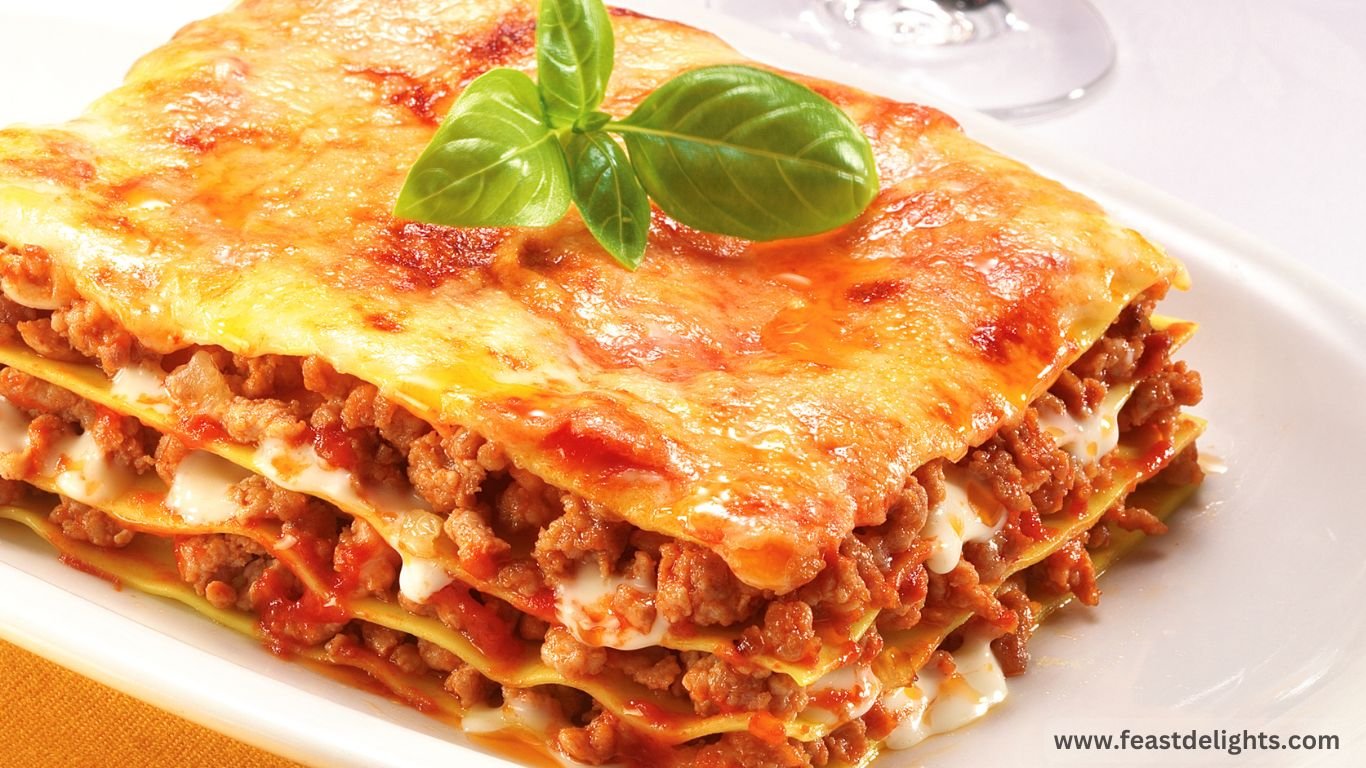
Beef and pork bring a rounded, savoury flavour to the tomato sauce in this layered lasagna. Béchamel adds creamy richness between the pasta sheets, while mozzarella and Parmesan brown on top. The meat sauce uses onion, carrot, garlic and dried herbs, with no wine required. Bake the assembled dish covered first so the pasta softens, then uncover to colour the cheese. A short rest makes the eight portions easier to serve. Follow your pasta packet for any precooking and check the centre before taking it from the oven.
This beef and pork lasagna layers tomato meat sauce, creamy béchamel and pasta under mozzarella and Parmesan. It is an Italian-inspired home version with a fairly quick meat sauce, rather than a long-cooked ragù. The existing quantities make eight portions in a 23 × 33 cm (9 × 13 inch) baking dish. Expect about 2 hours 10 minutes from chopping to slicing, including a 15-minute rest after baking. The most important choices happen before it enters the oven: use the pasta sheets as their packet directs, keep the sauces spreadable and cover every exposed pasta edge. That balance gives tender layers with enough structure to lift onto a plate.
Ingredients and sauce balance
The 500 g (about 1 lb 2 oz) mixed beef and pork stays at the original combined weight; no particular split is required. Brown it in small crumbles so each layer spreads evenly. Onion and grated carrot add sweetness, while tomato paste gives body to the 400 g (14 oz) canned tomatoes. The herbs make this a home-style version; it is not presented as a definitive regional lasagne alla bolognese.
The béchamel keeps its original 50 g butter, 50 g flour and 500 ml milk. That ratio makes a fairly thick sauce, so spread it in thin layers while warm. Whisk the milk in gradually and keep the heat moderate to avoid a floury lump at the bottom of the saucepan. The finished sauce should be smooth and spreadable. For a closer look at the technique, see the béchamel sauce guide, while using the quantities in this card.
Choose the pasta before you start
Twelve sheets is a guide because brands differ in size. In a 23 × 33 cm dish, use enough to make three or four single layers, trimming to fit and avoiding thick overlaps. Sheets requiring boiling must be prepared according to their packet before assembly. Drain and separate them so they do not stick together. Fresh sheets may have different instructions.
Oven-ready sheets vary in the liquid they need. Use them only if their packet’s sauce and liquid requirements can be met; do not assume any dry sheet will soften in this relatively thick sauce. If the packet calls for substantially more liquid, choose precooked sheets for this version instead. The approximate baking time below does not override pasta-label instructions.
Recipe card
Beef and Pork Lasagna with Béchamel and Cheese
About 30 minutes active preparation and assembly, 85 minutes cooking with béchamel made during the sauce simmer, and 15 minutes resting. Pasta preparation and chilled assembly can add time.
Equipment: Wide saucepan or deep skillet; medium saucepan; whisk; 23 × 33 cm (9 × 13 inch) baking dish; foil; rimmed baking tray; thin knife; food thermometer
Ingredients
Meat sauce
Béchamel
Assembly
Instructions
Soften the vegetables
Heat the olive oil in a wide saucepan over medium heat. Add the diced onion and grated carrot and cook about 5–7 minutes, stirring, until softened. Add garlic and cook about 30 seconds without letting it brown.
Cook and simmer the meat sauce
Add the mixed beef and pork, break into small crumbles and cook thoroughly to at least 71°C (160°F). Stir in canned tomatoes with their juices, tomato paste, oregano, basil, salt and pepper. Simmer gently, uncovered, about 25 minutes, stirring occasionally, until moist and spoonable rather than watery or dry.
Whisk the béchamel
While the meat sauce simmers, melt the butter in a saucepan over medium-low heat. Whisk in the flour and cook for 1 minute without browning. Add the milk gradually while whisking. Bring to a gentle simmer and cook, stirring, about 5–8 minutes until smooth and thick enough to coat a spoon. Stir in the nutmeg and remove from the heat.
Prepare the pasta and oven
Heat the conventional oven to 180°C (350°F). Prepare lasagna sheets exactly as their packet directs, boiling first if required. Separate drained sheets. Use the 12 sheets as a guide for 3–4 single layers in a 23 × 33 cm (9 × 13 inch) dish; trim to fit.
Layer and cover
Spread a thin layer of meat sauce in the dish. Alternate pasta, meat sauce and béchamel, dividing sauces evenly and reserving enough to cover the final pasta layer. Finish with sauce and scatter over all the mozzarella and Parmesan. Tent loosely with foil, keeping it off the cheese.
Bake until tender and hot
Bake on a rimmed tray for about 30 minutes covered, then uncover and bake about 15 minutes more. The pasta must be tender when pierced and the centre must reach 74°C (165°F). If the top browns first, cover again and continue baking. Chilled assembly may need longer.
Rest and portion
Rest the lasagna for 15 minutes before cutting into eight portions. Use a sharp knife to cut the layers and a broad spatula to lift each serving.
How to layer without dry corners
Start with a thin film of meat sauce on the bottom of the dish. This keeps the first pasta layer from sitting directly on hot ceramic or metal. Divide the remaining meat sauce and béchamel among the intended layers before you begin; save enough of both for the top. Alternate pasta, meat sauce and thinly spread béchamel, then finish with sauce over the last pasta layer and both cheeses.
Press sheets gently into the sauce rather than packing them down. If a corner sticks up, tuck it under or cover it with sauce. Set the dish on a rimmed tray to catch drips, keeping it level in the centre of the oven. Cover loosely for the first stage of baking, then uncover once the layers have heated through and the pasta is softening.
Doneness, resting and troubleshooting
At 180°C (350°F) in a conventional oven, start with 30 minutes covered and about 15 minutes uncovered. The sauce should bubble at the edges, the top should be golden, and a thin knife should pass through the pasta without meeting a stiff sheet. Check the centre with a food thermometer: this casserole should reach 74°C (165°F). A browned surface alone does not show that the middle is hot.
Hard pasta: cover again and continue baking until tender, checking that there is moisture around the affected sheets. If the sauces have dried out, add a small splash of hot water at the edges before covering. This is a rescue step, not a substitute for preparing the right pasta at the start.
Watery portions: the meat sauce may have been too thin, the mozzarella especially wet, or the dish cut too soon. Drain fresh mozzarella well if using it and let the lasagna rest for 15 minutes. The layers settle as the sauces stop bubbling.
Dark cheese before the centre is ready: tent foil over the dish and keep cooking. Move it away from a strong top element. Do not increase the temperature just to shorten the final heating stage.
Lumpy béchamel: remove from the heat and whisk firmly before it goes into the lasagna. Strain stubborn small lumps. If it has scorched, make a fresh sauce; scraping the burnt bottom into it will carry the bitter flavour throughout.
Success tips
- Prepare the béchamel while the tomato sauce simmers to keep the work manageable.
- Leave the meat sauce moist enough to spread; do not reduce it to dry mince.
- Count and divide the sheets and sauces before assembling.
- Cover pasta edges with sauce so they do not bake hard.
- Tent the foil above the cheese to prevent sticking.
- Rest before slicing, then use a sharp knife and broad spatula.
Make ahead
For the clearest workflow, cook the sauces ahead, cool them promptly in shallow containers and refrigerate. Use them within 24 hours for this make-ahead plan. Assemble with pasta prepared as its packet directs, then bake soon after assembling. A dish assembled with chilled sauces needs extra covered baking time, so start checking after the stated time and continue until the middle reaches 74°C (165°F) and the pasta is tender.
Follow the baking dish manufacturer’s instructions before putting a chilled dish into a hot oven. Avoid sudden temperature changes with glass or ceramic. If making a freezer meal, freezing cooked portions gives more predictable reheating than promising a fixed baking time for a whole frozen casserole.
Substitutions and serving
All beef can replace the mixed beef and pork at the same total weight. It will change the flavour and richness slightly. Low-moisture mozzarella is convenient for grating and introduces less water than fresh mozzarella. Keep the Parmesan for its salty finish, or use a comparable hard grating cheese.
This recipe contains wheat and milk; pasta may also contain egg. Check each packet rather than assuming an egg-free pasta or a gluten-free sauce. A dairy-free or gluten-free version needs suitable replacements throughout and a separate texture check. For a meatless option, use the dedicated spinach and cheese lasagna. If you want a sauce-led meal without assembling layers, the slow-simmered beef and pork Bolognese serves a different cooking task.
Serve modest squares with green salad, steamed green beans, crusty bread or fresh basil at the table. Keep heavy sides small because the pasta, meat and cheese already make a substantial main dish.
Storage and safe reheating
Divide leftovers into shallow portions and refrigerate within 2 hours, or within 1 hour above 32°C (90°F). Store at 4°C (40°F) or below for up to 3 days. Freeze individual portions in sealed containers for up to 2 months for best quality, then thaw in the refrigerator. Reheat covered until the centre reaches 74°C (165°F); add a spoonful of water around a dry portion if needed.
Keep raw ground meat separate from ready-to-eat ingredients. Cook the beef and pork thoroughly to at least 71°C (160°F) before assembly, then heat the completed casserole to 74°C (165°F). These temperature checks follow the official safe-temperature chart. Do not rely on the meat losing its pink colour.
Give the lasagna its full resting time, then serve warm squares with a crisp, lightly dressed side. Tender pasta and a moist centre matter more than a perfectly straight slice.
Frequently asked questions
Can I use ricotta instead of béchamel?
That makes a different filling and moisture balance. This version is written for the measured butter, flour and milk sauce; a direct swap has not been checked.
Do I put cheese between every layer?
In this version the two cheeses finish the top. The internal layers get their creaminess from béchamel, so you do not need extra cheese to assemble it.
Can I omit the nutmeg?
Yes. Nutmeg gives a subtle warm note to the white sauce but is not needed to thicken it.
Why did the foil stick to the cheese?
It likely touched the topping. Make a loose tent over the dish and lift it carefully before the uncovered baking stage.
Can I bake it in two smaller dishes?
Yes, divide all components evenly and make the same number of thin layers where possible. Smaller dishes may heat faster; check pasta tenderness and 74°C (165°F) at the centre of each.
How do I cut neat portions?
Rest for 15 minutes, then cut through the full depth with a sharp knife before lifting with a broad spatula. Very hot lasagna is naturally softer.
Can I use fresh tomatoes?
Their water content and acidity vary. The recipe is written for 400 g canned chopped tomatoes with juices; fresh tomatoes need a separate sauce-consistency adjustment.
Can I leave the baked lasagna on the counter to cool completely?
No. Portion it into shallow containers and refrigerate within 2 hours, or within 1 hour above 32°C (90°F). Do not wait for a deep whole casserole to become completely cold.
More recipes to try






Spotted a detail that needs correcting? Contact the FeastDelights editors.