Classic Béchamel Sauce with Nutmeg
Béchamel is a smooth French white sauce made from milk, butter and flour, with a gentle seasoning of salt, pepper and optional nutmeg. A pale roux thickens the milk without giving it a toasted colour. This relatively thick version uses 50 g each of butter and flour for 500 ml of milk and takes about 17 minutes to prepare. The original yield is approximately 600 ml, although reduction affects the final volume. Use it for lasagne, moussaka, baked vegetables or as the base for a cheese sauce.
Classic béchamel sauce is a French white sauce thickened with a pale butter-and-flour roux. It has a mild creamy flavour and a smooth consistency, useful for lasagne, moussaka and vegetable bakes. This version takes about 17 minutes and produces an estimated 600 ml of relatively thick sauce.
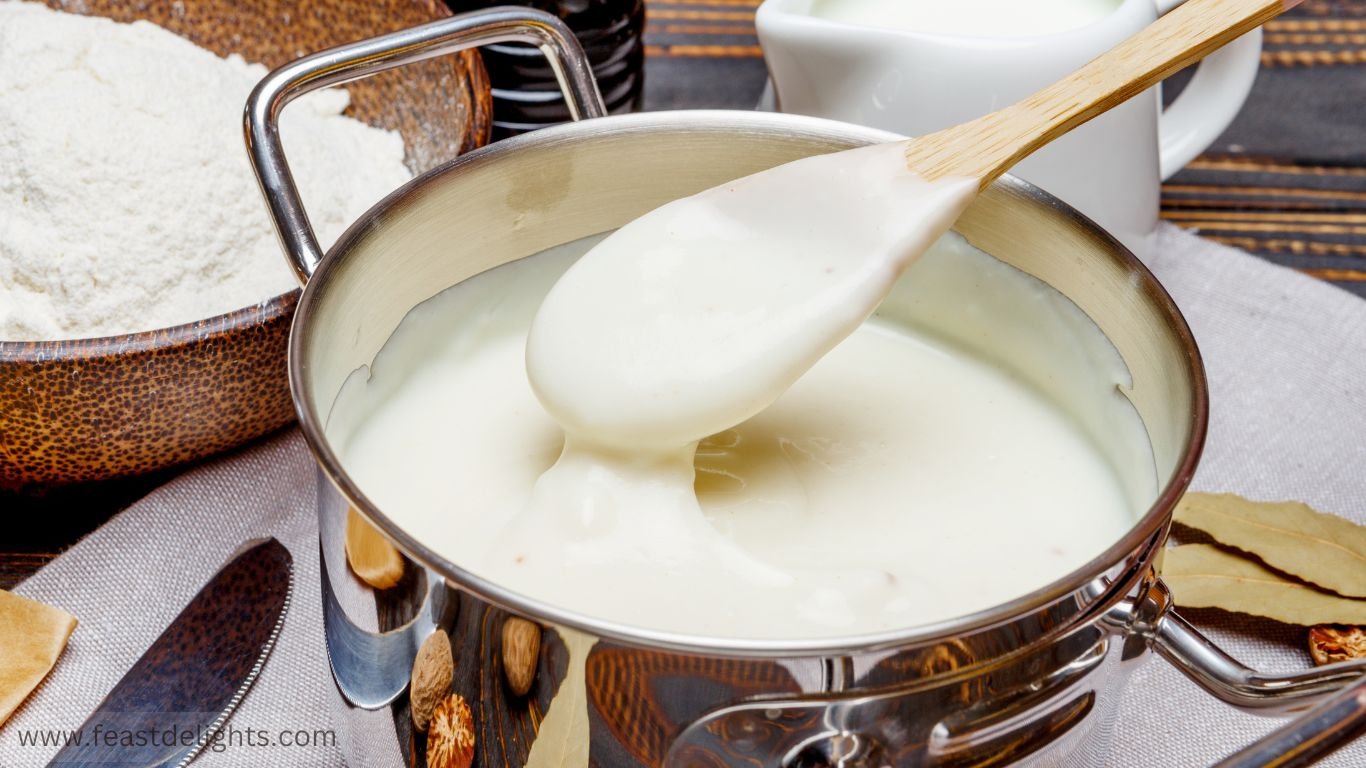
Recipe card
Classic Béchamel Sauce with Nutmeg
Approximately 12 minutes of cooking with milk warming and roux preparation overlapping. The original approximate yield needs kitchen measurement; thickness and evaporation affect volume.
Equipment: Small saucepan for milk, heavy 1.5–2 litre saucepan, whisk, kitchen scale, measuring jug and spoons
Ingredients
White sauce
Seasoning
Instructions
Warm the milk
Warm the measured milk in a small saucepan over medium-low heat until steaming, not boiling. Keep it nearby; do not let it scorch.
Cook a pale roux
Melt butter in a heavy saucepan over medium-low heat. Add flour and whisk continuously for about two minutes until the mixture is smooth and gently bubbling but still pale. Reduce heat if it starts browning.
Whisk in the milk gradually
Add a small splash of warm milk to the roux and whisk until smooth. Gradually add more milk, whisking each addition smooth before pouring in the next. Once the mixture is fluid, whisk in the remaining milk.
Simmer until smooth and thick
Bring to a gentle simmer, whisking across the bottom and corners of the pan. Cook for 5–8 minutes until smooth and thick enough to coat the back of a spoon. If needed, add a little warm milk to loosen it for your intended dish.
Season and use
Remove from the heat and season with salt, pepper and optional nutmeg. Use immediately or transfer to a clean container for prompt cooling and refrigerated storage. A food-safe cover touching the surface can prevent a skin forming.
Understand the butter, flour and milk ratio
The original formula uses 50 g butter and 50 g plain flour to thicken 500 ml whole milk. This is a substantial amount of roux for the liquid, so expect a thick sauce rather than a thin pouring cream. Whole milk gives a fuller flavour. Weigh flour and butter instead of estimating by spoonfuls. White pepper and optional nutmeg provide gentle seasoning without masking the milk.
How to make a pale roux without lumps
Warm the milk in a separate saucepan while melting butter over medium-low heat. Whisk flour into the melted butter and cook briefly until the paste bubbles gently. Do not brown it. Add the first splash of milk slowly and whisk until completely smooth. Gradually add more, taking care to reach the corners of the pan. A small initial addition creates a thick paste that is easier to smooth than lumps dispersed in a large amount of milk.
Once the milk is incorporated, bring to a gentle simmer. Whisk regularly so the sauce does not catch on the bottom. The starch thickens as it heats. Continue cooking for five to eight minutes, then check whether the sauce coats the back of a spoon without immediately running off. Remove from direct heat before seasoning.
Troubleshooting the consistency
If lumps form, take the saucepan off the heat and whisk vigorously. A fine sieve can remove stubborn lumps before returning the sauce to gentle heat. If it tastes like raw flour, continue simmering briefly while whisking. If too thick for a particular dish, add warm milk gradually. If too thin, allow it to simmer a little longer rather than adding raw flour directly to the hot sauce.
Variations and allergens
For a cheese sauce, stir finely grated melting cheese into the finished béchamel away from direct heat. An optional bay leaf can infuse the milk and should be removed before whisking. This recipe contains wheat and milk. A dairy-free variation requires suitable plant-based alternatives for both butter and milk; a gluten-free variation needs a thickener formulated for sauces, with quantities adjusted as necessary. These substitutions have not been kitchen-tested here.
What to make with béchamel
Use it in beef and pork lasagna, spinach and cheese lasagna or vegetarian mushroom moussaka. Follow the quantities and consistency requirements of the individual dish rather than assuming this entire batch is needed.
Make ahead and storage
Refrigerate the sauce promptly in a shallow covered container. It thickens as it cools; whisk in a little milk during reheating. Use within three days and heat leftovers thoroughly to 74°C (165°F). Freezing is possible but may cause a grainy or separated texture. The original ingredient proportions and approximate yield are retained; actual volume should be confirmed in a kitchen trial.
Frequently asked questions
What is a roux?
A roux is a cooked mixture of fat and flour used to thicken liquids. For béchamel, keep it pale rather than deeply browning it.
How do I fix lumpy béchamel?
Take the pan off the heat, whisk briskly and strain if necessary. Return to gentle heat to finish cooking.
Why does my sauce taste floury?
The roux or sauce may not have cooked long enough. Simmer gently for a few more minutes while whisking.
How do I thin a thick white sauce?
Whisk in warm milk a tablespoon at a time until it reaches the desired consistency.
Can I make cheese sauce from béchamel?
Yes. Remove the thickened sauce from direct heat and stir in finely grated melting cheese until smooth. Adjust salt afterwards.
Can I make it dairy-free?
A suitable unsalted plant-based butter alternative and unsweetened plant milk may work, but the flavour and thickness can differ. The original recipe contains milk and wheat.
More recipes to try






Spotted a detail that needs correcting? Contact the FeastDelights editors.