Yeast-Free Skillet Flatbreads with Warm Water and Oil
These yeast-free skillet flatbreads are soft, flexible rounds made from flour, warm water, oil and a small amount of baking soda and lemon juice. The dough rests for half an hour so it rolls easily, then cooks on a dry hot skillet until lightly browned in spots. The batch makes eight flatbreads in about 65 minutes, including resting. Stack the cooked rounds under a clean towel to keep them pliable for wraps, or serve warm with dips, soups and stews.
Yeast-free skillet flatbreads are thin, flexible breads made without a yeast rise. This version retains the original flour, warm water, oil, baking soda and lemon juice formula. It makes eight rounds in approximately 65 minutes: 15 minutes preparation, 30 minutes resting and 20 minutes cooking.
What makes the dough flexible?
All-purpose flour provides gluten, while the warm water hydrates it and oil helps keep the cooked bread pliable. The small amount of lemon juice reacts with baking soda, although the amount of lift will vary; these are flatbreads, not fluffy yeast rolls. Do not add extra baking soda to force more puffing, since it can leave a bitter or soapy taste. Weigh flour and measure water carefully. Flour absorption varies, so if the mixture stays dry after kneading, add water a teaspoon at a time. If sticky, let it rest briefly before adding a small dusting of flour.
Mix, rest and roll
Whisk dry ingredients together to distribute the soda evenly. Mix in water, oil and lemon juice and knead until smooth. The 30-minute covered rest relaxes the dough; it is not a fermentation stage, and you need not wait for it to double. Divide into eight equal portions by weight. Keep unused pieces covered while rolling each round to 2–3 mm thick. A lightly floured board helps prevent sticking without coating the bread in excess flour.
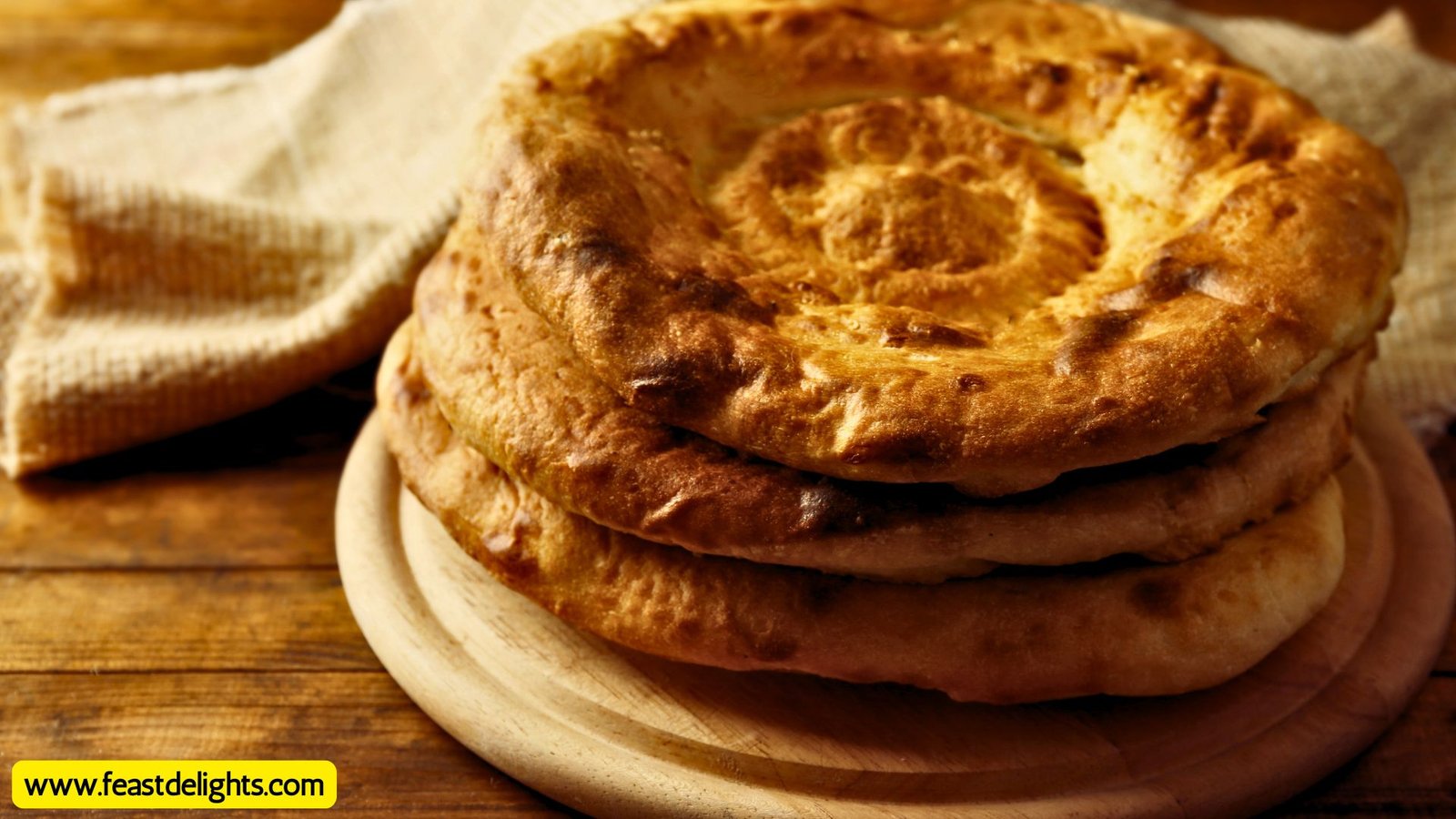
Recipe card
Yeast-Free Skillet Flatbreads with Warm Water and Oil
15 minutes preparation, 30 minutes resting and about 20 minutes cooking; individual batches may take longer.
Equipment: Mixing bowl, scales, measuring jug and spoons, rolling pin, heavy 25–28 cm skillet, spatula and clean towel.
Ingredients
Dough
Instructions
Mix and knead
Whisk flour, salt and baking soda. Add warm water, oil and lemon juice, then knead about 5 minutes until smooth. Add a teaspoon of water only if too dry.
Rest the covered dough
Cover dough and rest 30 minutes at room temperature to relax gluten; do not wait for it to rise.
Divide and roll eight rounds
Divide into 8 equal balls. Keep covered and roll each into a 2–3 mm circle on a lightly floured surface.
Cook in a dry skillet
Heat a dry heavy skillet over medium-high heat. Cook rounds one at a time about 1–2 minutes per side until puffed in spots, lightly browned and cooked through; adjust heat if scorching.
Stack to keep soft
Stack cooked breads under a clean towel. Serve warm or cool completely before airtight storage.
Cook on a dry skillet
Use a heavy skillet around 25–28 cm. Preheat over medium-high heat until hot, then lay one round flat. After about one to two minutes, small bubbles and light brown patches should appear. Turn and cook the second side until the centre no longer looks raw. Large dark spots appearing before the dough cooks mean the pan is too hot; reduce heat slightly. Cooking eight breads individually may take longer than 20 minutes depending on your pan and pace. Stack cooked rounds under a clean towel to retain steam, which helps them bend without cracking.
Troubleshooting and variations
If the dough springs back, rest the covered ball for a few more minutes. If the bread is hard, shorten cooking and avoid rolling paper-thin. If flour burns in the skillet, wipe away excess with a dry heatproof utensil after taking the pan off the heat. A half-whole-wheat variation may need more water; its texture will be firmer. Add cumin seeds for a spiced version or brush cooked bread with oil and fresh herbs just before eating. The base contains wheat; do not taste raw flour dough. For other methods, see thin Armenian skillet lavash and soft yeast skillet flatbreads. Serve alongside red lentil curry or a dip.
Make ahead and storage
Cool plain breads completely before sealing in an airtight container; keep at cool room temperature for up to two days. Freeze with parchment between rounds for up to two months for quality. Thaw and rewarm briefly on a skillet, adding a few drops of water if needed. Store any perishable fillings separately in the refrigerator. Discard mouldy bread rather than trimming the affected areas.
Frequently asked questions
Do these need to rise?
No; the rest relaxes the dough rather than activating yeast.
Why do my flatbreads spring back?
Cover the dough and give it a little more resting time before rolling.
Can I use whole-wheat flour?
Try replacing half the flour, adding a little water if needed; the bread may be firmer.
Should I grease the skillet?
The original method uses a dry skillet; oil is already in the dough.
Why do the breads turn hard?
They may have cooked too long or been rolled too thin. Stack under a towel after cooking.
Can I freeze them?
Yes, cool completely and freeze separated by parchment for up to two months for quality.
More recipes to try






Spotted a detail that needs correcting? Contact the FeastDelights editors.