Crisp Refrigerator Pickled Cauliflower
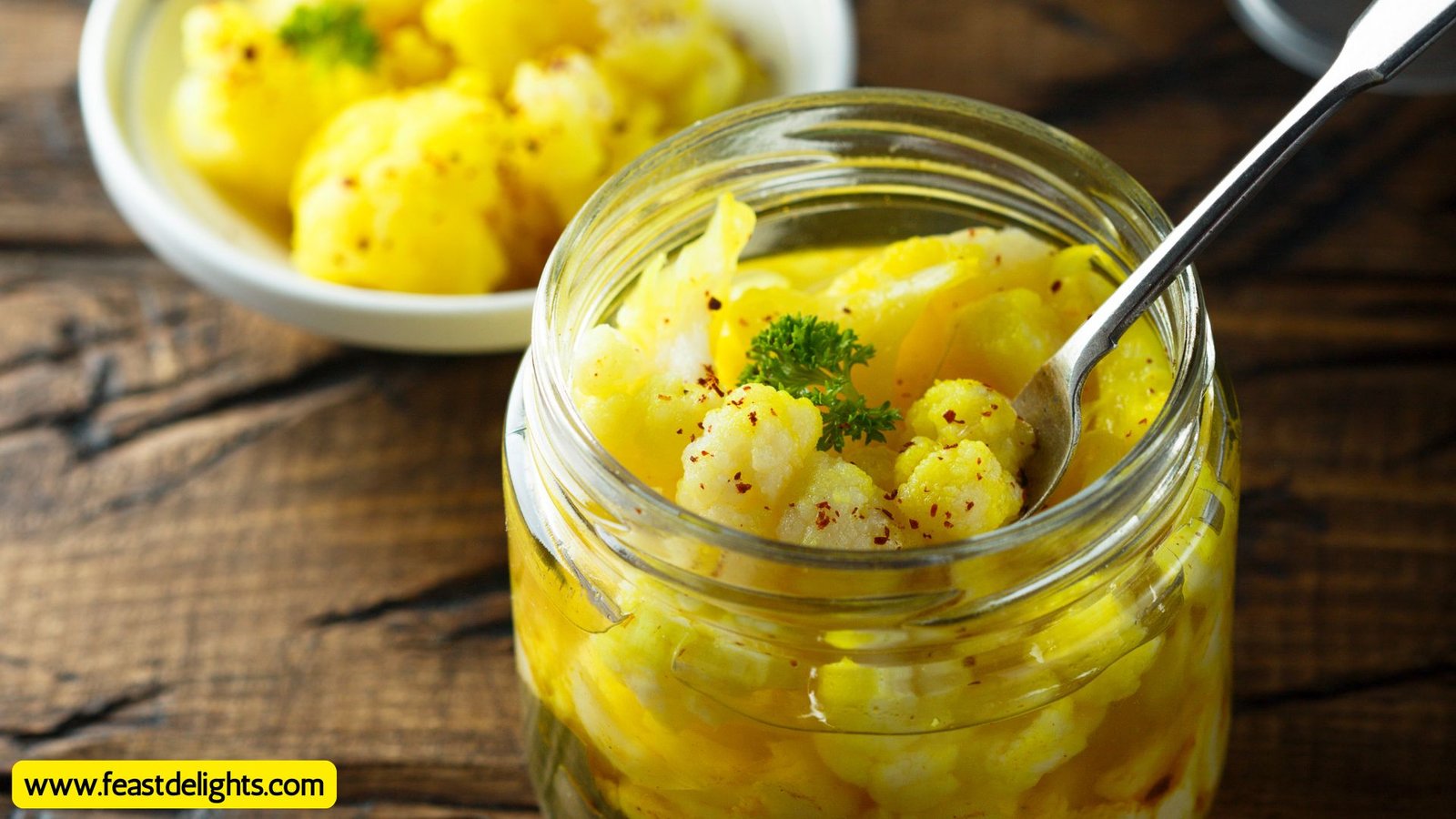
Crisp refrigerator pickled cauliflower has a firm bite and a bright vinegar flavour, with red pepper, garlic, mustard seed and coriander in the brine. A brief blanch softens the raw edge without cooking the florets through. This batch uses 1 kg of prepared cauliflower and makes 1.2 litres of brine; packed container volume depends on the floret size. Allow about 30 minutes to prepare and cook, then at least 24 hours in the refrigerator for flavour. These pickles stay chilled throughout and are not a shelf-stable preserve.
Refrigerator pickled cauliflower is a useful sharp side for rich meals, sandwiches and simple vegetable plates. Cut the florets small enough to eat comfortably, blanch them for only 2 minutes and cool them immediately so they retain their bite. The existing brine combines equal volumes of labelled 5% vinegar and water with a little sugar, salt and whole spices. Red pepper adds colour and a sweeter contrast to the cauliflower. Plan on a day of refrigerated waiting before the first serving, with a fuller flavour after 48 hours. This is a vinegar pickle, not a fermented vegetable, and the clean jars are storage containers for the fridge rather than a method of making the recipe safe for a cupboard.
Vegetables and the measured brine
Weigh the cauliflower after removing leaves and the tough central stem. One kilogram is about 2 lb 3 oz. Choose a firm head with tightly packed florets and no soft or slimy patches. Divide it into roughly 2–3 cm/1 inch pieces; split thick stems so they cook at a similar rate to the tops.
Remove the red pepper’s core and seeds, then cut into narrow strips. Slice five garlic cloves so their flavour disperses through the containers. Whole mustard seeds, coriander seeds, peppercorns and bay give a clean, spiced brine without a powdery coating on the vegetables.
Measure 600 ml of labelled 5% white vinegar and 600 ml water, about 2½ US cups plus 2 teaspoons of each. Keep those amounts equal. Use level 15 ml tablespoons for the 2 tablespoons sugar and 1 tablespoon salt. Fine pickling salt dissolves readily; large salt crystals do not give the same weight per tablespoon.
White wine vinegar is a flavour alternative only if labelled 5% acidity. Do not use unlabelled homemade vinegar or cleaning vinegar. The University of Maine refrigerator pickle guidance uses the same general equal-vinegar-and-water approach, but its recipe and storage directions are separate from this batch.
Containers and blanching
Have several clean heatproof containers with lids ready, providing about 3 litres of total space. Exact packing volume depends on the vegetable shapes. Use jars intended to withstand hot liquid, or suitable heatproof food containers, rather than cold decorative glass. A stainless-steel saucepan is useful for the acidic brine.
Bring a large pot of water to a rolling boil. Add florets in batches if necessary so the water returns to the boil quickly, and cook for 2 minutes. Cool straight away in ice water and drain thoroughly. This short blanch is for texture; it is not a canning process or a step that makes the vegetables shelf-stable.
Recipe card
Crisp Refrigerator Pickled Cauliflower
30 minutes preparation/cooking plus at least 24 hours in the refrigerator; flavour develops over 24–48 hours. Container yield depends on packing.
Equipment: Large blanching pan, colander, ice-water bowl, stainless-steel brine saucepan, measuring jug and spoons, knife, clean heatproof lidded containers with about 3 L combined capacity
Ingredients
Vegetables
Vinegar brine and spices
Instructions
Prepare the vegetables and containers
Wash hands and equipment. Rinse the vegetables under running water. Cut 1 kg trimmed cauliflower into even 2–3 cm florets, slice 1 seeded bell pepper and 5 garlic cloves. Set out clean heatproof lidded containers with about 3 litres combined capacity.
Blanch briefly and cool
Bring a large pan of water to a rolling boil. Add cauliflower in manageable batches and boil for 2 minutes, keeping it firm. Transfer immediately to ice water, then drain very well. The pepper and garlic are not blanched.
Boil the measured brine
In a stainless-steel saucepan combine 600 ml 5% white vinegar, 600 ml water, 2 tablespoons sugar, 1 tablespoon fine salt, 3 bay leaves, 1 teaspoon mustard seed, 1 teaspoon coriander seed and 10 peppercorns. Bring to a boil, stirring until sugar and salt dissolve.
Pack and cover with brine
Divide cauliflower, pepper and garlic between the heatproof containers. Carefully pour over the hot brine to cover, distributing the spices. Leave some space below the rim. If coverage is short, repack more closely or make more brine in the same proportions; do not add plain water.
Refrigerate and let flavour develop
Cover and refrigerate promptly, within 2 hours of preparation, or 1 hour above 32°C/90°F. Use small containers to cool quickly and keep at 4°C/40°F or below. Wait at least 24 hours, preferably 24–48 hours, before serving. Use within 1 week from preparation and never store in the pantry.
Serve a drained portion
Lift out a serving with a clean utensil, leaving the remaining vegetables under the brine in the refrigerator. Discard the bay leaves and whole spices from the serving as preferred; the brine is not reused for another batch.
Keeping the crunch and balanced flavour
Soft florets: the blanch may have been too long, the pieces too small, or the vegetables left in hot liquid for too long before chilling. Begin with fresh cauliflower, make the pieces even and cool promptly after blanching.
Not enough brine to cover: divide the vegetables between containers that fit them more closely, or make a separate extra batch of brine with the same ratios. Do not top up with plain water, which weakens both flavour and acidity.
Vegetables float: gently settle them with a clean spoon. A clean food-safe pickle weight can help keep pieces below the liquid, but must not be used as a substitute for refrigeration. Leave enough space so brine does not spill when the lid goes on.
Too sharp at the first taste: allow the full refrigerated waiting time and taste a drained piece. Add a little sweetness to the portion being served if desired; do not dilute the stored brine with extra water.
Cloudiness or bubbling: whole spices can shed particles, but this is not a fermented recipe. If the batch becomes slimy, develops mould, unexpected gas or an off smell, discard it without tasting. Absence of these signs does not make a wrongly stored batch safe.
Variations and allergens
Use green or yellow bell pepper in place of red without changing its quantity. Add a small dried chilli for a hotter version or fresh dill to a serving. For a carrot variation, replace a small part of the cauliflower by weight with thin carrot slices and blanch until just losing their raw hardness. Keep the total vegetable amount and measured vinegar-to-water ratio unchanged.
Mustard is an allergen and is part of this recipe. If omitting the mustard seed for someone with a mustard allergy, also check the other spices and preparation surfaces for cross-contact. Check vinegar labels if avoiding gluten; malt vinegar is not a gluten-free alternative. The base ingredients do not include milk or eggs.
Serving suggestions and other chilled pickles
Serve a drained portion beside grilled tofu, roast chicken or a sandwich. The brine is a storage and seasoning liquid, so it need not be poured onto the plate. Add a few florets to a lunchbox only if it can be kept cold until eating.
For a varied pickle plate, make separate batches of spiced refrigerator red onions or refrigerator cabbage with carrot and beet. Do not combine leftover brines. For a warm cauliflower meal to serve alongside a small sharp pickle, try roasted cauliflower and black bean tacos.
Make ahead and storage
Refrigerate promptly after packing, within 2 hours of preparation, or 1 hour above 32°C/90°F. Use small containers so the hot brine can cool quickly. Keep at 4°C/40°F or colder, allow 24–48 hours for flavour and use within 1 week of preparation. Label the date; the waiting period is included in that week.
Use a clean utensil and remove only the amount needed. Keep the remaining vegetables covered by brine in the fridge. Do not return a partly eaten serving to the container. Do not reuse brine that has held vegetables for a fresh batch, and do not assume a tight lid permits room-temperature storage.
Freezing is not recommended for this crisp pickle because thawed cauliflower and pepper can soften. Serve cold; reheating defeats the intended texture. If you need pantry-stable pickles, choose a separately tested canning recipe and follow its vegetable, acid and processing instructions exactly.
Keep the florets evenly sized, stop the blanch quickly and leave the finished pickle in the refrigerator. Drain a small portion when serving so the crunch and garlic-spice flavour stand out.
Frequently asked questions
Is this a fermented cauliflower pickle?
No. Vinegar supplies the acidity, and the batch goes directly into the refrigerator. Do not leave it on the counter to ferment.
Can I use raw cauliflower without blanching?
Raw florets make a firmer variation and take longer to lose their raw edge. The specified recipe uses a 2-minute blanch; either version must remain refrigerated.
Can I use 4% vinegar?
Use labelled 5% vinegar for this formula. Weaker or unlabelled vinegar is not the stated ingredient, and extra refrigerator time does not correct an altered acid ratio.
Can I make a half batch?
Yes. Halve the vegetables, liquid, sugar, salt and spices together. Use 300 ml each of 5% vinegar and water, and keep the same chilled storage limit.
Does the 1-week storage period start after the pickling wait?
No. Count from the day the batch is prepared. The initial 24–48 hours in the refrigerator are part of the week.
Can I process these jars in boiling water?
Do not use this refrigerator recipe as a canning formula. Pantry storage needs a separately tested recipe with specified proportions, jar size and processing method.
More recipes to try






Spotted a detail that needs correcting? Contact the FeastDelights editors.