Refrigerator Pickled Cabbage with Carrot and Beet
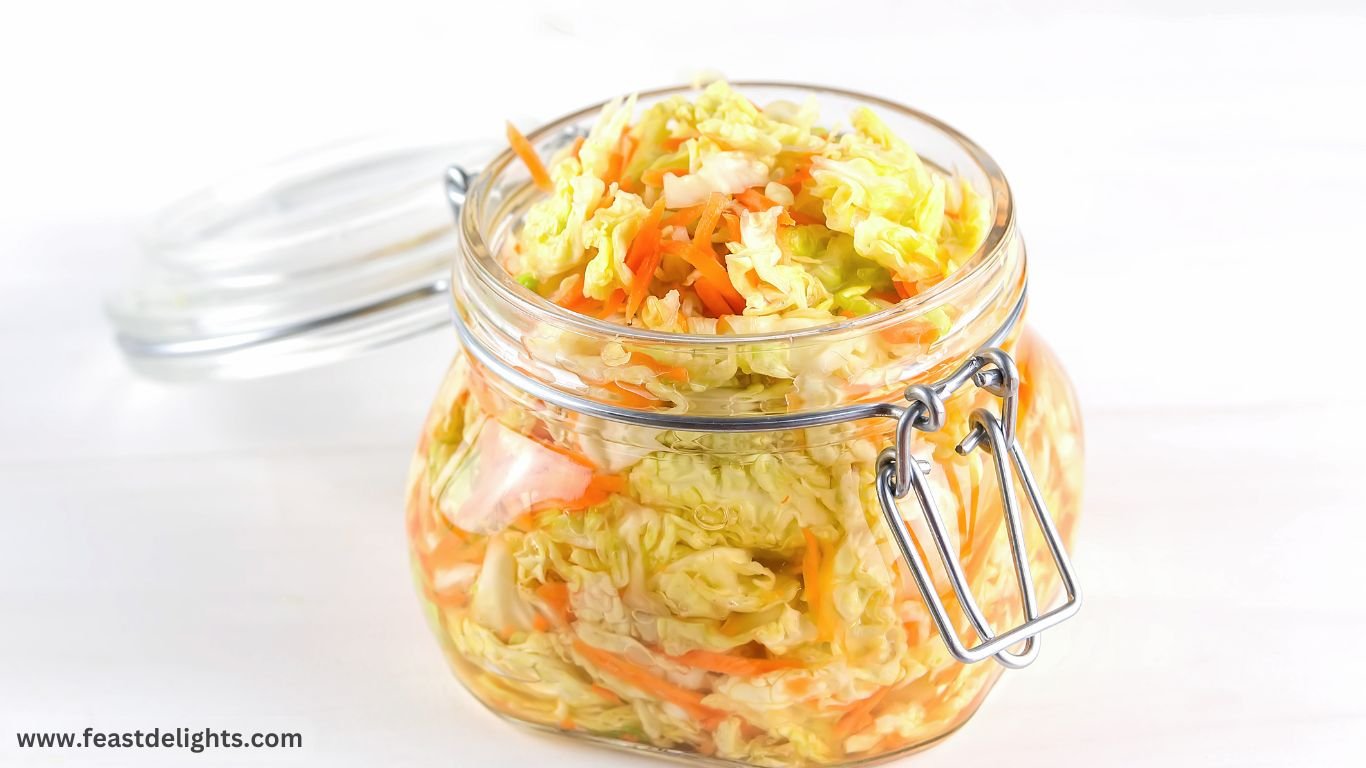
This refrigerator pickled cabbage combines shredded white cabbage, grated carrots and beet with sliced garlic and a sweet-sour vinegar brine. Beet colours the vegetables pink while the cabbage retains a pleasant crunch. Bay leaves, peppercorns and allspice add a gently spiced aroma. The batch makes about twelve side servings and needs 24 hours in the refrigerator before serving. Enjoy it with potatoes, sandwiches or roast meat. This is a short-term refrigerated pickle, not a fermented sauerkraut or a tested shelf-stable canning recipe.
Refrigerator pickled cabbage with carrot and beet is a tangy, crunchy Eastern European-inspired side dish coloured naturally by grated beet. Garlic, allspice, bay and black pepper scent the sweet-sour brine. This recipe makes about twelve side servings, with 30 minutes of preparation and cooking followed by a 24-hour refrigerator rest. It is not a fermented sauerkraut and must not be stored in a pantry.
Ingredients and preparation
Choose a firm head of white cabbage, remove damaged outer leaves and shred the usable portion into even strips. Carrots contribute sweetness and texture; beet adds colour and earthy flavour. Grating the root vegetables helps distribute their flavour throughout the cabbage. Garlic should be sliced rather than left in large whole cloves so it flavours the vegetables more evenly.
The original brine uses 500 ml water, 100 ml food-grade vinegar labelled 9% acidity, three tablespoons of sugar and two tablespoons of salt. Use culinary vinegar only, not concentrated acetic acid or cleaning vinegar. Allspice berries are included alongside black peppercorns and bay leaves. Their addition is now explicit in the method.
Prepare a knife, cutting board, grater, large mixing bowl, saucepan and several clean heat-safe containers with lids. Glass or other nonreactive food-safe containers are suitable. Smaller containers help the vegetables settle and cool more evenly.
Recipe card
Refrigerator Pickled Cabbage with Carrot and Beet
Refrigerate promptly and allow 24 hours for flavour. Consume within four days of preparation.
Equipment: Knife, cutting board, grater, mixing bowl, saucepan, measuring tools, small heat-safe nonreactive containers and optional food-safe weight.
Ingredients
Vegetables
Brine
Instructions
Wash, shred and pack vegetables
Remove damaged outer cabbage leaves. Wash the cabbage, carrots and beet under running water. Shred cabbage evenly, peel and grate carrots and beet, and slice garlic. Toss gently in a clean bowl and divide among small clean heat-safe nonreactive containers.
Prepare the spiced brine
Combine the measured water, 9% food-grade vinegar, sugar, salt, bay leaves, peppercorns and allspice berries in a saucepan. Bring to a boil while stirring until sugar and salt dissolve, then remove from heat.
Pour over the vegetables
Carefully divide the hot brine among the vegetables. Press gently with a clean spoon so the vegetables settle and release some juice; use a clean food-safe weight if needed. If the brine does not initially reach all vegetables, redistribute in smaller containers and press gently rather than adding plain water. Do not claim that submersion makes the recipe shelf-stable.
Refrigerate for 24 hours
Cool promptly in small containers and refrigerate within two hours of preparation (one hour in hot conditions above 32°C/90°F). Keep covered at 4°C (40°F) or colder for 24 hours. Never leave the batch at room temperature overnight.
Serve cold with a clean utensil
Lift a portion with a clean fork and drain lightly. The cabbage should remain crunchy with a pink tint and a tangy flavour. Return the remainder to the refrigerator immediately. Consume within four days of preparation.
How to keep the cabbage crunchy
Shred cabbage evenly rather than crushing it into a paste. Toss it with grated carrot, beet and garlic, then pack without compacting excessively. The hot brine softens the surface slightly, while the refrigerated rest allows the vegetables to take on the seasoning. Do not boil the cabbage itself. Keep the prepared vegetables cold during the entire overnight rest.
The original quantity of brine may not immediately cover all of the vegetables, depending on shredding thickness and container shape. The cabbage releases water as it settles. Use small containers and gently press the vegetables down with a clean spoon or suitable weight. Exact coverage needs kitchen confirmation. Do not dilute the mixture arbitrarily, and never interpret a submerged vegetable as proof of safe room-temperature storage.
Refrigerator pickling is not canning
This formula has no documented validation for shelf-stable storage. A hot brine and a closed lid do not make vegetables safe to store at room temperature. The National Center for Home Food Preservation recommends research-tested formulations for canning and cautions against altering their vinegar, water and food proportions. This recipe is intended only as a refrigerated side dish, with a conservative four-day limit inherited from the original recipe.
Troubleshooting and variations
If the vegetables remain pale, allow the full refrigerator rest for the beet colour to spread. A very coarse shred may take longer to soften and season. If the flavour is sharp, serve a smaller drained portion alongside mild potatoes rather than diluting the stored brine. If the cabbage is slimy or spoiled, discard it. Normal appearance or smell cannot establish safety after a refrigeration failure.
For a pale refrigerator pickle, omit beet as a fresh-food variation. A pinch of mustard seed adds another aroma; mustard is an allergen in some countries. Our pickled cabbage petals with beet use larger pieces, while kryzhavka refrigerator cabbage offers another presentation. These related recipes should not be treated as interchangeable canning formulas.
Serving and storage
Serve cold alongside garlic and paprika roasted potatoes, sandwiches or a grain bowl. For a different beet side dish, try our vinegret beet salad. Refrigerate the prepared pickle promptly in small containers within two hours, or one hour above 32°C (90°F), at 4°C (40°F) or below. Follow FoodSafety.gov refrigeration guidance. Use within four days of preparation, including the overnight rest. Use clean utensils and return leftovers promptly. Freezing damages the fresh crunch. Check vinegar and seasonings for allergens, including sulfites where applicable.
Frequently asked questions
Is this the same as sauerkraut?
No. It is a vinegar-based refrigerator pickle, not a salt-fermented cabbage recipe.
Can I store sealed jars in the pantry?
No. The formula has no validated canning process, so it must remain refrigerated.
Can I use 5% vinegar instead?
This version uses the original 9% food-grade vinegar. Lower-strength vinegar changes the flavour and acidity; choose a recipe formulated for it instead.
Why is the cabbage pink?
Natural beet pigments colour the brine and other vegetables. The intensity depends on the beet and time spent in the brine.
Why is there not enough liquid?
Shredded cabbage releases moisture as it settles. Divide it among smaller containers and press gently; the exact brine coverage requires kitchen confirmation.
Can I omit beet?
For a fresh refrigerator-only variation, yes. The colour and flavour will change; do not use the altered recipe for canning.
How long can I keep the cabbage?
Use within four days of initial preparation, including the first 24 hours of refrigerated marinating.
More recipes to try





Spotted a detail that needs correcting? Contact the FeastDelights editors.