Fresh Tomato Borscht Soup Base
This fresh borscht soup base combines ripe tomatoes, sweet red pepper, grated carrot and onion in a thick, gently seasoned vegetable mixture. Sauté the onion and carrot first, then simmer everything uncovered until the tomatoes reduce and the vegetables become tender. Optional cooked white beans make the base more substantial. The recipe yields approximately two litres, ready to stir into broth with cooked beetroot and cabbage. Refrigerate or freeze it in meal-sized portions; this is not a shelf-stable canning recipe.
Fresh tomato borscht soup base is a concentrated cooked vegetable starter, not a finished beet soup. It uses tomatoes, carrots, sweet peppers and onions to provide sweetness and savoury depth. Add beetroot, cabbage and broth separately when making borscht. The recipe produces approximately two litres in about 80 minutes, depending on how juicy the tomatoes are.
What goes into this borscht base
The tomatoes provide liquid and acidity, while carrots and red bell pepper contribute natural sweetness. Grate the carrots rather than cutting thick chunks so they soften at a similar rate to the onion. Choose ripe tomatoes with no mould or decay; watery slicing tomatoes may require a longer simmer than plum tomatoes. The measured oil is for softening the onion and carrot, not for covering the vegetables in a jar. This recipe contains no beetroot. For a beet-based starter instead, see our fresh beet borscht starter.
Equipment and timing
Kitchen scale; knife; grater; cutting board; 5–6 litre heavy saucepan; wooden spoon; ladle; shallow storage containers. Allow 25 minutes for active preparation and 55 minutes for cooking.
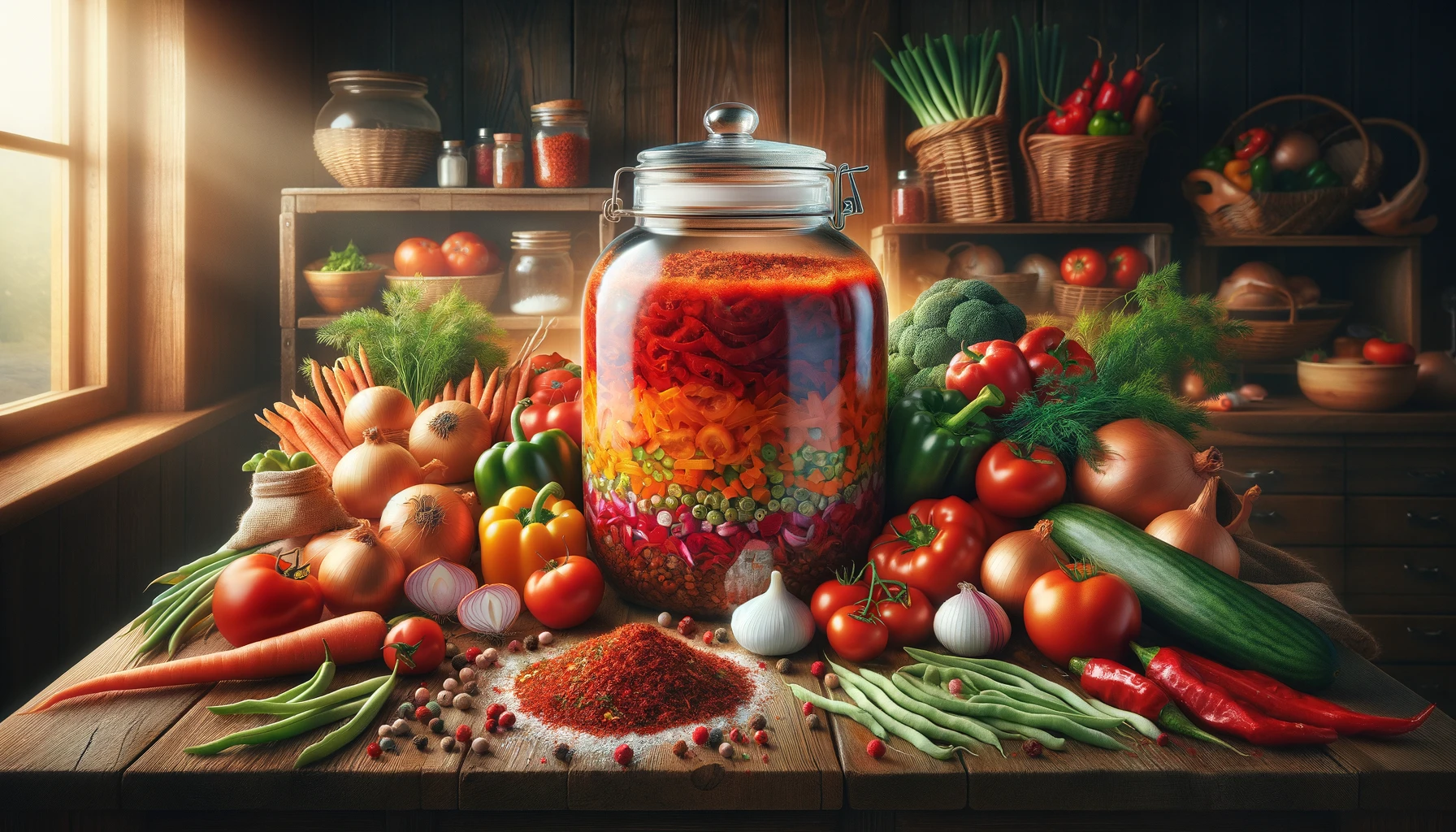
Recipe card
Fresh Tomato Borscht Soup Base
Timing is approximate; use the recipe's texture and doneness cues.
Equipment: Kitchen scale; knife; grater; cutting board; 5–6 litre heavy saucepan; wooden spoon; ladle; shallow storage containers
Ingredients
Vegetable base
For sautéing
Seasoning
Optional addition
Instructions
Wash and prepare the vegetables
Wash tomatoes, carrots and peppers under running water. Trim the tomatoes and chop, remove pepper stalks and seeds and slice, grate the carrots, and peel and dice the onion.
Soften onion and carrot
Heat the measured oil in a deep heavy saucepan over medium heat. Cook the onion and carrot for about eight minutes, stirring, until softened and the onion looks translucent. Reduce heat if they begin to catch.
Simmer the tomato and pepper mixture
Add tomatoes, pepper, salt, sugar, bay leaf and peppercorns. Bring to a gentle simmer, then cook uncovered over medium-low heat for 35–45 minutes, stirring regularly and more often as the mixture thickens. The vegetables should be tender and the sauce no longer watery.
Add optional cooked beans
If using cooked drained white beans, stir them in during the final ten minutes of simmering. Remove the bay leaf and taste the cooked mixture; adjust only if needed.
Portion, chill or turn into soup
Use immediately with broth and cooked beetroot and cabbage, or divide the base into clean shallow containers. Refrigerate within two hours at 4°C (40°F) or colder, or freeze promptly. Never seal this recipe for pantry storage.
Why sauté before simmering?
Cooking the onion and carrot in oil before adding tomatoes gives them a chance to soften without having to cook through in an acidic liquid. Keep the heat moderate rather than browning the onion heavily. Once the tomatoes release juice, simmer uncovered so steam can escape. A broad heavy pot encourages evaporation and makes it easier to stir the large batch. Leave enough room for the vegetables to bubble without spilling.
How to judge the consistency
The base is ready when the pepper strips are flexible, the carrot is tender and a spoon drawn across the bottom leaves a brief trail. It should be spoonable, not a dry paste. If a pool of thin tomato liquid remains, continue simmering uncovered and stir frequently. Tomato water content and pot diameter affect the final volume; about two litres is an estimate. Optional beans increase bulk and may change the yield.
Turning the base into borscht
Start with a portion of the base and add broth gradually until it has the consistency you prefer. Add cooked beetroot and tender cabbage or cook the cabbage separately in the broth first. Taste only after diluting, because the base is more concentrated than soup. Follow the method for vegetarian Ukrainian borscht for a complete soup or use meat broth if desired. Serve with homemade rye bread. Sour cream adds milk as an allergen.
Troubleshooting and variations
If the bottom catches, transfer the unburnt mixture to a clean pot and lower the heat. If the finished base is sharper than expected, taste a spoonful after dilution before adding extra sugar. Passata may work as a variation, but its thickness and volume differ from fresh chopped tomatoes, so the original quantities and yield need checking. White beans must already be fully cooked; do not substitute dry beans directly into this simmer. Check packaged beans for added salt and allergens.
Storage and preservation safety
This combination includes low-acid vegetables and optional beans. Neither the natural acidity of tomatoes nor a sealed lid makes it safe for shelf storage. The National Center for Home Food Preservation recommends using tested canning recipes. Use this batch fresh, refrigerated or frozen. Avoid cooling a full deep pot on the counter. Portion it while still warm and refrigerate promptly; label frozen portions with the preparation date.
Storage and make ahead
Divide into shallow containers and refrigerate within two hours of cooking, or one hour above 32°C (90°F), at 4°C (40°F) or colder. Use within four days. Freeze meal-sized portions for up to three months for best quality, leaving room for expansion. Thaw in the refrigerator; reheat the base or finished soup to 74°C (165°F). Do not can or store at room temperature.
Keep this base on hand for a quicker pot of borscht. Its usefulness comes from the tender vegetables and concentrated tomato flavour, not from a pantry-preservation process.
Frequently asked questions
Is this finished borscht?
No. It is a tomato and vegetable starter. Add broth, beetroot and cabbage separately.
Can I use dry beans?
Not directly. Use fully cooked and drained white beans as specified.
Why is the base watery?
Tomatoes vary in moisture. Simmer uncovered a little longer while stirring.
Can I can this for winter?
No. There is no validated canning process for this combination. Freeze portions instead.
Should I add beetroot before freezing?
This recipe freezes the tomato base without beetroot. Add cooked beetroot when preparing the soup.
How much soup does one batch make?
It yields about two litres of base, not a fixed volume of finished soup. Broth and other vegetables determine the soup yield.
More recipes to try






Spotted a detail that needs correcting? Contact the FeastDelights editors.