Hungarian-Inspired Bogrács Beef Stew with Potatoes
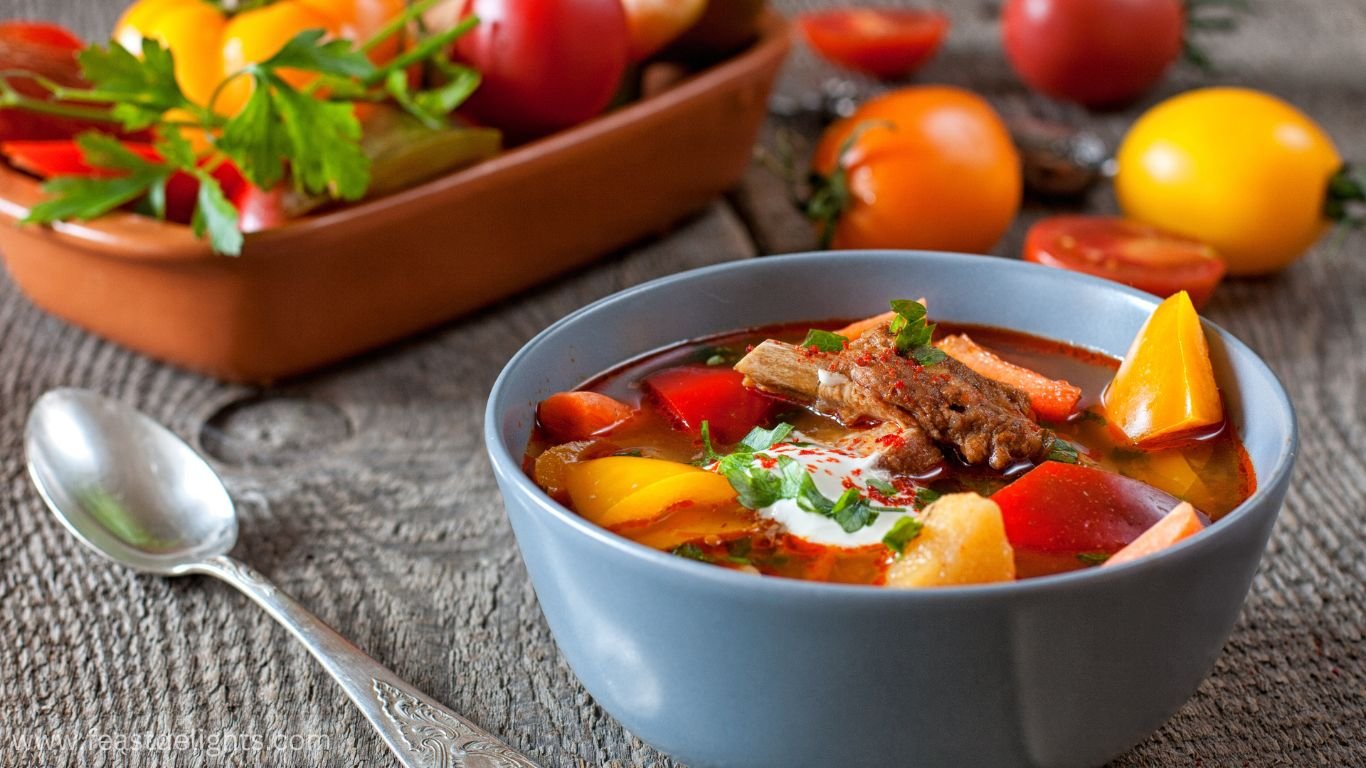
This Hungarian-inspired bogrács beef stew brings the flavours of kettle-cooked goulash to a heavy stovetop pot. Beef chuck slowly softens in a paprika-rich broth with onions, garlic, carrots, red pepper and tomatoes. Potatoes go in towards the end so they stay tender without disintegrating. Sweet paprika supplies the characteristic red colour, while a little hot paprika gives adjustable warmth. Allow roughly three and a half hours for six generous bowls, and serve with crusty bread to soak up the broth.
This Hungarian-inspired bogrács beef stew is a paprika-scented, broth-rich meal with tender beef chuck, potatoes, onions, carrots, red pepper and tomatoes. It serves six and takes about 3 hours 25 minutes, allowing for browning and a long gentle simmer. The goal is beef that yields to a fork, potatoes that hold their shape and a savoury red broth with a little warmth from hot paprika.
A bogrács is the kettle used for outdoor cooking in Hungary. Kettle goulash is closely related to gulyás, which is commonly served as a soup rather than the thick stew known internationally as goulash. This home version uses a Dutch oven and browns the beef, so it is an adaptation. See Taste Hungary’s discussion of gulyás for context. Our Hungarian beef goulash is closely related, while Transcarpathian bograch with beef and beans includes pork, sausage and beans.
Ingredients that build flavour
Beef chuck contains connective tissue that softens during slow cooking. Cut into roughly 3 cm cubes for even cooking. Lean steak is not a useful substitute for a long braise because it can become dry. Onions provide sweetness and body; cook them until soft before introducing paprika. Fresh sweet paprika is the main seasoning, and hot paprika can be reduced to suit your taste. Garlic adds depth without requiring a long list of spices.
Carrots, bell pepper and tomatoes soften into the broth. Choose firm potatoes and cut into similar-sized pieces; they go into the pot only after the beef is nearly tender. Beef stock makes a richer broth, but the original recipe also allows water. Low-salt stock leaves room for seasoning after reduction. Remove the bay leaf before serving. Parsley adds freshness.
Equipment and preparation
Use a 5–6 litre Dutch oven or heavy lidded pot, knife, cutting board, tongs, ladle and sturdy spoon. Prepare vegetables before heating oil. Keep raw beef and its utensils separate from parsley and other ready-to-eat ingredients. Dry the beef before browning to reduce steaming and splashing.
Recipe card
Hungarian-Inspired Bogrács Beef Stew with Potatoes
Browning and onions take about 20–25 minutes; braise 90–120 minutes then cook potatoes 25–30 minutes. Allow longer for tougher beef.
Equipment: 5–6 litre Dutch oven or heavy lidded pot, knife, cutting board, tongs, spoon and ladle.
Ingredients
Beef and paprika base
Vegetables and broth
Finish
Instructions
Brown the beef in batches
Pat the beef dry with paper towels. Heat oil in a 5–6 litre heavy pot over medium-high heat. Brown the beef in batches, turning as each side develops colour, and transfer to a plate. Allow about 12–15 minutes altogether.
Soften onions and add paprika off the heat
Reduce to medium heat and cook the diced onions in the same pot for 8–10 minutes, stirring until soft and golden. Add a splash of the measured stock if the residue threatens to burn. Remove the pot briefly from the burner, stir in both paprikas and garlic, and promptly add some stock to prevent scorching.
Build the broth
Return to the burner and add carrots, red pepper, tomatoes, remaining stock, bay leaf and beef with its juices. Scrape the base and bring to a gentle simmer.
Simmer until the beef is nearly tender
Cover and cook over low heat for 90–120 minutes, stirring occasionally, until the beef is nearly fork-tender. Keep meat mostly submerged and add a little hot water if needed. Allow longer if the meat remains firm.
Add potatoes and finish cooking
Add the cubed potatoes and simmer gently for 25–30 minutes until a fork slides into the potato centres and the beef yields easily. Keep the lid partly open if the broth needs reducing. Season near the end.
Season and serve
Remove the bay leaf and scatter parsley over the stew. Ladle into six bowls with meat, potatoes and broth. Serve hot.
Why browning and gentle simmering matter
Brown meat in batches so moisture can evaporate rather than collecting in the pot. A browned surface adds flavour to the broth; it does not seal in juices. Reduce heat before adding onions and loosen the browned residue with a splash of measured stock if needed.
Paprika burns easily in hot fat, so move the pot off the heat before stirring in the paprikas and garlic. Add stock promptly and return the pot to the burner. A rolling boil can evaporate broth too quickly. Look instead for occasional bubbles and maintain a gentle simmer. Keep the lid on during the initial braise and check liquid periodically.
When to add potatoes
Check beef after about 90 minutes. A fork should enter with relatively little resistance, although the meat need not be completely tender yet. If still tough, continue cooking before adding potatoes. Once potatoes are in the pot, avoid vigorous stirring. Test a cube with a fork after about 25 minutes. Both beef and potatoes must be tender before serving. If the broth is thinner than you prefer, uncover briefly at the end; it should remain spoonable, not reduced to a dry sauce.
Troubleshooting
If beef remains firm, give it more time over low heat and add hot water if the level drops too far. If paprika scorches, extra stock will not remove a burnt taste; avoid scraping blackened residue into the stew. If potatoes fall apart, use a firmer variety next time and wait until meat is almost tender before adding them. If broth tastes too salty, add unsalted water in small amounts and check again.
Variations and serving
Use sweet paprika alone for a mild bowl. A pinch of caraway can be added for an earthy note. Pork shoulder can work, but its braising time may differ. Mushrooms require a separate shorter cooking schedule; see our plant-based soy chunk goulash for a meat-free dish. Serve with rye and wheat bread or fresh cucumber and dill salad. Sour cream is optional.
Make ahead, storage and reheating
Divide stew into shallow containers. Refrigerate at 4°C (40°F) or below within two hours, or one hour above 32°C (90°F). Use within three to four days or freeze in labelled portions for up to three months for best quality. Potatoes may soften. Thaw in the refrigerator and reheat to 74°C (165°F), stirring to distribute heat, following FoodSafety.gov guidance. Check stock labels for wheat, celery or other allergens; sour cream adds milk.
The original formula is retained. The cooking allowance is increased for browning, onions and the full braise; exact timing depends on the beef cut.
Frequently asked questions
What is a bogrács?
It is a Hungarian outdoor cooking kettle. This recipe adapts kettle-style paprika beef to a covered stovetop pot.
Is bogrács stew the same as goulash?
The dishes are closely related. Hungarian gulyás is often a brothy soup, while thicker paprika meat stews resemble pörkölt. This version has potatoes and a generous broth.
Can I use beef shin?
Yes. Beef shin or another collagen-rich braising cut can replace chuck; allow extra time if needed.
Why does paprika taste bitter?
Paprika can scorch when added to a very hot dry pot. Stir it in off the heat and promptly add some stock.
Why is my beef still tough?
Continue a gentle simmer in 15-minute intervals before adding potatoes, until the connective tissue softens.
Can I omit hot paprika?
Yes. Keep the sweet paprika, which supplies much of the flavour.
Can I make this ahead?
Yes. Chill promptly in shallow containers and reheat to 74°C (165°F). Add stock if the potatoes have thickened the broth.
More recipes to try






Spotted a detail that needs correcting? Contact the FeastDelights editors.