Vegetarian Moussaka with Mushroom Sauce and Béchamel
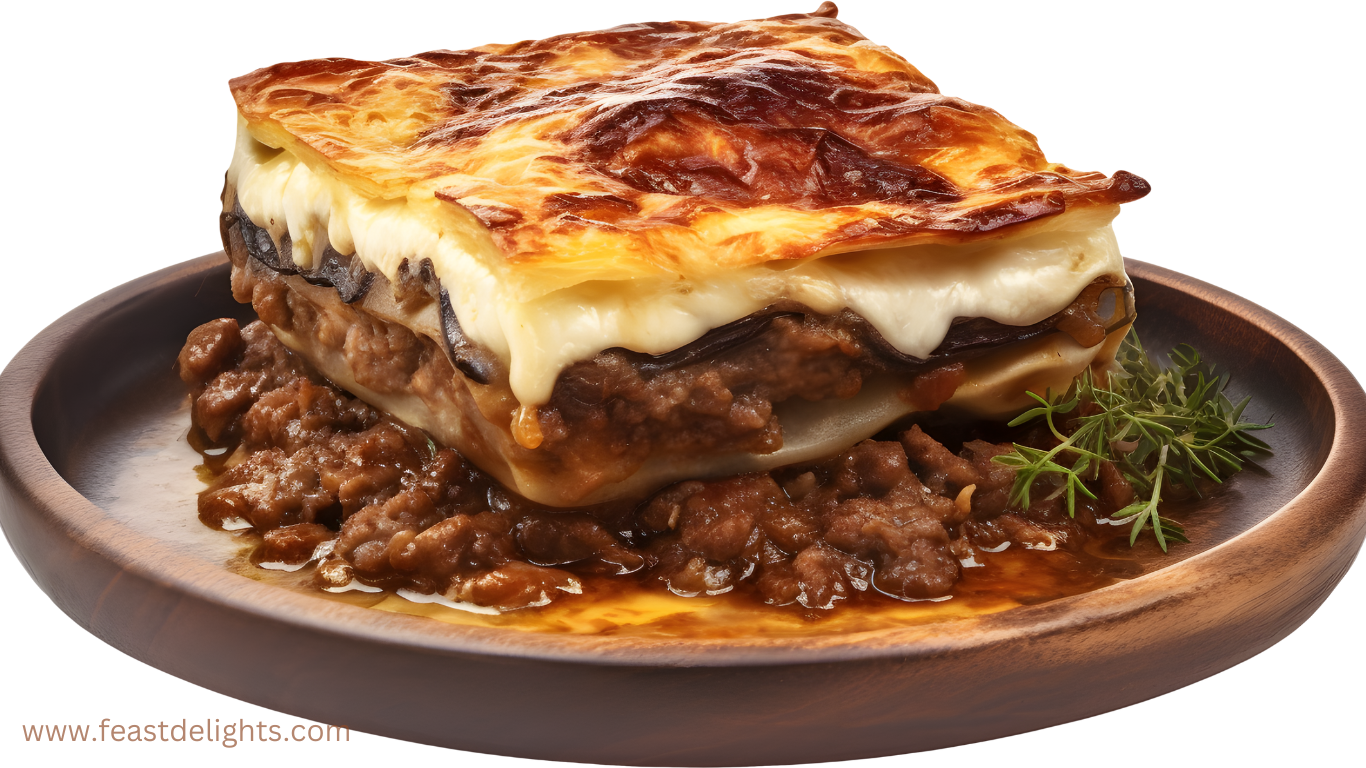
This vegetarian moussaka layers tender roasted eggplant and potatoes with a rich mushroom and tomato filling, then finishes everything under a creamy béchamel and golden cheese crust. It is a Greek-inspired meatless casserole with the comforting texture of a classic layered bake. Roasting the vegetables first and reducing the mushroom sauce help prevent a watery filling. The recipe serves six and takes about two hours, including resting time. Serve it with a crisp salad or simply enjoy a generous slice on its own.
Vegetarian moussaka is a layered oven bake rather than a quick stir-together casserole. Each component has a job: potatoes provide a firm base, eggplant brings a soft texture, mushrooms supply savoury depth and béchamel holds the topping together. Prepare the filling while the vegetables roast to make the best use of your time.
What makes this mushroom moussaka different?
This is a Greek-inspired meatless adaptation of the layered eggplant casserole, not the only traditional form of moussaka. Instead of minced meat, finely chopped mushrooms and tomatoes create a savoury filling. A simple flour-and-butter béchamel, enriched with a little nutmeg and finished with cheese, replaces more elaborate egg-enriched sauces. The result is soft and creamy inside with a lightly browned top. The key is to cook each component before assembling it, so the final bake is about melding flavours rather than trying to cook raw potatoes through a thick sauce.
Choosing the ingredients
Eggplant and potatoes
Choose firm, glossy eggplants (aubergines) with no soft patches. Slice them lengthwise about 7–10 mm (¼–⅜ inch) thick; very thin slices can tear after roasting. Waxy potatoes retain their shape and make a good base. Slice them 5 mm (about ¼ inch) thick, using a mandoline with a hand guard if you have one. Uniform slices cook much more evenly than a mixture of thick and thin pieces. There is no need to peel the eggplant unless the skin is particularly tough.
Mushroom filling
Button or cremini mushrooms work well. Chop them into small pieces rather than puréeing them: the filling should have a noticeable texture. Crushed tomatoes are convenient because they break down quickly. Dried oregano adds a familiar Mediterranean flavour without competing with the mushrooms. Reserve one tablespoon of the measured olive oil for the filling and use the other two for the roasting trays and vegetables.
Béchamel and cheese
All-purpose (plain) flour thickens the milk when cooked with butter. Warm milk is easier to whisk into the roux, the cooked butter-and-flour mixture. Use a hard cheese made with vegetarian or microbial rennet, rather than assuming every hard cheese is vegetarian. A pinch of nutmeg gives the sauce a gentle warmth. Whole milk gives the richest result; lower-fat milk produces a lighter sauce.
Equipment
Use two large baking trays, a pastry brush, a wide skillet, a medium saucepan, a whisk and a deep baking dish around 23 × 30 cm (9 × 12 inches). Have a knife and cutting board ready before beginning. If your trays cannot hold the vegetables in one layer, roast them in batches and allow extra time.
Recipe card
Vegetarian Moussaka with Mushroom Sauce and Béchamel
Roasting and filling preparation overlap; allow extra time for batches or chilled components.
Equipment: Two baking trays, brush, wide skillet, medium saucepan, whisk, knife, cutting board, deep 23 × 30 cm baking dish
Ingredients
Vegetable layers
For vegetables and filling
Mushroom filling
Béchamel and topping
Seasoning
Instructions
Roast the eggplant and potatoes
Heat the oven to 220°C (425°F). Cut eggplant lengthwise into 7–10 mm slices and potatoes into 5 mm rounds. Arrange separately in single layers on trays, brush with 2 tablespoons of olive oil in total and season lightly. Roast for 20–25 minutes, turning halfway, until the eggplant is soft and potatoes are nearly tender. Allow extra time for thicker potato slices.
Reduce the mushroom filling
While the vegetables roast, warm the remaining tablespoon of olive oil in a wide skillet over medium heat. Cook the onion for 4–5 minutes until translucent. Add mushrooms and cook for 6–8 minutes until released liquid evaporates. Stir in garlic for 30 seconds, then tomatoes and oregano. Simmer uncovered for about 15 minutes until thick, season to taste.
Whisk the béchamel
Melt butter in a saucepan over medium-low heat. Whisk in flour and cook for 1 minute. Add warm milk gradually, whisking smooth after each addition. Simmer gently for 5–8 minutes, stirring, until the sauce coats a spoon. Season with nutmeg, salt and pepper.
Assemble the layers
Reduce the oven to 190°C (375°F). In a deep 23 × 30 cm baking dish, layer all the potatoes, half the eggplant, all the mushroom sauce and the remaining eggplant. Spread béchamel evenly over the top and scatter the grated cheese.
Bake and rest
Bake for 30–35 minutes until the sauce bubbles at the edges, the centre is hot and the cheese is golden. If necessary, cover loosely to prevent excess browning. Rest 20 minutes before cutting into six portions.
How to prevent a watery moussaka
Moisture comes mainly from mushrooms, eggplant and tomatoes. Space the eggplant slices apart so they roast rather than steam. Turn them once, and remove the slices when soft and lightly coloured. Potatoes should be almost completely tender before layering; the tip of a knife should meet little resistance. Give the mushrooms enough space in the skillet to release their liquid and let that liquid evaporate before adding tomatoes. Reduce the tomato mixture until a spatula drawn across the pan leaves a brief trail. A wet sauce will seep into the bottom layers and make the casserole difficult to portion.
For the béchamel, cook the flour in melted butter for about a minute without allowing it to turn dark. Add the milk gradually, whisking continuously at first. Once all the milk is incorporated, bring the sauce to a gentle simmer and stir across the bottom of the saucepan. It should coat the back of a spoon evenly but still spread over the vegetables. Avoid a hard boil, which can scorch milk and cause lumps.
Layering and baking
Build the base with all the potatoes. Spread half the eggplant over them, add the mushroom filling, then cover with the remaining eggplant. This keeps the filling enclosed and gives the white sauce a relatively flat surface. Spread the béchamel right to the edges and sprinkle the cheese evenly. Leave a little room at the top of the baking dish so the sauce can bubble without spilling.
Look for bubbling at the sides and a golden surface rather than judging by colour alone. If the top browns early, cover loosely with foil and continue until the centre is hot. Rest the casserole for 20 minutes before cutting; the sauces become less fluid as they cool slightly.
Troubleshooting
Potatoes still firm: roast them longer before assembly. If discovered after baking, cover the dish and return it to the oven until tender. Lumpy white sauce: take the pan off the heat and whisk vigorously; strain if necessary before layering. Runny filling: reduce it in the skillet before assembling. If the baked casserole is loose, allow the full resting period rather than trying to drain hot liquid. Dry eggplant: slice evenly, brush with oil on both sides and check thin slices early. Overbrowned cheese: cover loosely and move the dish lower in the oven if needed.
Substitutions and variations
Courgette (zucchini) can replace some eggplant, but roast it separately until excess moisture has evaporated. For a more substantial filling, add a small amount of cooked, drained lentils and reduce the sauce until thick again. A dairy-free adaptation would require a different sauce: unsweetened soy milk and plant-based butter can work with flour, but the thickness and flavour will differ and the cheese must also be replaced. This variation has not been kitchen-tested. For gluten avoidance, use a suitable gluten-free white-sauce recipe rather than assuming every flour blend will behave the same way.
Serving suggestions
Pair a slice with cucumber, tomatoes and the site’s lemon and oregano Greek salad dressing. For another meat-free eggplant dinner, see baked eggplant Parmesan (choose vegetarian-rennet cheese) or eggplant with roasted red pepper sauce. The site’s Greek-style beef moussaka uses a different meat filling and yoghurt topping.
Make ahead and storage
You can roast the vegetables and cook the mushroom filling a day before assembly. Cool them promptly in separate shallow containers, cover and refrigerate. Make the béchamel just before assembly for easier spreading. If baking with chilled components, allow additional oven time and check the centre reaches 74°C (165°F).
Cut leftovers into portions and refrigerate in shallow covered containers within two hours, or one hour above 32°C (90°F). Keep at 4°C (40°F) or colder and use within three days. Freeze portions for up to two months for best quality; thaw overnight in the refrigerator. Reheat covered in the oven or microwave until the centre reaches 74°C (165°F). See USDA leftover handling guidance. The original dish contains milk and wheat; check the cheese and any substituted products for additional allergens.
Give the finished moussaka time to settle before serving. A well-reduced mushroom sauce and tender vegetables matter more than perfectly uniform layers.
Frequently asked questions
Do I need to salt eggplant before roasting?
Not usually for firm, fresh eggplants. If you salt them to draw out moisture, pat dry before brushing with oil and reduce the later seasoning.
Can I leave the potato skins on?
Yes, if they are thin-skinned waxy potatoes. Scrub them well and slice evenly.
Can I use fresh tomatoes?
Yes. Chop roughly 400 g of ripe tomatoes and simmer until the sauce has the same thick consistency; this may take longer.
Can I double this recipe?
Use two baking dishes rather than one very deep dish. Roast vegetables in batches and check each casserole for doneness.
Does the béchamel need eggs?
No. The flour and butter thicken the milk in this version, so eggs are not required.
Can I make smaller individual moussakas?
Yes. Divide the prepared components among ovenproof dishes; start checking the bubbling and browning earlier.
Should the baking dish be covered?
Normally bake uncovered for a golden top. Add loose foil only if the surface browns before the centre is hot.
More recipes to try


Spotted a detail that needs correcting? Contact the FeastDelights editors.