Clarified Butter Recipe for Everyday Cooking
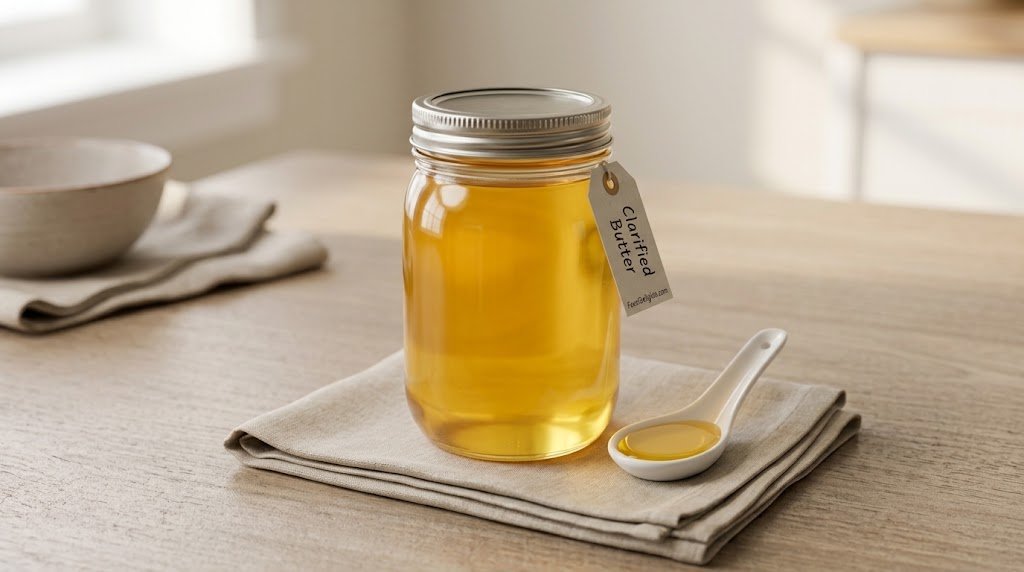
This clarified butter recipe separates butterfat from the milk solids and much of the water in ordinary butter. The result is a clear golden cooking fat with a mild buttery flavor, useful for brushing pastry, gently frying ingredients or finishing vegetables. It takes about twenty-five minutes and requires only butter, a saucepan and a way to filter the liquid. The key is restraint: low heat gives the layers time to separate without browning the solids. That keeps this version distinct from a more deeply cooked, nutty ghee. Yield varies with the butter brand and how carefully the fat is poured off, so expect about two hundred grams from a two-hundred-and-fifty-gram block.
Separate the layers without stirring them together
As butter melts, foam collects above the fat and heavier milk solids settle below it. Low heat helps you see this separation clearly. Skimming the foam improves visibility, but the final careful pour is what leaves the sediment behind.
Use a clean, fully dry jar and a dry straining setup. A fine sieve alone may miss small particles, so line it with clean cheesecloth or a suitable food-grade filter. Clarification reduces milk solids but does not certify the product as dairy-free or suitable for someone with a milk allergy.
Recipe at a glance
Yield: About 200 g clarified butter. Active preparation: about 5 minutes. Cooking: about 15 minutes. Total elapsed time: about 25 minutes. Includes about 5 minutes of resting, rising, cooling or chilling, as specified in the method.
How to make clarified butter for everyday cooking
Recipe card
Clarified Butter Recipe for Everyday Cooking
Equipment: Small heavy saucepan, preferably light-colored inside; spoon; fine sieve; clean cheesecloth; heatproof jug; clean dry jar.
Ingredients
Main
Instructions
Melt gently
Cut butter into pieces and place in a small saucepan over low heat. Let it melt slowly without stirring or allowing browned patches to form.
Let the layers separate
Continue at very low heat for about 10–15 minutes total. Expect a foam layer on top and pale sediment below the clear yellow fat. Skim most of the surface foam with a spoon.
Settle and filter
Remove from heat and let stand 5 minutes. Set a cheesecloth-lined sieve over a heatproof jug. Pour the clear fat slowly through it, stopping before the cloudy bottom sediment enters the filter.
Cool and store
Let the fat cool until no longer hot, then transfer to a clean dry jar. Cover and refrigerate. It becomes opaque and firm when cold; this is normal.
How to tell when it is ready
The strained warm fat is clear and golden, with no visible milky sediment; it solidifies to a pale yellow mass when chilled.
Tips
- Keep the heat low enough to avoid browned milk solids.
- Use a light-colored pan to make sediment visible.
- Stop pouring while a little fat remains above the sediment.
- Use dry utensils whenever removing butter from the jar.
Troubleshooting
- Cloudy liquid: allow more settling time and strain again.
- Brown flecks: the solids have toasted; the flavor will be nuttier rather than mild.
- Lower yield: extra fat remained with the sediment, which is preferable to mixing solids back into the jar.
Substitutions
- Salted butter can be clarified, but unsalted butter gives more predictable flavor.
- Commercial clarified butter can replace homemade by weight in recipes that call for it.
Variations
- For ghee, follow a separate method that deliberately cooks the milk solids longer; do not label lightly clarified butter as ghee.
- Make a half batch with 125 g butter in a very small pan, watching closely because it heats faster.
Serving suggestions
- Brush over cooked flatbread.
- Use to grease pastry molds that call for clarified butter.
- Drizzle a little over steamed vegetables.
- Use in place of butterfat for pan-cooking when the recipe allows it.
Make ahead
Make before baking day and refrigerate. Melt only the amount needed over low heat or in short microwave intervals in a suitable container.
Storage
Refrigerate in a clean dry sealed jar for up to 2 weeks as a conservative home-storage limit. Freeze small portions for up to 3 months for quality. Discard if mold, an off smell or unexpected moisture appears.
Food safety
Hot butterfat can cause burns. Keep water out of the hot pan and finished jar. Residual milk proteins can remain after filtering, so clarified butter is not safe to assume suitable for a milk allergy.
Frequently asked questions
Why is my clarified butter solid after chilling?
Butterfat becomes solid when cold. Melt gently to return it to a clear liquid.
Can I use the foam and milk solids?
They can flavor foods if they have not scorched, but keep them separate and use promptly; they are not part of the clarified butter yield.
More recipes to try





Spotted a detail that needs correcting? Contact the FeastDelights editors.