Spaghetti Squash with Marinara
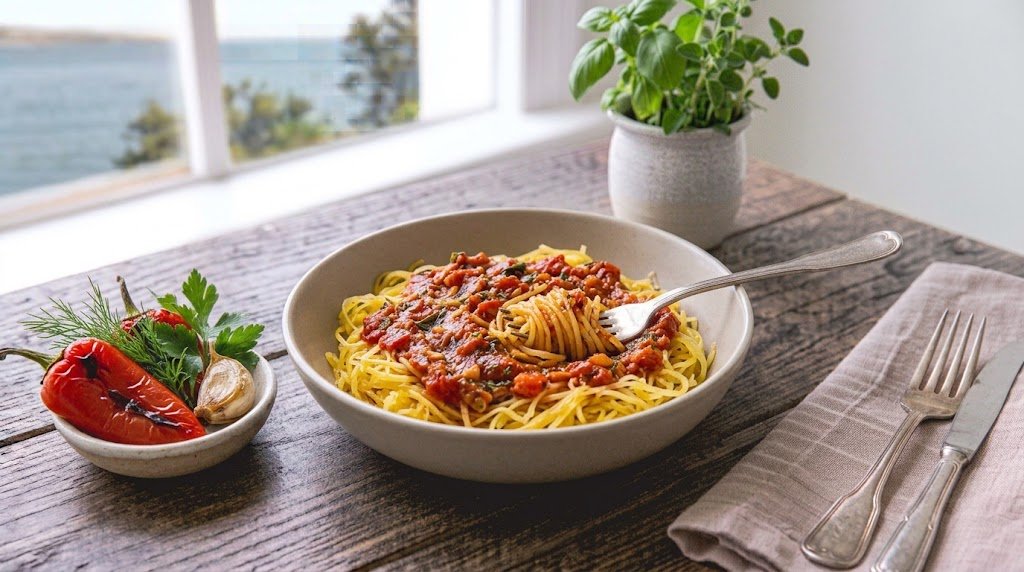
Roasted spaghetti squash forms tender, gently sweet strands that pair beautifully with warm tomato marinara and Italian herbs. The squash halves roast cut-side down until the flesh releases easily under a fork, then the strands are topped with sauce and optional grated Parmesan. This simple Italian-inspired dish makes four servings and takes about 65 minutes, including a short cooling period. Serve as a light main with a substantial side or alongside your favourite baked or grilled dish.
Spaghetti squash with marinara is an Italian-inspired vegetable dish in which roasted squash separates into long, tender strands under a fork. Olive oil and dried herbs season the mild, slightly sweet flesh, and warm tomato sauce adds a savoury tang. One large squash serves four as a light main or side. Allow about 65 minutes, including a five-minute cooling period before scraping out the strands.
Choosing spaghetti squash and marinara
Use one large spaghetti squash weighing about 1.5 kg (3.3 lb). Unlike most winter squash, its cooked flesh naturally separates into thin strands. Choose a firm squash with an intact rind. The skin is not eaten in this recipe. One tablespoon of olive oil, salt, pepper and dried Italian herbs provide a simple seasoning that complements the 400 g (14 oz) of marinara. Use your preferred tomato-based sauce; the optional 30 g (1 oz) of grated Parmesan adds a savoury finish.
Recipe card
Spaghetti Squash with Marinara
Total assumes 45 minutes of roasting and five minutes of cooling; large squash may require up to 50 minutes or longer. Warm sauce during roasting.
Equipment: Large sharp chef's knife, stable cutting board, spoon, rimmed baking tray, oven-safe parchment, oven mitts, fork, small saucepan
Ingredients
Roasted squash
Sauce and topping
Instructions
Preheat the oven
Preheat the oven to 200°C (400°F), conventional heat. Line a rimmed baking tray with oven-safe parchment rated for that temperature.
Halve and season the squash
Wash and dry the squash. Place it on a stable cutting board with a non-slip surface. Carefully cut it lengthwise with a sharp knife, keeping fingers clear of the blade; do not force a stuck knife. Scoop out seeds and loose fibres with a spoon. Brush the cut sides with olive oil and season with salt, black pepper and dried Italian herbs.
Roast cut-side down
Arrange both halves cut-side down on the tray. Roast for 40–50 minutes, starting to check at 40 minutes. Use oven mitts to turn a half if necessary; a fork should pierce the flesh easily and the strands should separate without becoming mushy.
45 minCool and scrape into strands
Let the squash cool for about five minutes, or until comfortable to handle with oven mitts. Use a fork to loosen and scrape the flesh into strands, leaving the outer skin behind. Drain any excess liquid.
5 minWarm the sauce and serve
Warm the marinara in a small saucepan during roasting, stirring until hot. Divide the squash among four plates, spoon the warm sauce over it and add the optional Parmesan if desired.
How to cut and roast spaghetti squash
The raw rind can be difficult to cut. Wash and dry the squash and use a large stable board that does not slide. A folded damp towel under the board can help keep it in place. Use a sharp, sturdy knife and keep your hands away from the blade. If the squash is too hard to cut safely, do not force it or try to catch a slipping knife. Choose a smaller squash or ask for help preparing it.
Scoop the seeds and loose fibres from the centre before brushing the cut surfaces with oil and herbs. Roast cut-side down on a rimmed lined tray at 200°C (400°F). The size and thickness of the squash and the oven’s actual temperature affect cooking time. Check after 40 minutes rather than relying only on the clock.
Getting tender strands instead of mush
Turn a half carefully with oven mitts and test the flesh near the thickest part. A fork should pierce it readily, and a little flesh should separate into strands when scraped. If still very firm, return the squash to the oven and check again after a few minutes. If the strands collapse into a purée, the squash has cooked too long. Let it cool for five minutes or until safe to handle, then work gently with a fork, leaving the skin behind.
Some liquid is normal because squash contains water. Drain any excess before plating and warm the marinara separately. Stirring the strands into a pan of sauce for a long time can make them softer and wetter. Spoon the sauce over the squash immediately before eating instead.
Variations and dietary considerations
For a deeper savoury flavour, use mushroom marinara with garlic and basil. Add a pinch of chilli to the sauce or finish with fresh basil. Parmesan contains milk and traditional Parmesan is made with animal rennet; choose a cheese made with suitable non-animal rennet for a vegetarian serving, or omit it for a vegan version with a plant-based marinara. Check the sauce and herb blend for allergens and other ingredients. If adding pine nuts, check whether they are suitable for the diners.
Serving and make ahead
Serve with a green salad or homemade garlic knots if dairy and wheat are suitable. For a heartier meal, pair with beans or garlic and herb vegetable skewers. Roast the squash ahead if needed, but keep its strands separate from the marinara to retain the best texture. The optional cheese is best grated just before serving.
Storage and reheating
Refrigerate the squash strands and marinara separately in shallow covered containers at 4°C (40°F) or colder within two hours, or one hour above 32°C (90°F). Use within three days. Reheat both to 74°C (165°F) throughout and combine before serving. Freeze sauce or drained squash in portions for up to two months for best quality; the thawed squash may be softer and wetter. Thaw in the refrigerator.
Scrape the squash gently so the strands remain distinct, then add the warm marinara just before serving. Finish with the optional cheese or a little fresh basil.
Frequently asked questions
How do I know spaghetti squash is ripe?
Choose a firm squash with an intact rind and no soft or mouldy spots. Many varieties turn golden yellow when mature, but colour varies by cultivar.
Why is my roasted squash watery?
Overcooking can soften the strands and release extra moisture. Check at 40 minutes, drain any liquid after scraping and add sauce just before serving.
Can I roast the halves cut-side up?
Yes, but this recipe uses cut-side down roasting to help the flesh cook evenly. If roasting cut-side up, monitor the surface and tenderness rather than assuming the same timing.
Does spaghetti squash taste like pasta?
No. It has a mild, slightly sweet squash flavour and tender-crisp vegetable strands. Marinara makes it pasta-like in presentation, but the texture is different.
Can I make it vegan?
Omit Parmesan or use a suitable plant-based topping, and check that the marinara and herb blend contain no animal-derived ingredients.
Can I use another kind of winter squash?
Other winter squash can be roasted with the same seasonings, but they generally do not separate into spaghetti-like strands. Use spaghetti squash for this particular texture.
More recipes to try






Spotted a detail that needs correcting? Contact the FeastDelights editors.